
516-621-0096

631-271-6679

Real Stone Veneer Long Island NY

Stone That Looks Real Because It Is
You’re looking at stone veneers because you want your property to stand out, not blend in. Real stone veneer gives you authentic texture, color that never fades, and durability that outlasts everything else—without the weight or cost of full stone masonry.
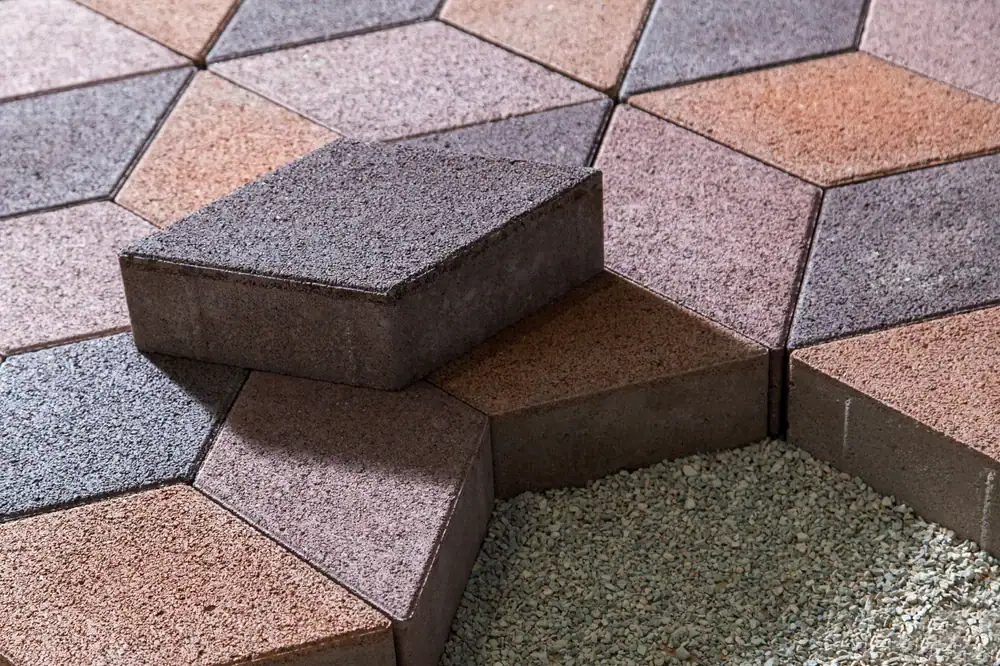
Hexagonal paving stones in shades of brown, pink, and gray are arranged in a geometric pattern. One stone is stacked on top of others, and some stones surround a patch of small gravel.

Culture Stone

Panel Stone

Family-Owned Long Island Business

We understand Long Island projects, weather challenges, and local building needs because we live and work here alongside you.

Expert Material Consultation

Our team helps you select the right stone for your specific project, budget, and aesthetic goals with honest guidance.

Contractor Connections Available

We connect you with qualified local installers who understand proper moisture management and Long Island's freeze-thaw climate.

Reliable Delivery Service

Our inventory management and delivery system ensures your materials arrive on time and in perfect condition across Long Island.

A modern house with a gray tiled driveway, metal fence, and gate. Neighboring houses with dark roofs and solar panels are visible beyond the fence, surrounded by green trees under a blue sky.

Outdoor Living Products in Long Island, NY

The Difference Between Real and Fake Matters

Real stone veneer is exactly what it sounds like—authentic stone cut thin for easier installation. The color goes through the entire thickness, not just painted on the surface. That means no fading after five years of sun exposure, no repetitive patterns, and no artificial look that screams “manufactured.”

You’re getting granite, limestone, sandstone, or quartzite that’s been quarried and sliced to 1 to 1.5 inches thick. It weighs about 10-15 pounds per square foot, so you don’t need foundation reinforcement like you would with full stone. But you get the same authentic appearance, durability, and weather resistance that’s made stone buildings last for centuries.

This matters on Long Island where freeze-thaw cycles, coastal humidity, and temperature swings test every material on your home’s exterior. Real stone handles it all without cracking, fading, or deteriorating.

Hear from Our Customers

Benefits of Real Stone Veneer

What You Actually Get With Natural Stone

Beyond looking better than manufactured alternatives, real stone veneer delivers practical advantages that affect your property value, maintenance schedule, and long-term satisfaction with your investment.

Your exterior will still look exactly the same in 20 years because natural stone doesn't fade, peel, or discolor.

You'll spend less time on maintenance since real stone only needs occasional rinsing, never repainting or sealing.

Your property value increases significantly—stone veneer projects recoup 92-153% of costs at resale according to industry data.

You get truly unique aesthetics with no two stones identical, eliminating the repetitive patterns that make manufactured stone look artificial.

Your home withstands Long Island's harsh weather including freeze-thaw cycles, coastal humidity, and temperature extremes without material failure.

You avoid the VOC off-gassing and potential chemical exposure that comes with manufactured stone products made from cement and synthetic materials.

number 1 in a black circle

Share project details

Call us or get a free online quote to help us identify your project needs.

number 2 in a black circle

We'll follow up

If you requested an online quote, you can expect a callback within 24-48 hours of your request.

number 3 in a black circle

The floor is yours

Connect with an expert and share all project specifics.

number 4 in a black circle

Plan your project

Like what you hear? We'll provide next steps and expert guidance.

A covered stone patio with ceiling fans overlooks a fenced outdoor pool and hot tub. There is an outdoor dining set, potted plants, and a scenic view of trees and hills under a blue sky with clouds.

Exterior Stone Veneer Services

Real Stone Costs More Upfront for Good Reason

Natural stone veneer typically runs $15-30 per square foot for materials, compared to $8-12.50 for manufactured alternatives. That gap makes some people hesitate. But here’s what that extra cost actually buys you.

Manufactured stone is concrete with surface coloring. After 10-15 years of sun exposure, especially on darker colors, that surface color fades noticeably. Real stone has color throughout the entire thickness—it can’t fade because there’s no paint or surface treatment to deteriorate.

Manufactured stone also shows repetitive patterns because it’s made from molds. Once you notice the same stone shape appearing every few feet, you can’t unsee it. Real stone is quarried, so every piece is genuinely unique. Your exterior looks authentic because it is authentic.

The durability difference is even more significant. Real stone lasts 75-100+ years with minimal maintenance. Manufactured stone typically needs replacement or restoration after 20-40 years. When you calculate cost per year of use, real stone often ends up being the more economical choice, especially when you factor in the higher resale value it creates.

Stone Cladding Installation Long Island

Installation Done Right Protects Your Investment

The biggest risk with any stone veneer isn’t the material itself—it’s improper installation. Long Island’s climate demands specific moisture management techniques. Freeze-thaw cycles can destroy even the best stone if water gets trapped behind it and freezes.

Proper installation includes a weather-resistive barrier, metal lath where needed, correct mortar mix for our climate, proper flashing at all transitions, and weep screeds that allow any moisture to escape. Corners, windows, doors, and grade transitions all need specific attention to prevent water intrusion.

This is why we connect customers with qualified local installers who understand these requirements. A skilled mason knows how to prep surfaces, apply scratch coats, set stones with full mortar contact, and tool joints to the right profile. They also understand Long Island building codes and local inspection requirements.

The installation complexity is similar to high-quality manufactured stone—both require professional installation for long-term performance. The difference is that when real stone is installed correctly, it performs flawlessly for decades longer than manufactured alternatives.
A person wearing gloves uses an electric polisher to buff a smooth, dark surface, creating a blurred effect from the spinning pad.
Real Stone Veneer FAQs

Common Questions About Our Service

Real stone veneer is authentic stone—granite, limestone, sandstone, or quartzite—that’s been quarried and cut to 1-1.5 inches thick. The color and texture go through the entire thickness because it’s natural stone. Manufactured stone veneer is concrete mixed with aggregates and pigments, poured into molds, and colored on the surface to mimic stone. The key differences show up over time. Real stone never fades because the color is throughout the material, not just on the surface. Manufactured stone can fade after 10-15 years, especially darker colors exposed to sun. Real stone has unique variations in every piece since it’s quarried from the earth. Manufactured stone shows repetitive patterns because the same molds are used multiple times. Real stone typically lasts 75-100+ years while manufactured stone may need replacement after 20-40 years. Both can be installed on similar substrates, but real stone provides superior long-term durability and authentic appearance.
Real stone veneer actually handles Long Island’s climate better than most alternatives when installed correctly. Natural stone is extremely durable and weather-resistant—it’s why stone buildings from centuries ago are still standing. The key is proper installation with correct moisture management. Long Island experiences freeze-thaw cycles where water can freeze, expand, and cause damage if it gets trapped behind the veneer. Professional installation includes weather-resistive barriers, proper flashing, and weep screeds that allow any moisture to escape safely. The stone itself resists water absorption better than manufactured alternatives. Dense stones like granite and quartzite are naturally less porous. Even more porous stones like limestone perform well when installed with proper drainage systems. The mortar joints and backing system matter more than the stone itself. A qualified installer who understands Long Island’s climate will prep surfaces correctly, use appropriate mortar mixes rated for freeze-thaw conditions, and create drainage paths that prevent water accumulation. This is why we connect customers with local installers who know these requirements.
Real stone veneer typically costs $15-30 per square foot for materials, with professional installation adding $2-4 per square foot, bringing total installed costs to roughly $18-34 per square foot. That’s more expensive upfront than manufactured stone ($8-12.50 per square foot for materials) or vinyl siding ($3-8 per square foot). But cost per square foot only tells part of the story. Real stone lasts 75-100+ years with minimal maintenance, while manufactured stone typically needs replacement or restoration after 20-40 years. When you calculate cost per year of use, real stone often becomes more economical. Real stone also increases property value significantly. Stone veneer projects recoup 92-153% of their cost at resale according to industry data. That ROI is higher than most other exterior upgrades. You’re also avoiding future costs. Real stone doesn’t need repainting, doesn’t fade requiring color restoration, and rarely needs repairs when properly installed. Manufactured stone may need those services. The upfront investment is higher, but the long-term value—both financial and aesthetic—makes real stone a smart choice for property owners planning to stay in their homes or maximize resale value.
Real stone veneer can be installed over certain existing surfaces, but it depends on the substrate condition and type. Stone veneer cannot go directly over vinyl or aluminum siding—those must be removed first. The veneer needs a solid substrate that can support 10-15 pounds per square foot. Stone can be installed over masonry, concrete, or existing stucco if those surfaces are structurally sound and properly prepared. Over wood siding or sheathing, you need proper moisture barriers and metal lath attachment through to the studs. The substrate must be clean, stable, and free of moisture damage. Any existing damage needs repair before veneer installation. Most professionals recommend complete removal of old siding for proper moisture management. This allows installation of modern weather-resistive barriers and drainage planes that prevent water intrusion. These systems are critical for Long Island’s climate where freeze-thaw cycles and humidity can cause problems if moisture gets trapped. The installation method depends on your existing wall construction. Wood-frame walls, concrete block, poured concrete, and metal stud walls all have different requirements. A qualified installer will assess your specific situation and recommend the proper prep work to ensure your stone veneer performs well for decades.
Choosing the right stone starts with considering your home’s architectural style, existing materials, and the look you want to achieve. Traditional homes often pair well with limestone, fieldstone, or ashlar patterns that have classic appeal. Modern homes can use ledgestone with clean lines, or smooth-cut stones in contemporary patterns. The key is complementing your home’s character, not competing with it. Color selection should consider your siding, trim, and roof. You don’t need an exact match—complementary tones usually look better than perfect matches. Pay attention to undertones. Warm undertones (yellows, reds, golds, browns) should pair with other warm tones. Cool undertones (grays, blues, greens) work with other cool tones. Mixing warm and cool undertones can make the whole exterior feel disjointed. Consider how much stone you’re using. Full facade coverage creates dramatic impact but can overwhelm some homes. Accent areas around entries, lower sections, or columns often provide better balance. Think about long-term trends versus current fads. Neutral earth tones and classic patterns tend to age better than trendy high-contrast looks. Visit our location to see actual stone samples in natural light, not just photos. Bring pictures of your home so we can help you visualize how different stones will look. We can guide you based on what we’ve seen work well on similar Long Island properties.
Real stone veneer is one of the lowest-maintenance exterior materials you can choose. Most natural stone needs nothing more than occasional rinsing with water to remove dirt and debris. That’s it. There’s no painting, no sealing, no color restoration required for most applications. The stone itself doesn’t degrade, fade, or deteriorate under normal weather exposure. Annual maintenance should include visual inspection of mortar joints and caulking around windows, doors, and transitions. If you spot any cracks or gaps, repair them promptly to prevent water intrusion. Check that weep screeds at the bottom aren’t blocked by dirt or debris. For cleaning, use plain water and a soft brush for most situations. Avoid pressure washing above 500 PSI as it can damage mortar joints. Harsh chemicals, de-icing salts near grade, and chlorine from pools can cause discoloration on some stones, so avoid direct exposure. Some porous stones like limestone might benefit from sealing in high-moisture areas, but most real stone doesn’t need it. If you see white powdery deposits (efflorescence), that’s mineral salts from moisture evaporation. It usually resolves on its own as the installation cures. You can rinse it with water or use a mild vinegar solution if needed. Compared to manufactured stone that may need color restoration after 15-20 years, or painted surfaces requiring repainting every 7-10 years, real stone’s maintenance requirements are minimal. That’s one reason it costs less over its lifetime despite higher upfront cost.
number 1 in a black circle

Material Selection and Consultation

Visit our location to see stone options in person, discuss your project goals, and get expert guidance on which stone works best for your specific application and budget.

number 2 in a black circle

Order and Delivery Coordination

We coordinate material quantities, timing, and delivery to your Long Island location, ensuring everything arrives when your installer needs it.

number 3 in a black circle

Professional Installation Connection

We can connect you with qualified local installers who understand proper moisture management and Long Island climate requirements for lasting results.