Not sure whether cultured stone or natural stone veneer is the right choice? Here's an honest breakdown of what actually sets them apart — and what matters most in a Nassau County climate.
Share:
Summary:
If you’ve spent any time researching stone veneer, you’ve probably noticed that nobody uses the same terminology. “Cultured stone,” “manufactured stone veneer,” “faux stone,” “architectural stone” — they’re often used interchangeably, and that’s before you even get to natural stone. It’s confusing, and it makes a decision that should be straightforward feel a lot harder than it needs to be.
The good news: the actual differences are pretty clear once someone lays them out honestly. That’s what this guide is for. By the end, you’ll know exactly what each product is, where each one performs well in Nassau County’s specific climate, and what to watch out for — so you can make the right call for your project.
Cultured stone — also called manufactured stone veneer — is a man-made product. It’s made from concrete and aggregate materials pressed into molds designed to mimic the look of natural stone. The product has been around for roughly 60 years, and the manufacturing process has improved significantly in that time. Premium brands use multiple mold variations and hand-applied detailing to reduce the repeated-pattern look that gives lower-quality products away.
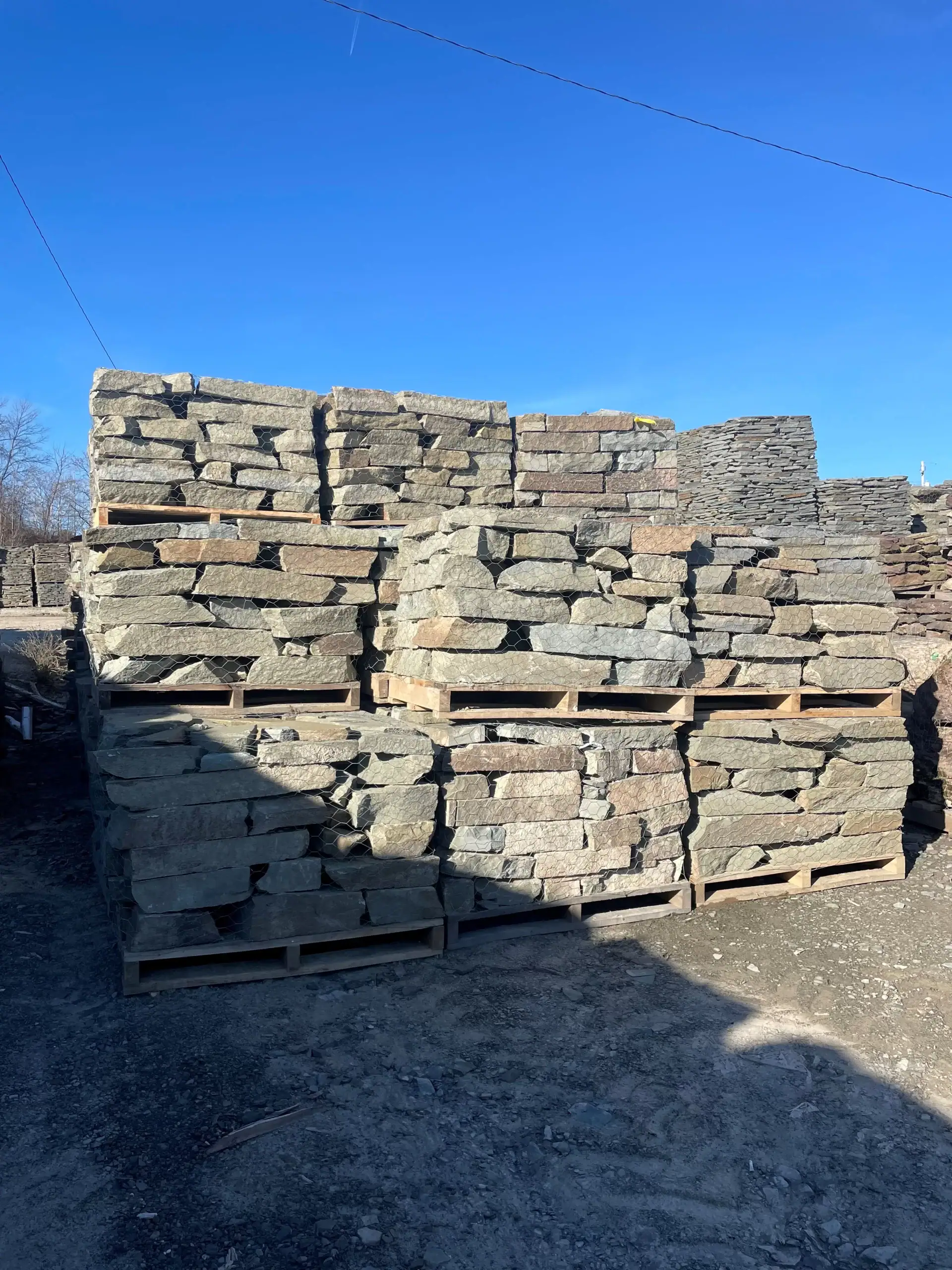
Natural stone veneer, on the other hand, is exactly what it sounds like: real stone, quarried and cut thin enough to be used as a cladding material rather than a structural element. It’s heavier, denser, and — when sourced from a reputable supplier — carries a consistency of character that’s genuinely hard to replicate.
The core difference isn’t just material. It’s performance, longevity, and what the product demands from the installer.
This is the question most homeowners are actually asking when they start researching this topic — they just don’t always phrase it that way. And it deserves a straight answer.
At a distance, quality cultured stone looks convincing. Brands like Eldorado Stone and Dutch Quality Stone — both of which we carry — invest heavily in mold variety and color variation to produce a realistic result. When you’re standing at the street looking at a well-installed cultured stone facade, you’re unlikely to spot the difference.
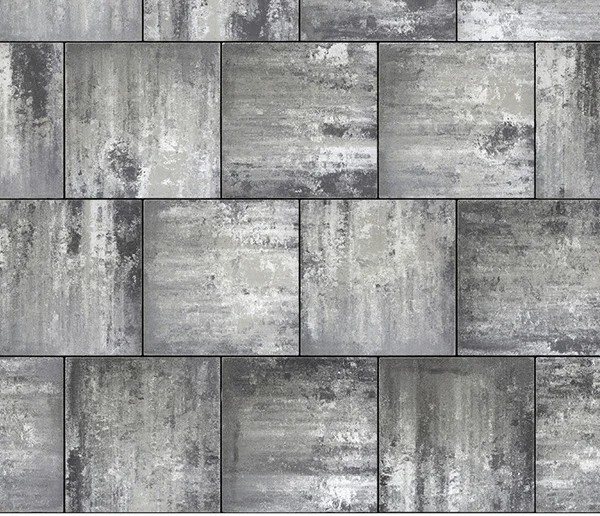
Up close is where it gets more nuanced. Lower-quality manufactured stone can show repeated mold patterns — you’ll notice the same shape appearing multiple times across a wall. Some products also use a surface-painted finish rather than integral color (pigment mixed throughout the concrete), which means the color sits on the outside of the stone rather than running through it. That’s worth knowing because surface color can fade or chip over time, especially on exterior applications exposed to weather.
The better cultured stone products address both of these issues. Integral color is the standard for premium lines, and manufacturers use enough mold variations that pattern repetition becomes much harder to detect. The honest answer is that the quality spectrum within manufactured stone is wide — and the difference between a budget product and a premium one is visible.
If authenticity at close range is a priority for your project — a front stoop, an outdoor kitchen surround, a fireplace wall that people will be standing next to — that’s worth factoring into your decision. If the application is a broader exterior facade viewed primarily from the street or yard, a quality cultured stone product can absolutely hold its own.
One thing that often surprises people: you cannot field-cut cultured stone the way you can with natural stone. Cutting through the product exposes the inner concrete, which affects the appearance at edges and corners. This is a real installation consideration, and it’s something your contractor needs to account for in the layout and planning phase.
This is where local conditions matter — and where a lot of generic comparison articles fall short, because they’re written for a national audience without any reference to what the weather actually does in your area.
Nassau County gets real winters. Temperatures drop below freezing regularly, and the freeze-thaw cycle — water getting into small pores in a material, freezing, expanding, and contracting repeatedly — is one of the most damaging forces for exterior masonry. Add the coastal factor: homes along the South Shore in Long Beach, Oceanside, and Freeport, or on the North Shore in Sea Cliff and Glen Cove, deal with salt air and elevated humidity on top of the temperature swings.
Natural stone veneer has high compressive strength and low water absorption. Those two properties are exactly what you want in a freeze-thaw environment. With proper installation, natural stone veneer has a documented track record of lasting through conditions like these without significant degradation.
Cultured stone’s performance in these conditions is more variable — and it comes back to product quality. Lower-porosity, premium manufactured stone products with integral color perform considerably better than budget options. The concern with surface-painted products is that once the color layer is compromised by weather cycling, the damage is cosmetic and progressive. That doesn’t mean cultured stone is a bad choice for exterior use in Nassau County — it means product selection and installation quality matter more than they might in a milder climate.
There’s also the salt air factor. Painted or coated surfaces tend to degrade faster in coastal environments than materials with integral color or natural composition. If your property is within a mile or two of the water, that’s a relevant consideration when choosing between products — and it’s the kind of thing worth discussing with someone who actually knows the materials, not just selling them.
We’ve been supplying masonry materials to contractors and homeowners across Nassau County for over 25 years, and the projects that hold up best over time are the ones where the product choice was matched to the specific exposure of the site — not just the budget or the aesthetic preference.
Want live answers?
Connect with a Powerhouse Mason Supply expert for fast, friendly support.
Once you’ve decided which direction you’re leaning, finding the right supplier matters as much as finding the right product. This isn’t a category where all suppliers are equal.
The biggest practical difference between buying from a masonry supply distributor versus a big-box store is access to expertise and inventory depth. At a big-box store, you’re typically choosing from a narrow selection of a single brand’s most popular SKUs, with no one on staff who can tell you how the product installs or how it performs in your specific application. At a masonry supply yard with a showroom, you can see multiple products side by side, ask questions from people who have worked with the materials, and make a decision based on actual comparison rather than a product photo.
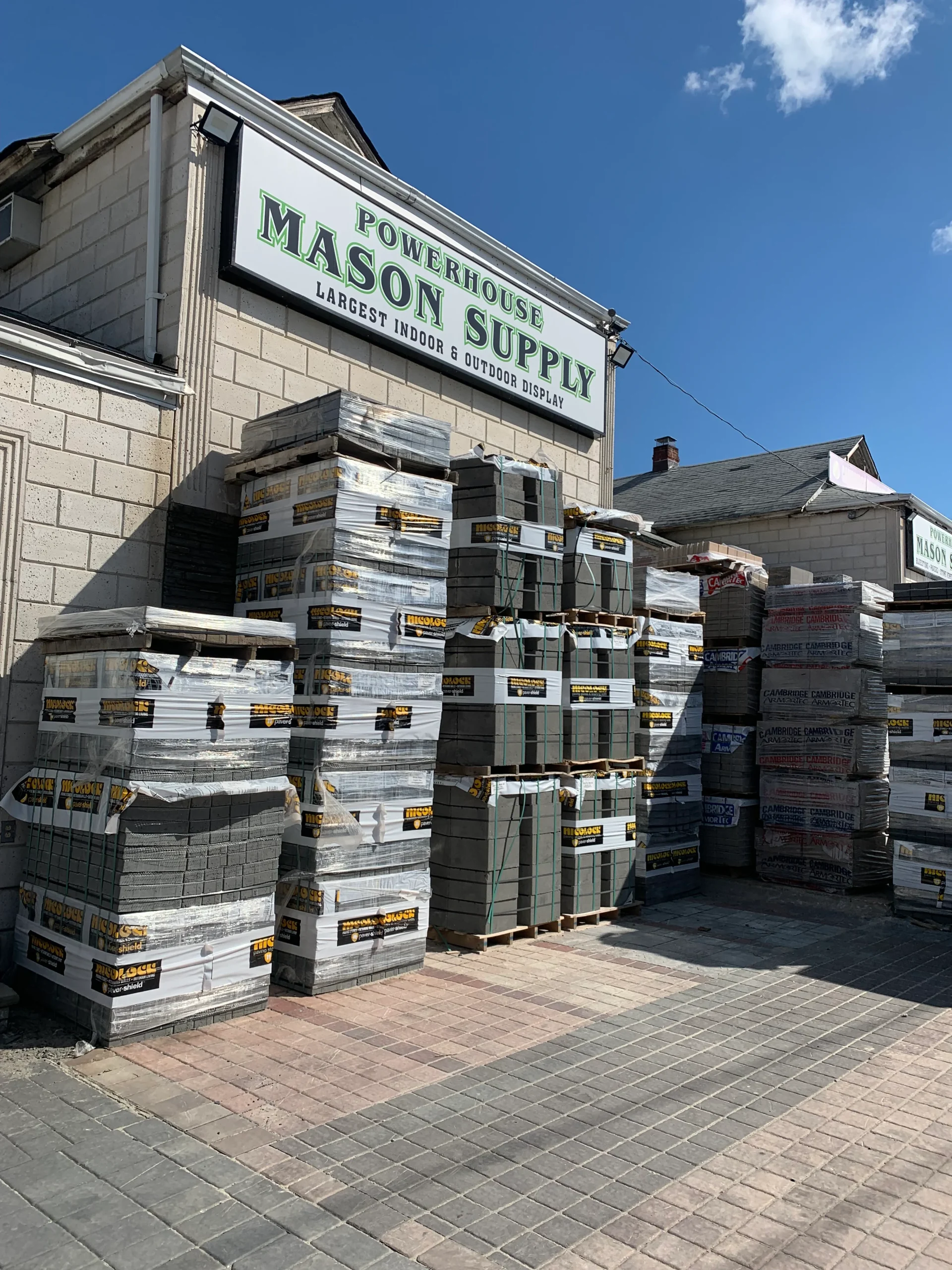
Most buyers don’t know what questions to ask — and most suppliers don’t volunteer the information that would actually help. Here are the things worth asking before you commit to a product.
First, ask about color consistency across inventory. If you’re doing a larger project, you want to confirm that the product you’re ordering comes from the same production run — or that the supplier can source enough material to complete the job without a color mismatch. Supply chain disruptions over the past few years have made this a real issue, not a hypothetical one.
Second, ask about minimum order quantities. Some suppliers require full-pallet purchases, which can leave you with significant overage on a residential project. We’re able to work with customers on order quantities that make sense for their specific job — a flexibility that matters when you’re trying to hit a budget without wasting material.
Third, ask whether the supplier can connect you with a contractor who has experience installing that specific product. Installation quality is the single biggest factor in how any stone veneer performs over time. A product that’s installed incorrectly — without proper moisture barrier, without accounting for the field-trimming limitations of cultured stone, without the right substrate preparation — will underperform regardless of how good the material is. Having a supplier who can point you toward an experienced local installer is a genuine advantage, not just a nice-to-have.
Finally, ask if you can see the product in person before ordering. For a category where color, texture, and scale are nearly impossible to evaluate from a small sample or a website photo, showroom access is worth prioritizing. Our Roslyn Heights location — right here in Nassau County — has a working showroom where you can see stone veneer products at full scale, compare options side by side, and get a real sense of how something will look on your home before you place an order.
“Faux stone” is a term that comes up a lot in searches, and it’s worth clarifying because it doesn’t mean the same thing as cultured stone — even though the two are often used interchangeably in casual conversation.
Cultured stone specifically refers to concrete-based manufactured stone veneer: a product made from Portland cement, aggregate, and pigment, pressed into molds and cured to produce a material with real structural density. It’s a legitimate masonry product with documented performance standards, including ASTM C1670, which governs adhered manufactured stone masonry veneer units.
“Faux stone” is a broader, less precise term that can refer to cultured stone, but it can also describe foam-based panels, vinyl siding with a stone texture, or thin decorative overlays that have no real structural integrity. These products are not the same thing, and they’re not appropriate for the same applications. If you’re looking at exterior cladding, a fireplace surround, or any application where durability and weather resistance matter, you want a concrete-based manufactured stone veneer — not a foam panel that happens to look like stone from a distance.
When you’re evaluating suppliers, this distinction matters. A reputable manufactured stone veneer supplier should be able to tell you exactly what the product is made from, who manufactures it, and whether it carries an ICC-ES evaluation report confirming code compliance. Brands like Eldorado Stone, Dutch Quality Stone, and Casa di Sassi, which we carry, are manufactured stone veneer products with documented specifications — not decorative panels.
The terminology in this category is genuinely confusing, and it’s not always in a supplier’s interest to clarify it. If you’re not sure what you’re looking at, the simplest question to ask is: “Is this a concrete-based product?” If the answer is yes, you’re in manufactured stone veneer territory. If it’s foam or vinyl, you’re looking at something else entirely — and you should understand that before making a decision.
The cultured stone versus natural stone veneer decision isn’t one-size-fits-all. It depends on your project’s exposure, your timeline, your aesthetic priorities, and — honestly — what’s available in sufficient quantity to complete the job without a color mismatch midway through.
What we’d push back on is the idea that one product is always better than the other. Premium cultured stone from a reputable manufacturer is a legitimate, durable product. Natural stone veneer is harder to replicate but comes with its own installation requirements. The right answer is the one that fits your specific project — and that’s a conversation worth having in person, with someone who carries both and has no reason to steer you toward one over the other.
If you’re working on a project in Nassau County and want to see both options side by side before you commit, our Roslyn Heights showroom is the place to start. The team at Powerhouse Mason Supply has been doing this for a long time — and we’re happy to help you figure out which product actually makes sense for what you’re building.
Article details:
Share:
Continue learning: