Not sure where to start with paver stones? This guide walks you through what you need to know before you buy — material types, sizing, and what actually holds up on Long Island.
Share:
Summary:
Most people start thinking about paver stones after seeing a neighbor’s finished driveway or a patio they spotted online. The idea is there. The excitement is real. Then they start researching and quickly realize there are about a dozen decisions to make before they can even talk to a contractor.
Concrete or natural stone? What size? Which brand? How much do you actually need? What holds up in a Nassau County winter?
We’ve designed this guide to answer those questions plainly — without pushing you toward any one product before you understand your options. By the end, you’ll know what to look for, what to avoid, and what questions to ask when you’re ready to take the next step.
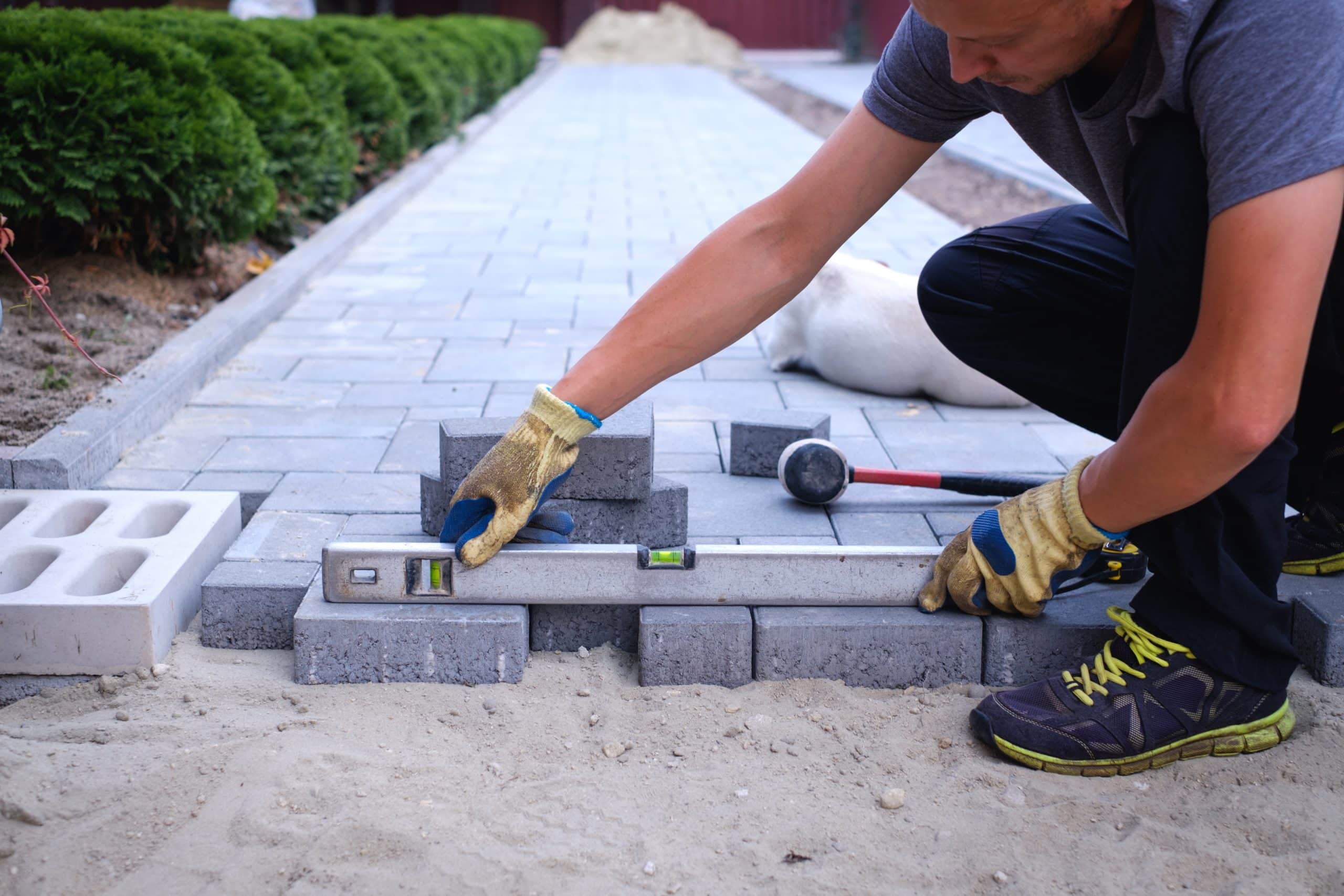
Paver stones are individual units — concrete, natural stone, or porcelain — that interlock or sit side by side to create a stable surface for driveways, patios, walkways, pool decks, and more. Unlike poured concrete, they’re installed as separate pieces over a compacted base, which means individual units can be removed and replaced if something shifts or cracks.
That flexibility is one of the reasons pavers have become so popular in Nassau County. But the type of paver you choose matters more than most people realize — not just for looks, but for how the material performs year after year in this specific climate.
Concrete pavers are manufactured — made from Portland cement, aggregate, and pigment pressed under high pressure. They’re consistent in size, widely available, and generally more affordable than natural stone. The quality varies significantly between manufacturers, though. Lower-end concrete pavers use surface-applied color, which means as the surface wears, the color fades. Higher-quality options, like those made with Paver-Shield™ technology, run the pigment through the entire paver from top to bottom — so what you see on day one is still what you’re looking at ten years later.
Natural stone pavers — bluestone, granite, limestone, travertine, slate — are cut from quarried stone. Each piece is unique, which is part of the appeal. Bluestone and granite are among the most resistant to cracking and cold weather wear, making them well-suited for Nassau County’s freeze-thaw winters. Travertine can work beautifully, but it requires proper sealing to handle freezing conditions — skip that step and you’ll pay for it eventually.
Porcelain pavers sit somewhere in between. They’re manufactured like concrete pavers but fired at extremely high temperatures, making them dense, low-maintenance, and resistant to staining. They’re a strong choice for patios and pool decks where aesthetics are a priority.
The honest answer to “which is better” is that it depends on your project, your budget, and how much maintenance you’re willing to do. What doesn’t change is this: the freeze-thaw cycle Nassau County experiences every winter puts real stress on pavers and their base. Material quality and proper installation aren’t optional — they’re what separates a surface that looks great in year ten from one that’s already shifting in year three.
One of the most common misconceptions about paver stones is that they’re primarily a driveway material. In reality, pavers are used across the entire outdoor footprint of a home — and each application has its own set of considerations.
For driveways, you need a paver that can handle vehicle weight repeatedly without cracking or shifting. Thicker concrete pavers (typically 3 inches or more) and dense natural stone like granite are the standard recommendations. The base preparation underneath matters enormously here — a proper base of compacted crushed stone topped with bedding sand is what keeps a paver driveway level and stable over time. Skimping on the base is the single most common reason paver driveways fail.
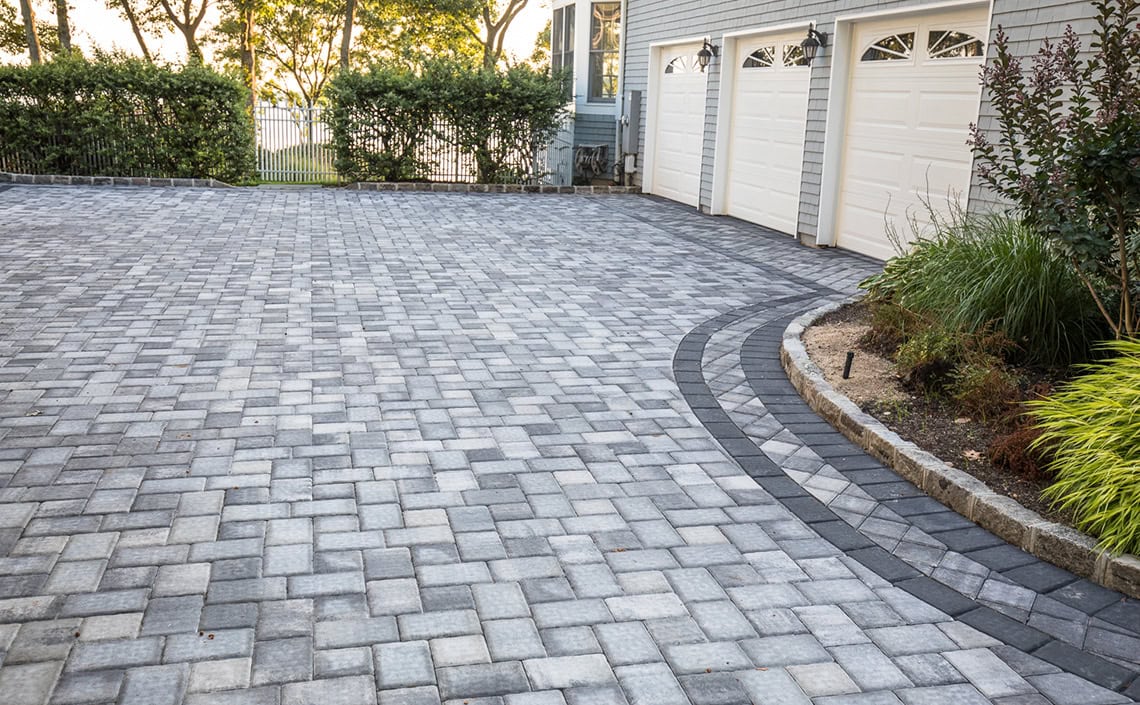
For patios and outdoor living areas, the calculus shifts. You have more flexibility on material because you’re not dealing with vehicle loads, so aesthetics, texture, and how the material feels underfoot become bigger factors. Homeowners in Nassau County’s North Shore communities — Great Neck, Roslyn, Manhasset — often gravitate toward natural stone or premium concrete pavers for their patio projects, where the visual result is as important as the durability.
Walkways and garden paths are typically lower-stakes in terms of load, which opens the door to thinner materials and more creative layouts. Steps and coping require specific products designed for edge applications — this is where coping and tread materials come in, and it’s worth asking your supplier which products are rated for those uses rather than assuming any paver will work.
The broader point is that pavers aren’t a single-use product. If you’re planning a full outdoor renovation — driveway, patio, walkway, steps — sourcing everything from one supplier who can help you coordinate materials across the entire project saves you time and ensures a cohesive look.
Want live answers?
Connect with a Powerhouse Mason Supply expert for fast, friendly support.
Patios are where most Nassau County homeowners focus first, and for good reason. A well-designed patio extends your usable living space for most of the year — Long Island’s springs and summers are genuinely good for outdoor living, and a patio built with the right materials will hold up through the winters in between.
The material decision for a patio is a balance between how you want it to look, how much upkeep you’re willing to do, and what your budget allows. There’s no universally correct answer, but there are some clear patterns based on what works in this climate and what doesn’t.
Bluestone is one of the most popular natural stone choices for Long Island patios, and it earns that reputation. It’s dense, handles freeze-thaw cycles well, and has a classic look that fits the architectural character of Nassau County’s housing stock — particularly the older, established neighborhoods where homes have real character worth complementing. It’s available in both natural cleft (textured, slightly uneven surface) and thermal (smooth, sawn finish), giving you options depending on the look you’re going for.
Granite is another strong performer in cold climates. It’s among the hardest natural stones available, which means it resists scratching, staining, and cracking under freeze-thaw stress. It tends to cost more than bluestone, but the longevity argument is real — natural stone pavers can last 50 to 100 years or more when properly maintained.
Travertine patios look stunning and are popular in warmer climates, but they require more attention in Nassau County. The material is porous, and without proper sealing, water infiltrates the stone, freezes, and causes damage. If you love the look of travertine, it can absolutely work here — just go in with clear eyes about the maintenance commitment.
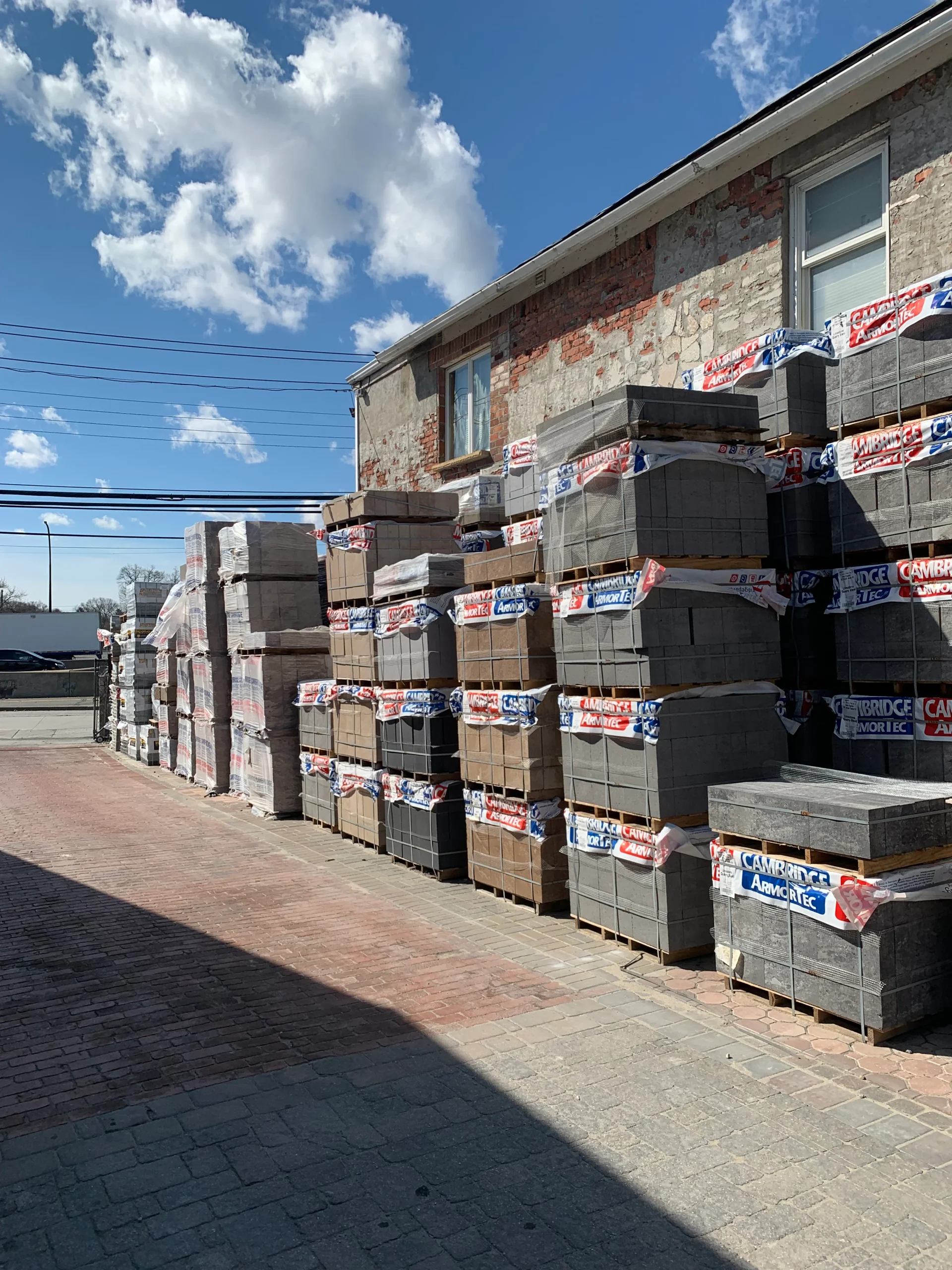
For homeowners who want the look of natural stone without the variability in sizing and the sealing requirements, premium concrete pavers are worth a serious look. The best concrete paver manufacturers have closed the aesthetic gap considerably. Cambridge Pavers and Nicolock — both of which we carry — offer extensive color and texture options designed to mimic natural stone, with the added benefit of consistent sizing that makes installation cleaner and more predictable.
The bottom line for patios: choose a material that fits your climate, your maintenance tolerance, and your design goals — in that order. A patio that shifts and cracks after three winters isn’t beautiful anymore.
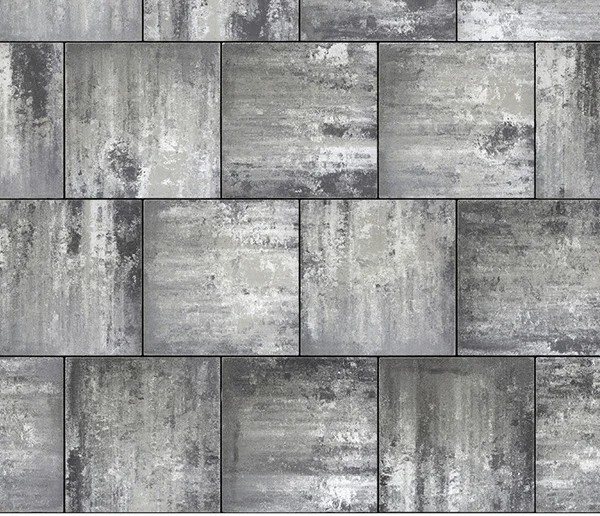
If you’ve been researching patio designs online, you’ve probably come across the large-format paver look — big, clean slabs with minimal joint lines that give a patio a modern, almost seamless appearance. The 24×24 concrete paver is the format driving most of that aesthetic right now, and it’s worth understanding what you’re getting into before you commit.
The appeal is real. Two-foot square pavers dramatically reduce the number of visible joints across a patio surface, which creates a cleaner, more contemporary look. They work especially well for larger patio footprints where smaller pavers would look busy, and they’re a popular choice for pool decks and outdoor living areas where the goal is a sleek, resort-style finish.
The practical considerations are equally real. A 24×24 concrete paver is heavy — significantly heavier than a standard 12×12 or 16×16. Installation requires more physical effort and, more importantly, demands a very flat, very well-prepared base. Any variation in the sub-base shows up immediately with large-format pavers in a way it might not with smaller units. This isn’t a reason to avoid them — it’s a reason to make sure your contractor has experience installing them and that the base work is done correctly from the start.
Large-format pavers are also less forgiving if you ever need to make a repair. Matching a specific color and finish years later can be a challenge with some products, which is another reason sourcing from a supplier with consistent, maintained inventory matters. We bring in Cambridge loads regularly to keep our stock current, which means you’re not hunting for a discontinued color two years after your patio was installed.
As a concrete paver supplier serving Nassau County, we can walk you through the specific 24×24 options we carry, help you understand which products are appropriate for your project type, and connect you with local contractors who have hands-on experience with large-format installations. Seeing the actual material in our Roslyn Heights showroom — not a photo on a screen — is the step most buyers say changed their decision.
The most important thing to take from this guide is that the decisions you make before installation determine everything that comes after. Material type, size, base preparation, and where you source your pavers all affect how your project performs through Nassau County’s winters and looks five or ten years from now.
You don’t need to have it all figured out before you talk to someone. In fact, the best time to ask questions is before you’ve committed to anything. Come into our Roslyn Heights showroom, see the materials in person, and talk through your project with someone who’s been doing this on Long Island for over 25 years.
Powerhouse Mason Supply is here to help you make a confident, informed decision — not just sell you a pallet of pavers. If you’re ready to get started, we’re ready to help.
Article details:
Share:
Continue learning: