Not all exterior veneer panels are created equal — and in Nassau County's climate, the wrong choice can cost you. Here's what to know before you buy.
Share:
Summary:
Most homeowners searching for exterior veneer panels already have a look in mind. What they don’t always have is a clear picture of which product fits their home, what proper installation actually requires, or where to source materials locally without ending up at a big-box store holding a two-inch sample and hoping for the best.
If you’re in Nassau County and you’re getting serious about an exterior upgrade, this guide is worth reading before you spend a dollar. We’ll walk through the product types, what Long Island’s climate demands from them, and how to avoid the installation mistakes that home inspectors see constantly on stone-clad homes across the region.
“Stone veneer” gets used as a catch-all, but it covers several very different products. Understanding the distinction matters — not just for aesthetics, but for how each type performs on a Nassau County exterior over time.
Cultured stone is engineered from concrete, aggregates, and pigment, molded from real stone to replicate its texture and variation. It’s the most commonly used option for residential exteriors because it’s lightweight, consistent in quality, and significantly more affordable than full natural stone. Panel stone veneers take that a step further — larger format pieces that install faster and create a cleaner, more contemporary look. Real stone veneers, including travertine and marble, are available for projects where the budget and the aesthetic call for something at the higher end.
The right choice depends on your home’s style, your budget, and honestly, what you want the finished product to feel like when you’re standing in front of it.
Stacked stone veneer panels are the horizontal, layered profile that’s become one of the most requested exterior looks on Long Island — and for good reason. It reads as substantial and architectural without overwhelming the home. You’ll see it used on full front facades, lower-third banding below a main siding material, entryway columns, and outdoor kitchen surrounds. It’s versatile in a way that a lot of exterior materials aren’t.
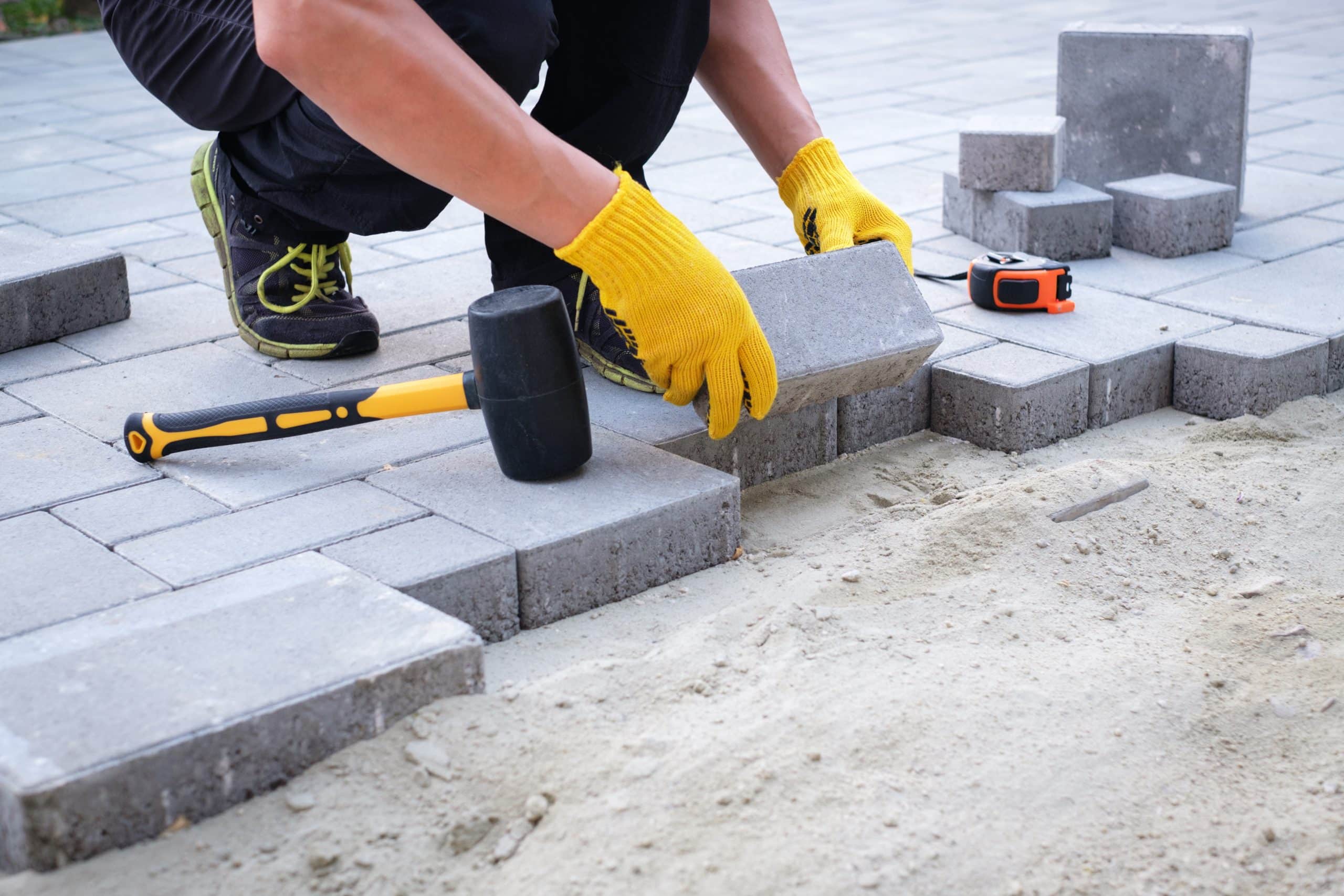
What most buyers don’t realize until they’re mid-project is that the look they want and the installation those panels require are two separate conversations. Stacked stone panels are heavier than they appear in photos, and the substrate they go onto has to be properly prepared. On a wood-framed home — which describes most of Nassau County’s post-WWII housing stock — that means a weather-resistant barrier first, then metal lath, then a scratch coat of mortar before a single panel goes up. Skip any of those steps and you’re not looking at a cosmetic problem down the road. You’re looking at moisture behind the wall, potential mold, and wood rot that’s expensive and disruptive to fix.
Home inspectors describe stone veneer as one of the most problematic exterior sidings they encounter — not because the product is bad, but because it gets installed incorrectly more often than almost anything else. The failure mode is almost always the same: water finds a way behind the veneer because the installation didn’t account for it. Kickout flashing at roof-wall intersections gets skipped. The gap around windows and doors gets filled in because it looks cleaner. The stone gets buried in soil or sits too close to a concrete surface, and water wicks up into the material.
This is why who you buy from matters as much as what you buy. A supplier who can tell you exactly what that installation should look like — and connect you with a contractor who actually does it that way — is worth more than the cheapest price per square foot.
Within the stacked stone category, exterior ledgestone is a specific profile worth understanding on its own. Ledgestone panels use a tighter, more linear pattern than traditional stacked stone — the individual pieces are flatter and more uniform in height, which gives the finished wall a cleaner, almost architectural quality. It works particularly well on the North Shore’s more formal colonial and center-hall homes, where you want the texture of stone without anything that reads as rustic.
The practical advantage of panel-format ledgestone is the installation speed. Panels are designed to interlock — some use a Z-joint system that makes the seam between panels nearly invisible once installed, so the wall reads as continuous stone rather than assembled sections. That matters visually, and it also means fewer grout lines where water can potentially enter.
For Nassau County homeowners, the freeze-thaw question comes up with ledgestone the same way it does with any exterior stone product. Water is porous by nature, and if it gets into the face of a panel and then freezes, the expansion can cause the surface to chip or spall over time. Quality matters here. Established manufacturers engineer their products specifically for this kind of climate exposure — they test for freeze-thaw resistance, and their installation specs account for it. Buying a ledgestone panel from an unfamiliar source to save a few dollars per square foot is one of the more reliable ways to end up with a facade that looks great for two winters and then starts failing on the third.
The brands we carry — including Eldorado Stone, Dutch Quality Stone, Casa di Sassi, and Cultured Stone — are manufactured to documented standards and come with published installation specifications. That’s not a marketing point; it’s a practical one. When a contractor installs a product with a published spec sheet, there’s a clear standard to hold the work to.
Want live answers?
Connect with a Powerhouse Mason Supply expert for fast, friendly support.
There’s a gap in the buying process that catches a lot of Long Island homeowners off guard. They research products online, find something they like, and then realize they can’t actually see it locally, the contractor they hired doesn’t carry it, or the color that looked right on a small sample looks completely different installed across a full facade.
The sourcing step is where projects quietly go sideways before a single piece of stone gets installed. Getting it right means buying from a supplier who has the product in stock, can show it to you in person, and understands what your project actually needs — not just what you’re asking for.
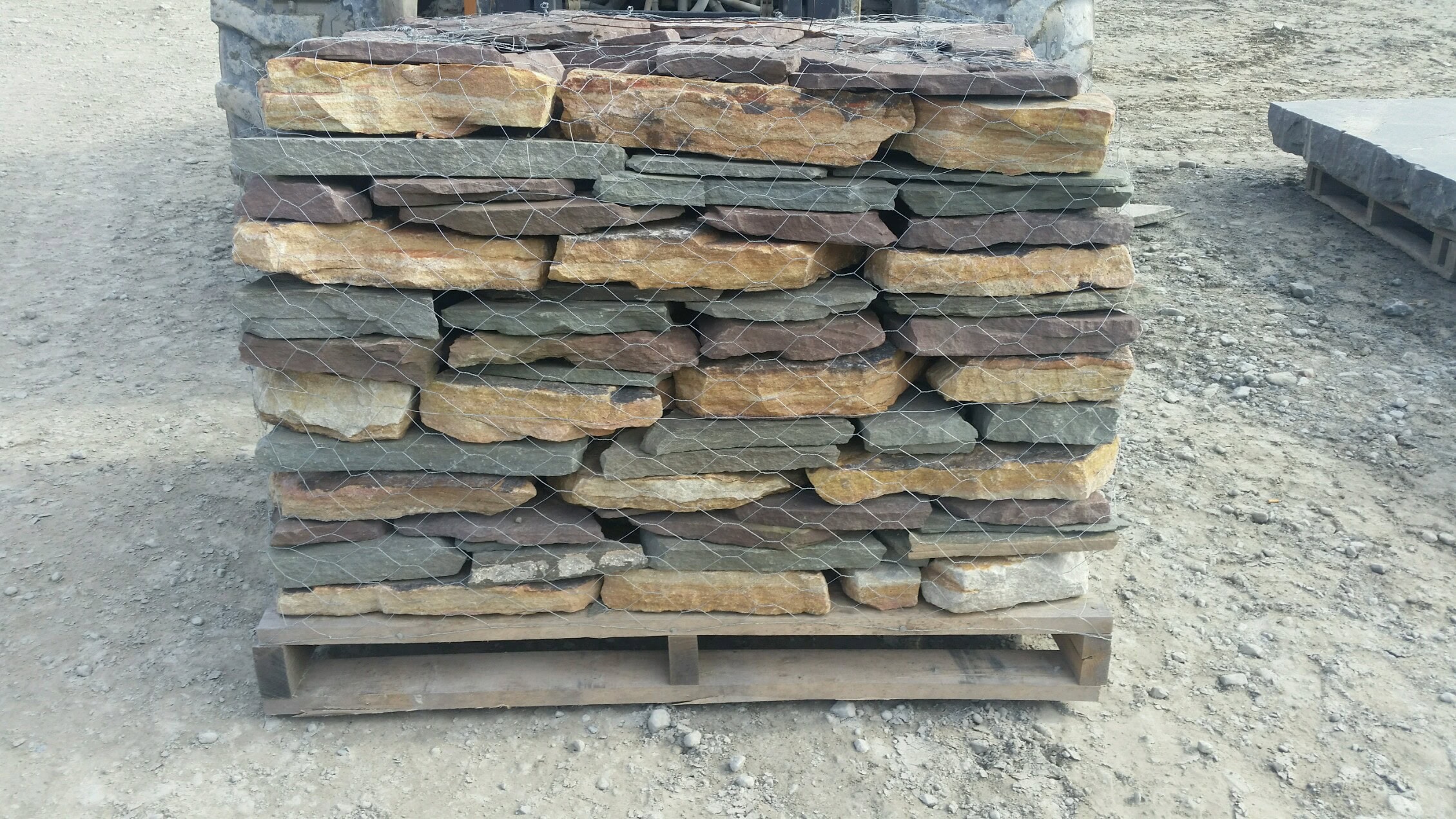
Color is the single biggest variable that photos and sample cards can’t communicate accurately. Stone veneer — whether it’s a cultured panel or a natural ledgestone — has depth, variation, and shadow that only show up at scale. A product that looks warm and earthy in a three-inch sample can read completely differently installed across a twelve-foot wall in direct afternoon sun.
This is one of the main reasons we operate showrooms at our Roslyn Heights and Amityville locations. Roslyn Heights puts us squarely in the heart of Nassau County’s North Shore — convenient for homeowners in Great Neck, Manhasset, Port Washington, Oyster Bay, and the surrounding communities. Amityville serves the South Shore. At either location, you can see actual products at a scale that gives you a realistic sense of what the finished result will look like before you commit to anything.
It’s also where the expert guidance piece becomes concrete rather than theoretical. Our staff can look at photos of your home, understand the style you’re going for, and point you toward products that will actually work — both aesthetically and structurally. That kind of back-and-forth is hard to replicate online, and it’s genuinely useful when you’re making a decision that will be on the front of your house for the next twenty years.
For contractors, the showroom visit is often a project-saving step. Bringing a client in to select materials together eliminates the misalignment that happens when a homeowner describes a look and a contractor interprets it differently. Everyone sees the same product, agrees on the same selection, and the project starts with a shared understanding instead of a revision mid-installation.
Most people think about stone veneer as a curb appeal upgrade. It is — but framing it only that way undersells what the data actually shows. According to the 2025 Zonda Cost vs. Value Report, manufactured stone veneer delivered a 208% return on investment nationally, making it the third-highest-returning home improvement project evaluated out of 28. The average project cost around $11,702 and returned roughly $24,328 in added resale value.
In Nassau County’s real estate market, where single-family homes routinely sell in the $700,000 to well over $1 million range, that ROI argument carries even more weight. A well-executed stone veneer installation on a home in Manhasset or Oyster Bay isn’t just a cosmetic improvement — it’s a measurable contribution to the home’s market value.
There’s also a cost comparison that surprises a lot of buyers: stone veneer doesn’t require the structural modifications that full natural stone does. Natural stone is heavy enough that it often demands additional foundation work or structural support before installation can begin. Stone veneer doesn’t. That difference alone can save $10,000 or more on a project before you’ve even factored in the material costs themselves.
Material costs for stone veneer panels typically run $5.50 to $12.00 per square foot depending on the product, with installation in Nassau County generally ranging from $11 to $54 per square foot based on complexity and the specific material selected. These ranges give you a working framework for budgeting before you get to a formal quote — which is a useful starting point when you’re trying to understand whether a project makes sense for your home.
One more thing worth knowing: we maintain a large inventory across our three Long Island locations specifically to prevent mid-project delays. In stone veneer work, a material shortage mid-installation isn’t just an inconvenience — replacement product from a different production run may not match the color of what’s already on the wall. Inventory depth is a practical detail that matters more than it sounds.
The right exterior veneer panels for a Nassau County home come down to three things: choosing a product that’s rated for this climate, making sure it gets installed correctly, and sourcing it from a supplier who can support both of those outcomes — not just hand you a box and send you on your way.
We’ve been doing this on Long Island for over 25 years. We carry the brands, we maintain the inventory, and we can connect you with experienced local contractors who know how to install stone veneer the right way. If you want to see products in person before you commit, our showrooms in Roslyn Heights and Amityville are open Monday through Friday and Saturday mornings.
When you’re ready to talk through your project, Powerhouse Mason Supply is here. Reach out for a quote or stop in — either way, you’ll leave with real answers.
Article details:
Share:
Continue learning: