Not sure where to start with a paver driveway? This guide covers materials, budgeting, and what Nassau County homeowners should know before buying.
Share:
Summary:
Most Nassau County homeowners start researching paver driveways after one of two things happens: their driveway finally reaches the point of no return, or they see a neighbor’s installation and start wondering what it would actually cost. Either way, the first thing you find online is a price range so wide it’s nearly useless — anywhere from $10 to $50 per square foot depending on who you ask and what they’re including.
That range isn’t wrong. It’s just incomplete. The real question isn’t “how much do paver driveways cost?” It’s “how do I figure out what mine will cost, and how do I make sure I’m getting what I’m paying for?” That’s what this guide is here to answer.
The $10–$50 per square foot range reflects real variation — not just contractor markup. On the lower end, you’re looking at standard concrete pavers with a basic pattern and a straightforward installation. On the higher end, you’re getting premium natural stone or large-format porcelain, more complex design work, and a base that’s built to last through decades of Long Island winters.
Materials alone typically run $2–$8 per square foot for concrete pavers, with natural stone and porcelain pushing higher depending on the specific product. Labor, base preparation, and delivery make up the rest. And base prep is not where you want to cut corners — a proper paver driveway requires at least 4 inches of compacted recycled concrete aggregate followed by a 1-inch sand setting bed.
Skip that step and you’ll be dealing with shifting, sinking pavers within a few years. The contractor may be long gone by then, and “warranty doesn’t cover ground movement” is suddenly in the fine print.
Here’s something most buyers don’t think about until it’s too late: the contractor and the materials supplier are two separate decisions. Many homeowners hire a contractor and assume the material question is handled. But the contractor’s incentive isn’t always aligned with yours — some use generic, unbranded products and remove all labeling before they arrive on your property.
You paid for a premium product; you got something else. Choosing your block paving supplier before you hire a contractor gives you real leverage. You know what brand you’re getting, you can verify it’s in stock, and you’re not dependent on a contractor’s preferred vendor relationship.
What separates a good masonry supply yard from a mediocre one comes down to a few things: inventory depth, brand authorization, staff knowledge, and flexibility. Can they break a pallet if you don’t need a full one? Do they carry the brands you’ve actually researched — Cambridge, Nicolock — or are they substituting with cheaper alternatives? Do they have a showroom where you can see materials in person before committing?
We’ve been supplying Long Island homeowners and contractors for over 25 years, and the customers who have the smoothest projects are almost always the ones who came into our Roslyn Heights showroom first. They knew what they wanted, they’d seen it in person, and they weren’t relying on a contractor’s word that the material was right. That’s not a knock on contractors — most are excellent. It’s just a smarter way to buy.
Our Roslyn Heights location on Powerhouse Road is the closest showroom to Nassau County homeowners. We carry Cambridge Pavingstones and Nicolock — two of the most recognized paver brands in the Northeast — along with natural stone, porcelain, and a range of other materials. We stock an abundance of both and bring in fresh Cambridge loads regularly to make sure availability is never the reason your project gets delayed.
Concrete pavers dominate the Nassau County market for good reason — they’re engineered for freeze-thaw conditions, they’re consistent in size and color, and brands like Cambridge and Nicolock back them with real warranties. But they’re not the only option, and for some homeowners, they’re not the right one.
Natural paving materials — bluestone, granite, travertine, limestone, flagstone — offer a look that manufactured pavers can’t fully replicate. Granite in particular is exceptionally hard and handles vehicle traffic well. Bluestone is a classic on Long Island and holds up in our climate when properly sealed. Travertine has a warmer, more Mediterranean feel and works beautifully in certain design contexts, though it does require more maintenance than concrete pavers.
The honest trade-off with natural stone is upkeep. Most natural stone driveways need to be sealed periodically to protect against moisture penetration — and in Nassau County, where road salt and freeze-thaw cycles are a yearly reality, that maintenance matters. Frozen water expands with enough force to widen cracks and cause serious damage over time. Natural stone that isn’t properly sealed is more vulnerable to that process than a concrete paver engineered specifically for cold climates.
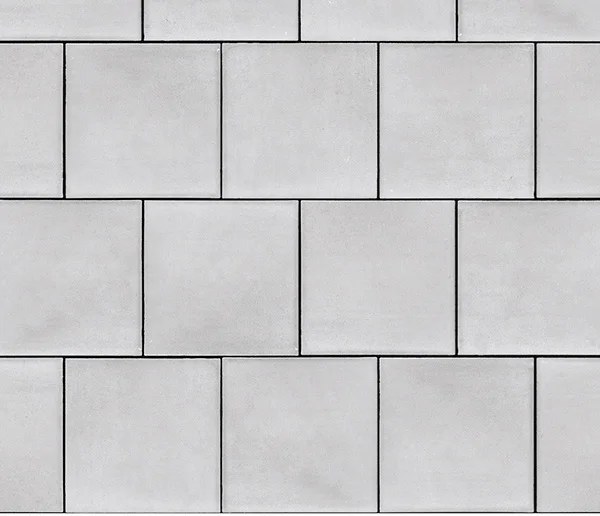
Porcelain pavers occupy an interesting middle ground. They’re virtually non-porous, which means moisture can’t penetrate them the way it can natural stone. They don’t need sealing. They’re frost-resistant and hold up to salt exposure better than most materials. The trade-off is that they require a more precise installation — the base and setting bed have to be exactly right, and not every contractor has experience with large-format porcelain.
When it’s done well, a porcelain driveway is as low-maintenance as it gets. We carry all of these options and can walk you through the specific differences at our showroom. The right material depends on your design preferences, your maintenance tolerance, and your budget — and those are conversations worth having before you sign anything with a contractor.
Want live answers?
Connect with a Powerhouse Mason Supply expert for fast, friendly support.
Nassau County homeowners deal with something that buyers in milder climates don’t have to think about: every winter, water gets into small gaps in your driveway, freezes, and expands with up to 25,000 pounds per square inch of pressure. That’s what cracks concrete slabs and heaves asphalt. Pavers handle this differently — because they’re individual units set in sand, they can shift slightly without fracturing.
If one gets damaged, you replace that paver, not the whole driveway. That’s the functional argument for pavers in this climate. But it’s not the only one. With Nassau County’s median home values approaching $827,000 and homes regularly selling above asking price, curb appeal has real financial weight here.
A paver driveway that’s been installed correctly and maintained properly can last 50 to 75 years — well beyond the lifespan of asphalt, which typically needs resurfacing every 5 to 7 years in Long Island’s climate.
This is one of the most important technical questions buyers don’t think to ask — and it’s where a lot of budget installations fail. For driveway applications, pavers need to be at least 2 inches thick. Anything thinner and the paver may crack under repeated vehicle weight, even with a solid base beneath it. This isn’t a preference; it’s a structural requirement.
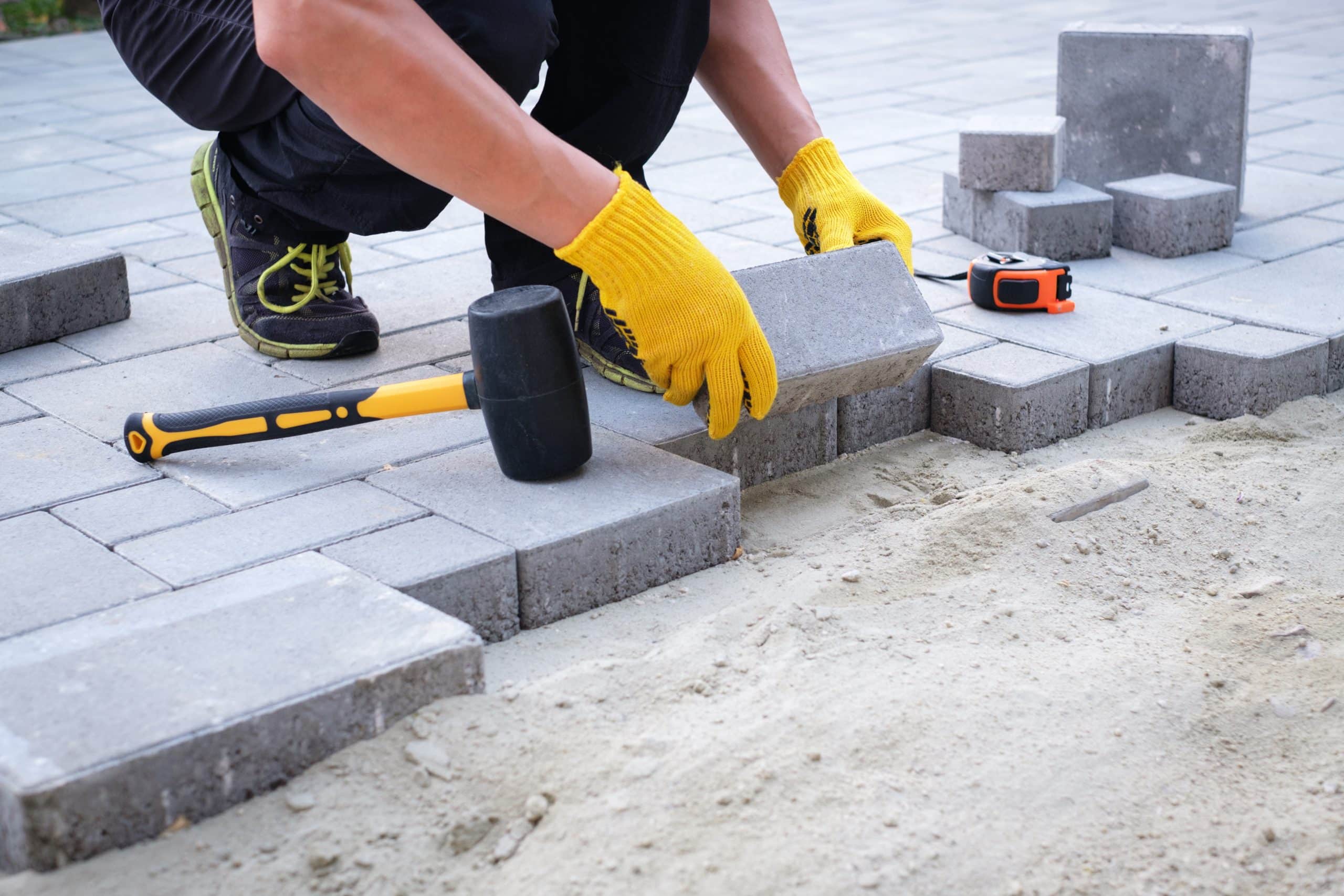
The base is equally important. A properly built paver driveway base starts with at least 4 inches of compacted recycled concrete aggregate, fully compacted in lifts. On top of that goes a 1-inch sand setting bed, which gives the pavers a level surface to sit on and allows for slight movement without displacement.
In Nassau County’s soil conditions — which can include clay-heavy areas that don’t drain as efficiently as sandy soil — that base depth sometimes needs to go deeper, especially in driveways where vehicles are making turns and applying lateral stress to the pavers. The reason base preparation gets skipped or skimped on is simple: it’s not visible when the job is done.
A contractor who cuts corners on the base can produce a driveway that looks perfect on day one and starts sinking within two or three years. Asking your contractor specifically about base depth, compaction method, and what they’re using for aggregate is one of the most useful questions you can ask before signing a contract. If you’re not sure what questions to ask, that’s something we can help with.
Our team has a generational background in masonry — this isn’t retail knowledge, it’s applied knowledge from people who have actually built with these materials. We’re happy to walk you through what a proper installation looks like so you know what to expect from your contractor.
**Do paver driveways increase home value in Nassau County?**
They do, and the numbers are meaningful in this market. Studies suggest paver driveways and hardscape improvements can return anywhere from 50% to over 100% of their cost at resale, depending on the scope of the project and the neighborhood. In Nassau County — where homes in Garden City, Great Neck, Manhasset, and Roslyn are selling above asking price and inventory is tight — curb appeal improvements carry extra weight. Buyers are making decisions quickly, and a driveway that looks worn or dated can affect perceived value before a buyer even walks through the door.
**How long does a paver driveway last in Long Island’s climate?**
A properly installed concrete paver driveway can last 50 to 75 years. That’s a function of how interlocking pavers work. Because individual units can flex slightly during freeze-thaw cycles rather than cracking as a slab would, the structural integrity holds up much longer than poured concrete. The key word is “properly installed.” The base preparation, paver thickness, and jointing material all determine whether that lifespan is achievable.
**What’s the difference between concrete pavers and brick pavers?**
True clay brick pavers are fired from clay. Concrete pavers are precast from cement, sand, gravel, and pigment under controlled manufacturing conditions — resulting in very high compressive strength and dimensional consistency. Brands like Cambridge and Nicolock make concrete pavers specifically engineered for freeze-thaw resistance and salt exposure, which makes them particularly well-suited to Nassau County. Both are commonly referred to as “brick pavers” in everyday conversation, but they’re different products with different performance characteristics.
**Do I need to seal my paver driveway?**
For concrete pavers, sealing is optional but recommended — it enhances color, reduces staining, and helps polymeric sand stay in place between joints. For natural stone, sealing is more important, especially in Nassau County where road salt and coastal moisture accelerate surface breakdown. Porcelain pavers generally don’t need sealing at all, which is one of the reasons they’ve become more popular in recent years. Whatever material you choose, ask your supplier about the specific maintenance requirements before you buy.
**Can I buy pavers without purchasing a full pallet?**
At most masonry yards, the answer is no — they sell by the pallet only. We’re able to break pallets when the project size calls for it, which is particularly useful for partial driveway repairs or smaller accent areas. It’s worth asking before you assume you need to buy more than you need.
The smartest thing you can do before calling a single contractor is visit a showroom and see the materials in person. Photos online don’t tell you how a paver actually feels underfoot, how the color holds up in direct sunlight, or how different products compare side by side. That visit also gives you a foundation — you’ll know what you want, you’ll be able to specify it by brand and product name, and you won’t be relying entirely on a contractor’s recommendation.
Our Roslyn Heights showroom is the place to start if you’re in Nassau County. We carry Cambridge Pavingstones, Nicolock, natural stone, and porcelain options, and our team can help you match material to budget, climate, and design — without pushing you toward anything that doesn’t make sense for your project. We can also connect you with experienced local installers through our contractor referral network if you need help finding someone qualified to do the work.
Reach out to Powerhouse Mason Supply when you’re ready to take the next step. We’ve been doing this for over 25 years, and we’re here to make sure you buy the right thing the first time.
Article details:
Share:
Continue learning: