Long Island's winters are brutal on driveways. Here's how to choose a stone driveway material that actually holds up in Nassau County's climate.
Share:
Summary:
If you’ve watched your concrete driveway crack, heave, and crumble through a few Nassau County winters, you already know that not every material is built for this climate. The freeze-thaw cycle alone — which hits Long Island roughly 30 to 40 times a season — is enough to work its way into any surface that isn’t engineered to handle it. Add in road salt, coastal salt air from the Sound or the Atlantic, and decades of wear, and you’ve got a real test.
The good news is that stone driveways, when you choose the right type and have them installed properly, are built for exactly this environment. The question is which type is right for your home, your budget, and your block.
Granite cobblestone — often called Belgian block around Nassau County — has been paving roads and driveways on Long Island for well over a century. There’s a reason it keeps showing up in Garden City, Old Westbury, Manhasset, and Roslyn. It works.
Granite is among the hardest natural stones available, which makes it exceptionally resistant to the mechanical stress of freeze-thaw cycles. Water can’t penetrate it the way it seeps into concrete, so you don’t get the same expansion and cracking from the inside out. It also holds up against road salt and the ambient salt air that comes with living near the water — a factor that accelerates surface degradation on softer materials much faster than most homeowners expect.
Full cobblestone driveways are striking, but they’re not the only way to use this material. Many Nassau County homeowners use granite Belgian block for driveway aprons, borders, and edging — framing a concrete paver or asphalt surface with a band of cobblestone that adds structure and a polished, finished look. It’s a practical approach that gives you the aesthetic without the full cost of a cobblestone field.
That said, full cobblestone driveways are genuinely worth considering if you’re looking at a long-term investment. These surfaces can last 50 years or more with minimal intervention. Individual stones can be reset if one shifts or settles — you’re not resurfacing the whole driveway, just addressing the specific spot. That’s a meaningful advantage over poured concrete, which, once it cracks significantly, typically needs to be broken out and replaced entirely.
One thing to know going in: cobblestone driveways have a naturally uneven surface. Most people find the look and feel charming, but if you’re parking a low-clearance vehicle or you have mobility concerns, it’s worth factoring in. The texture also provides excellent traction in wet conditions — something that matters during Nassau County’s icy winters.
From a neighborhood standpoint, cobblestone and Belgian block tend to meet or exceed HOA aesthetic standards in communities where those guidelines exist. In higher-property-value areas across Nassau County, a cobblestone border or full driveway often reads as a premium upgrade that adds genuine curb appeal without looking out of place.
If you’re unsure whether cobblestone is the right fit for your home, visiting our Roslyn Heights showroom where you can see the material in person makes a significant difference. You get a much clearer sense of scale, color, and texture than any photo can give you.
The material is only part of the equation. How a cobblestone driveway is installed determines how well it holds up over time. The most common cause of shifting, sinking, or uneven cobblestone isn’t the stone itself — it’s an inadequate base beneath it.
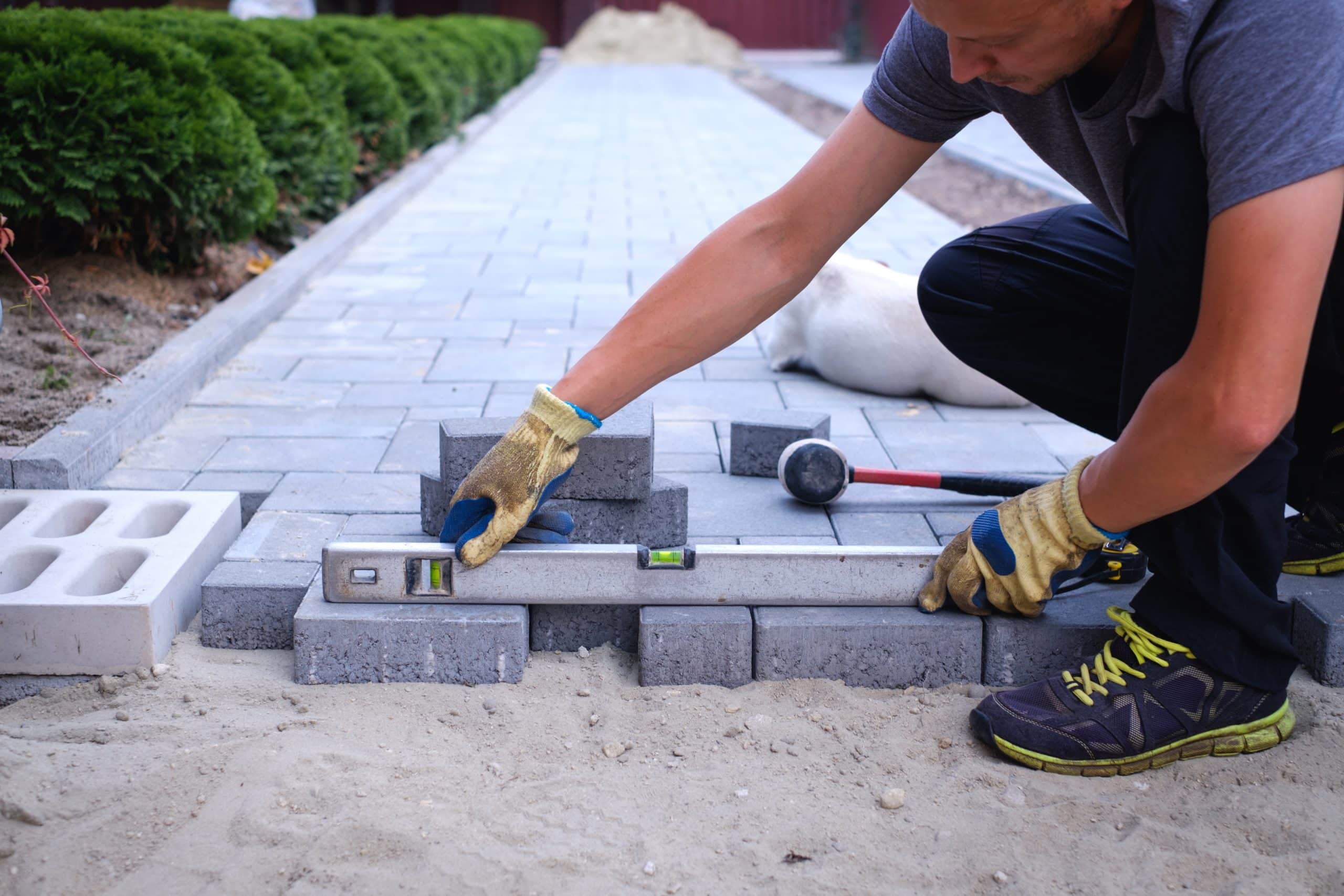
A properly installed cobblestone driveway starts with a compacted crushed stone base, typically six to eight inches deep depending on the soil conditions and expected load. Nassau County’s clay-heavy soils retain moisture, which makes proper base depth and drainage engineering especially important. If water pools beneath the surface and freezes, even granite cobblestone will eventually shift. A contractor who skips base prep to cut time or cost is setting you up for problems within a few seasons.
Ask your contractor specifically about base depth, drainage provisions, and whether they’ll be using a sand setting bed beneath the cobblestone. These aren’t trick questions — any experienced installer will answer them without hesitation. If someone gets evasive or dismissive about base prep, that’s a signal.
Also worth asking: what happens if a stone shifts or needs to be replaced five years from now? With cobblestone, the answer should be simple — individual stones can be pulled and reset without touching the surrounding surface. That’s the repairability advantage that poured concrete simply doesn’t offer.
Nassau County contractors operating in this space need to hold a county-issued home improvement license. We connect our customers with vetted local installers as part of what we do — it’s a practical resource that saves a lot of headaches.
Want live answers?
Connect with a Powerhouse Mason Supply expert for fast, friendly support.
When people picture a natural stone driveway, they’re often thinking of large-format slabs or interlocking pavers in travertine, bluestone, limestone, granite, or slate. These materials offer a range of looks — from the warm, earthy tones of travertine to the cool blue-gray of bluestone — and they perform very differently from one another in Nassau County’s climate.
The right choice depends on a few things: where your home is located, how much sun and shade the driveway gets, whether you’re near the water, and how much maintenance you’re willing to do. Not every natural stone is equally suited to Long Island’s conditions, and understanding the differences before you buy is what separates a driveway that looks great for decades from one that starts showing wear after a few winters.
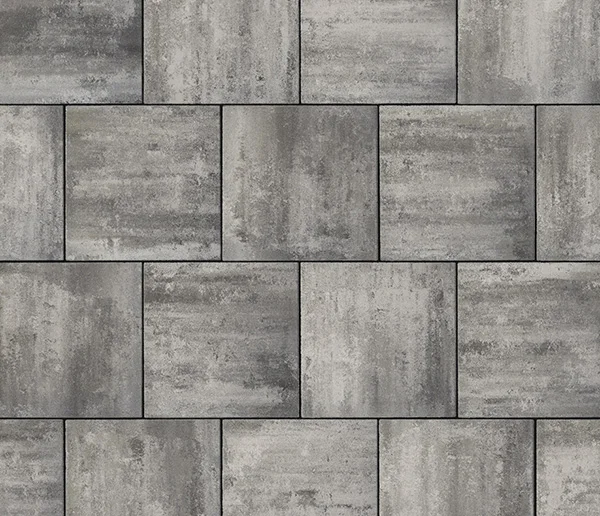
Granite is the clear frontrunner for freeze-thaw resistance among natural stones. It’s dense, low-porosity, and doesn’t absorb water readily — which means there’s less opportunity for the freeze-expand-thaw cycle to work its way into the material. If you’re on the north shore of Nassau County in a community like Roslyn, Port Washington, or Glen Cove, where winters tend to be particularly harsh and salt air is a constant, granite natural stone pavers are a strong choice.
Bluestone is another popular option on Long Island, and for good reason. It’s durable, handles foot and vehicle traffic well, and has a clean, classic look that works with a wide range of home styles. It does absorb more moisture than granite, so sealing is important — especially in coastal areas where salt exposure accelerates surface wear. Sealed properly and maintained every few years, bluestone holds up well.
Travertine is one of the more visually distinctive natural stones, with its warm tones and subtle texture. It’s widely used for patios and pool surrounds on Long Island, and it can work for driveways in the right application. The key caveat is that travertine is more porous than granite or bluestone, which means freeze-thaw performance is more dependent on proper sealing and drainage. In areas with heavy winter traffic or significant salt exposure — say, a south shore home in Massapequa or Rockville Centre — it requires more attention than granite or bluestone would.
Limestone and slate round out the natural stone options we commonly see requested for Long Island driveways. Limestone has a softer, more refined look but is also softer in terms of hardness, making it more susceptible to surface wear under vehicle loads. Slate is beautiful and handles moisture reasonably well but can be brittle under heavy impact. Both can work in the right context, but they’re better suited to lower-traffic applications or accent areas rather than a primary driveway surface.
The right material depends on your specific exposure, your aesthetic goals, and how much ongoing maintenance you’re prepared to do. That’s exactly the kind of question our team at the Roslyn Heights showroom helps customers work through — not with a script, but with a real conversation about your project.
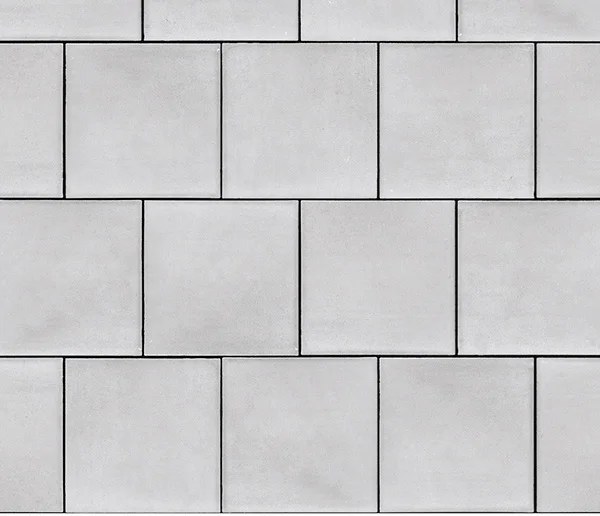
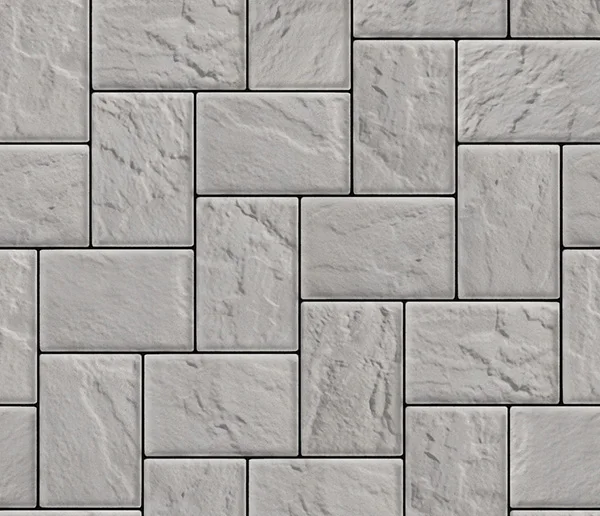
A paving stone driveway doesn’t have to mean natural stone. Concrete pavers — products like those made by Nicolock, which is manufactured right in Lindenhurst — offer a different value proposition: consistent sizing, engineered performance standards, and in many cases a transferable limited lifetime warranty. Nicolock products exceed the standards set by the Interlocking Concrete Pavement Institute (ICPI) and ASTM, which gives you a verifiable quality benchmark.
The practical difference between natural stone pavers and concrete pavers comes down to a few things. Natural stone is one-of-a-kind — each piece has its own variation in color and texture, which is part of the appeal. Concrete pavers are manufactured to uniform dimensions and consistent color profiles, which makes large installations more predictable and, in some cases, easier to match if repairs are needed years later.
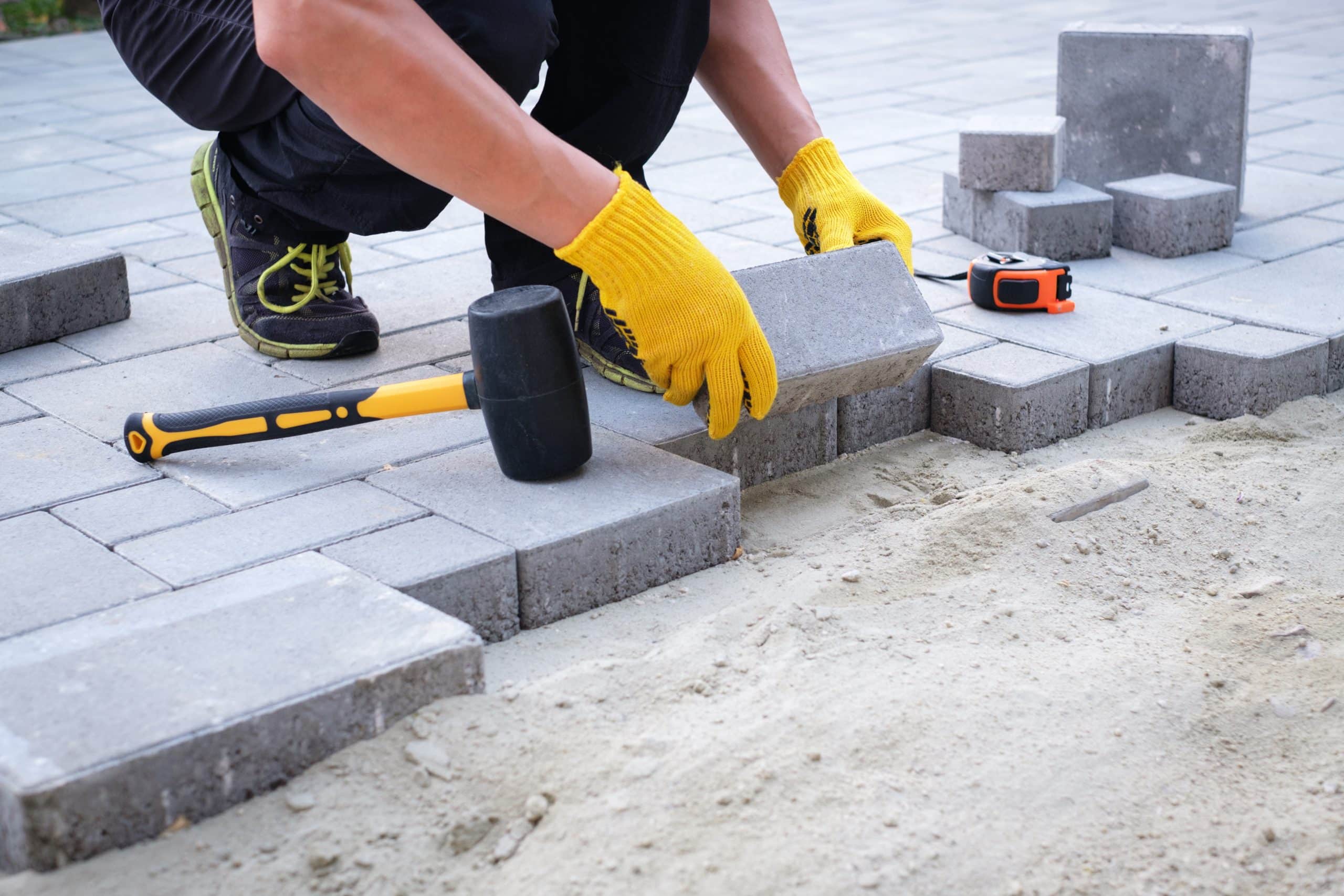
Both types share the most important structural advantage over poured concrete: they’re interlocking, not rigid. When the ground shifts — and in Nassau County’s clay soils, it does — individual pavers move with it rather than cracking across a continuous slab. If a paver is damaged or stained, you pull that unit and replace it. You’re not jackhammering out a section of a poured surface and hoping the patch blends in.
Sealing applies to both material types, though the frequency and product used differ. For most natural stone driveways, resealing every three to five years is a reasonable expectation. Concrete pavers like Nicolock’s Paver-Shield treated products have enhanced surface protection built into the manufacturing process, which can extend the interval between sealing applications.
One concern we hear often is about weeds growing between the joints. It’s a legitimate issue with older or improperly installed paver driveways, but it’s not inevitable. Polymeric sand — a joint filler that hardens when activated with water — significantly reduces weed intrusion and insect activity. If your current paver driveway has a weed problem, there’s a good chance it was either installed without polymeric sand or the joints have broken down over time and need refreshing. It’s a maintenance step, not a fundamental flaw in the material.
There’s no universal right answer when it comes to stone driveway materials — but there’s almost always a clearly better answer for your specific home, neighborhood, and climate exposure. If you’re replacing a failing concrete or asphalt driveway in Nassau County, the conditions here — freeze-thaw cycles, coastal salt, clay soils — should be the starting point for that decision, not an afterthought.
Granite cobblestone and granite natural stone pavers lead on durability and salt resistance. Bluestone offers a clean, classic look with strong performance when properly sealed. Concrete pavers from established manufacturers give you engineered consistency and warranty backing. Each has a real place in the right application.
If you’re still working through the options, come see the materials in person at our Roslyn Heights showroom. There’s a meaningful difference between choosing from photos online and actually holding two stones side by side. Our team has been doing this for a long time — we can help you sort through the options, connect you with a vetted local installer, and make sure you leave with what your project actually needs. Powerhouse Mason Supply is here when you’re ready to take the next step.
Article details:
Share:
Continue learning: