Not sure which natural stone paver is right for your Nassau County patio or pool deck? Here's how limestone, travertine, and bluestone actually compare.
Share:
Summary:
You’ve done the research. You’ve seen the photos. And somehow you’re still not sure whether to go with limestone, travertine, or bluestone for your outdoor space. That’s not a failure of effort — it’s a failure of most comparison articles, which tell you what each stone looks like but stop short of telling you which one actually holds up in a Nassau County winter.
We’ve been supplying natural stone to Long Island homeowners and contractors for over 25 years. What follows is the honest version of this comparison — no filler, no hedging, just what you actually need to know before you commit.
Limestone is denser and harder than travertine, which makes it the stronger performer for high-traffic areas — walkways, driveways, formal patios that see a lot of foot movement. Its surface is more uniform, it cuts cleanly for custom shapes, and its color palette (creams, tans, soft grays, muted blues) works well with both traditional and contemporary home styles.
The catch is that not all limestone is created equal. Lower-density varieties are porous enough that water absorption becomes a real problem in freeze-thaw climates like Nassau County’s. When water gets into the stone and freezes, it expands — and that expansion causes cracking, spalling, and surface flaking over time. For outdoor use here, you want architectural-grade or structural-grade limestone with a water absorption rate below 1%. That’s the spec that actually survives a Long Island winter.
Finish matters more than most buyers realize. Honed limestone has a smooth, matte surface that looks clean and refined — it’s a popular choice for formal outdoor patios and garden paths. Flamed limestone has a rougher, textured surface that improves slip resistance and actually reduces surface porosity, which helps with freeze-thaw performance. For outdoor applications in Nassau County’s climate, flamed is often the smarter call, even if honed is what you fell in love with in the showroom.
What you want to avoid is polished limestone outdoors. Polished finishes look stunning inside, but they become slippery when wet and tend to show weathering faster when exposed to freeze-thaw cycles and salt air — both of which are real factors along Nassau County’s north and south shores.
Sealing is non-negotiable with limestone outdoors. A penetrating (impregnating) sealer applied at installation — not a film-forming sealer — is the correct specification. Film-forming sealers sit on top of the stone and can trap moisture underneath, which accelerates exactly the kind of freeze-thaw damage you’re trying to prevent. Plan to re-seal every two to three years. It’s not a major undertaking, but skipping it shortens the stone’s lifespan considerably.
One more thing worth knowing: limestone’s density advantage over travertine makes it a better candidate for driveways and areas where vehicle weight or heavy loads are a factor. It’s not as hard as bluestone or granite, but architectural-grade limestone has a compressive strength that handles residential driveway use reliably when the base is properly prepared.
Nassau County averages 20 to 30 freeze-thaw cycles per winter. That number is the single most important variable in outdoor stone selection for this market — and it’s the one most national comparison articles gloss over entirely.
The industry test for freeze-thaw resistance in natural stone is ASTM C1026, which requires stone to withstand a minimum of 50 wet-dry and freezing cycles without significant damage. When you’re shopping for limestone for outdoor use in Nassau County, that certification is worth asking about. A supplier who can’t produce it or doesn’t know what it means is a signal to keep looking.
Properly specified limestone — architectural grade, sealed correctly, installed over a well-prepared compacted base — performs reliably through Long Island winters. The failure stories you’ve probably heard usually involve one of three problems: wrong grade of stone, wrong sealer, or inadequate base preparation. The stone itself isn’t the villain; the installation decisions are.
Salt air is a secondary factor that doesn’t get enough attention. If your property is close to the south shore — Long Beach, Atlantic Beach, the Jones Beach corridor — or along the Long Island Sound on the north shore, salt accelerates surface deterioration and attacks sealers faster than it would in an inland Nassau County neighborhood. In those locations, denser stones with lower absorption rates perform better over time, and re-sealing on the shorter end of the two-to-three-year range is a smart habit.
Want live answers?
Connect with a Powerhouse Mason Supply expert for fast, friendly support.
Travertine is technically a form of limestone — it’s formed by mineral spring deposits rather than marine sediment, which gives it a more cellular, porous structure and that distinctive pitted texture. That texture is part of its appeal, but it’s also the source of its biggest outdoor limitation in cold climates.
The functional case for travertine is real: it stays noticeably cooler underfoot in direct sunlight than most other stones, which makes it genuinely comfortable for barefoot use around a pool. It’s also naturally slip-resistant in its tumbled and brushed finishes. For Nassau County homeowners with in-ground pools — and there are a lot of them — travertine’s pool deck performance is hard to argue with in summer.
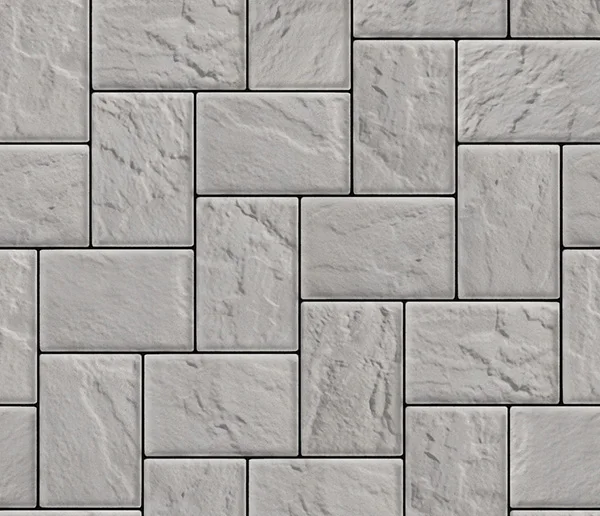
Here’s the part most buyers don’t know until it’s too late: unfilled travertine is an indoor material. The natural voids in the stone’s surface collect water, debris, and organic matter. In a freeze-thaw climate, that trapped water expands when it freezes and causes the surface to chip, flake, and deteriorate — sometimes within a few winters.
Filled and honed or filled and brushed travertine is the correct outdoor specification for Nassau County. The voids are filled with grout or resin before finishing, which dramatically reduces the stone’s vulnerability to moisture infiltration. Premium-grade filled travertine, properly sealed and installed, performs well in Long Island’s climate. But the grade and finish have to be right. This is exactly the kind of detail that gets missed when buyers shop purely on price or aesthetics.
If you’re comparing travertine options and a supplier can’t tell you whether the product is filled or unfilled, that’s a problem. The price difference between low-grade unfilled travertine and premium filled travertine is real, but so is the difference in how long it lasts through a Nassau County winter.
Installed costs for travertine pool patios on Long Island run roughly $30 to $55 per square foot depending on grade, format, and contractor. That range is wide because the grade variable is wide. Lower-cost travertine at the bottom of that range is almost always lower-grade material — and the savings tend to show up as replacement costs within a few years.
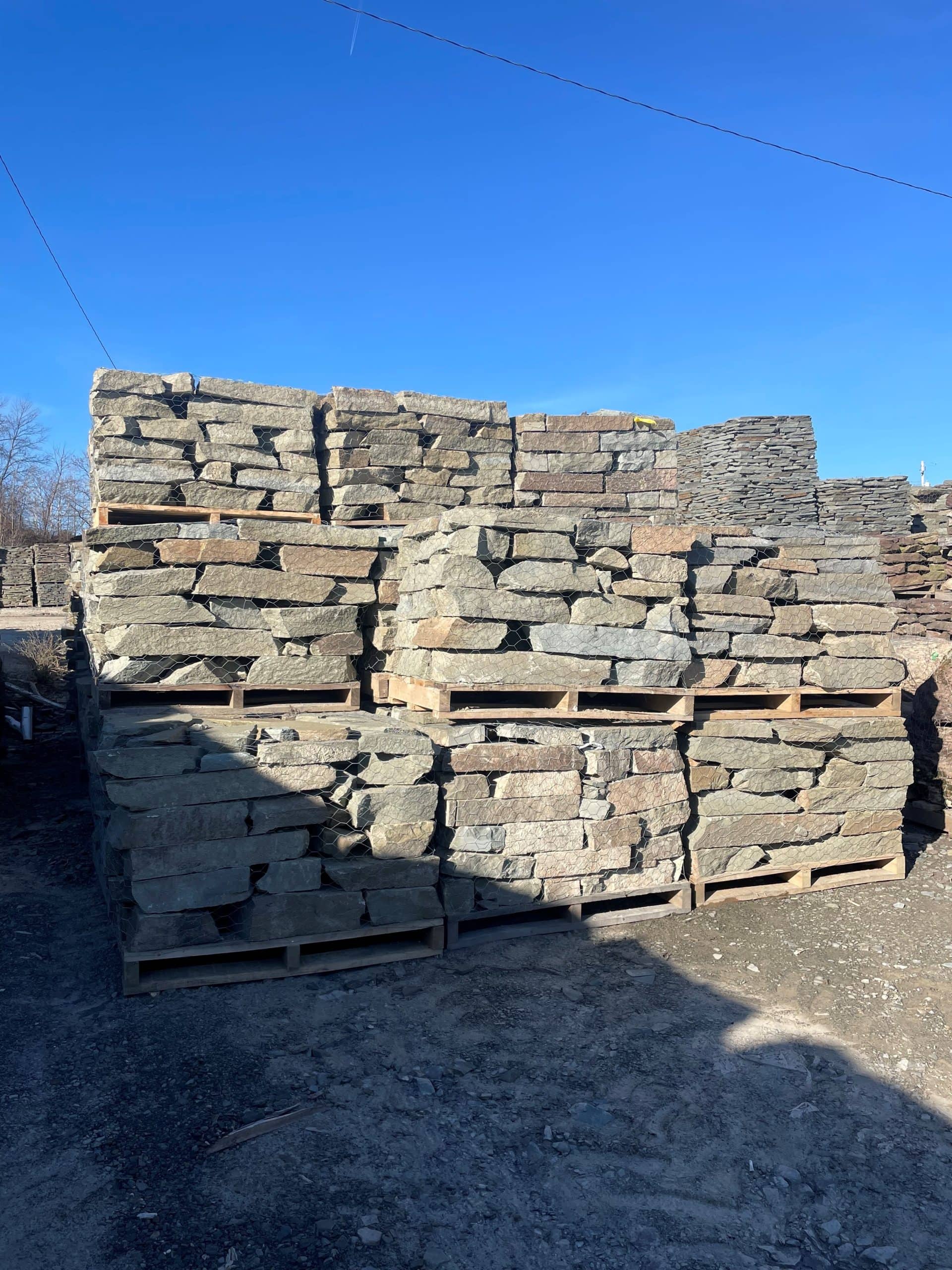
Bluestone has been the default patio material across Nassau and Suffolk County for decades. Drive through older North Shore neighborhoods — Roslyn, Manhasset, Great Neck — and you’ll see it everywhere: blue-gray irregular slabs, natural cleft surfaces, the kind of patios that have been holding up since the 1960s and 1970s without much drama. That track record isn’t a coincidence.
Pennsylvania and New York-quarried bluestone is denser than both limestone and travertine, putting it closer to granite on the hardness spectrum. That density gives it the best freeze-thaw resistance of the three stones — it absorbs less water, which means less expansion damage when temperatures drop. Installed costs for bluestone patios on Long Island run $35 to $65 per square foot, slightly above travertine at the mid-range, but the longevity argument is strong.
The most common objection we hear about bluestone is that it’s too common — everyone on the block already has it. That’s fair, but it misunderstands what bluestone actually offers as a design material. It comes in multiple formats: thermal (smooth top, consistent dimensions, clean and contemporary), natural cleft (rougher surface, more traditional character), and random rectangular (irregular sizes, relaxed and organic). The color range runs from blue-gray to brown, green, and lilac depending on quarry depth and mineral composition. It’s more versatile than its reputation suggests.
For homeowners renovating a period home on the North Shore or South Shore, bluestone isn’t just a material choice — it’s historically appropriate. It respects the architectural character of the home in a way that imported travertine or polished limestone might not. That’s not a small thing when the house is part of an established Nassau County neighborhood with a distinct visual identity.
Where bluestone is a harder sell is in Mediterranean-style or resort-inspired outdoor spaces, where travertine’s warmer tones and textured surface feel more authentic to the design intent. And for pool decks specifically, travertine’s cooler surface temperature in direct sun gives it a genuine functional edge that bluestone doesn’t match. The honest answer is that bluestone wins on durability and climate performance; travertine wins on pool deck comfort; limestone wins on design flexibility and traffic load. The right stone depends entirely on where it’s going.
Article details:
Share:
Continue learning: