Choosing the wrong paving material on Long Island isn't just a style mistake — it's an expensive one. Here's what actually holds up.
Share:
Summary:
Most Nassau County homeowners don’t start a paving project knowing exactly what they want. They know they want something better than cracked asphalt or a plain concrete slab — but once they start researching, the options multiply fast. Concrete pavers, natural stone, porcelain, Belgian block, permeable systems — it gets overwhelming quickly.
Here’s the thing: the right choice isn’t just about what looks good in a photo. On Long Island, where temperatures swing above and below freezing dozens of times each winter, the material you choose has real consequences. This guide walks you through the five main types of block paving, what each one actually does well, and where each one falls short — so you can walk into any conversation with a contractor already knowing your options.
Block paving is a broad term for any surface made from individual, interlocking units — as opposed to a poured slab of concrete or a rolled layer of asphalt. The units can be made from concrete, natural stone, porcelain, clay, or even recycled materials, and each comes with a different set of performance characteristics, price points, and maintenance requirements.
What makes block paving particularly well-suited to Long Island is the interlocking design itself. Because each unit moves independently, the surface can flex slightly with ground movement — rather than cracking across a wide span the way a monolithic slab does. That matters a lot when you’re dealing with Nassau County’s freeze-thaw cycles, where the ground can shift meaningfully between January and March alone.
The five types worth knowing are concrete pavers, natural stone, porcelain, Belgian block, and permeable pavers. Each has a real place in the Long Island market. Here’s an honest look at all of them.
Concrete pavers are the most common choice on Long Island driveways, and for good reason. They’re engineered to handle vehicular loads, they come in a wide range of colors and textures, and when you’re buying from a premium brand like Cambridge Pavers or Nicolock, you’re getting a product that’s been specifically designed for freeze-thaw climates. These aren’t the flat gray blocks you might picture from a big-box store. The manufacturing process produces dense, vibrant units that hold their color and resist water absorption — which is the single most important technical spec in a climate like ours.
Water absorption is worth understanding. When a paver absorbs water and that water freezes, it expands inside the material. Over enough cycles, that expansion causes cracking, spalling, and surface degradation. Premium concrete pavers are manufactured to minimize absorption, which is why they consistently outperform cheaper alternatives after a few Long Island winters.
Natural paving materials work on a completely different principle. Bluestone, granite, and travertine aren’t manufactured — they’re quarried, which means their density and strength come from millions of years of geological formation rather than a production process. That natural density makes them inherently low-absorption, which is why you’ll find bluestone on north shore properties in Port Washington and Great Neck that have been in place for decades without significant deterioration.
The trade-off with natural stone is consistency. Because it comes from the earth, no two pieces are identical — which is part of its appeal aesthetically, but it also means you need an experienced installer who knows how to work with natural variation. It also tends to carry a higher material cost than concrete pavers, though that gap narrows considerably when you factor in the long-term durability and the effect on resale value in Nassau County’s more competitive real estate markets.
Porcelain pavers don’t get enough credit in most paving guides, probably because they’re newer to the outdoor market and people associate the word “porcelain” with fragile bathroom tile. Exterior porcelain is a completely different product. It’s fired at extremely high temperatures, which makes it dense, non-porous, and highly resistant to frost, staining, and UV fading. It doesn’t need to be sealed. It doesn’t absorb road salt. And it can last 50 to 70 years with essentially no maintenance beyond the occasional rinse.
For Nassau County homeowners who want a clean, contemporary look — think large-format slabs in a light gray or warm beige — porcelain is genuinely worth considering for patios, pool surrounds, and front walkways. The main limitation is that it’s harder to cut and install than concrete pavers, so your installer needs to have experience with it.
Belgian block — sometimes called cobblestone — is a Long Island fixture that most national paving guides don’t even mention. Drive through almost any neighborhood in Syosset, Roslyn, or Old Westbury and you’ll see it: granite cobbles used as driveway borders, apron accents, or full decorative surfaces. It’s one of the most durable materials available, it ages beautifully, and it carries a visual weight that concrete pavers simply can’t replicate.
Permeable pavers are the option that surprises people the most. Unlike standard pavers, permeable systems have open joints or porous surfaces that allow rainwater to pass through and recharge the groundwater below, rather than running off into storm drains. On Long Island — particularly in south shore communities near the bays, where stormwater management is an active concern — this is more than an environmental preference. It’s a practical advantage. Permeable pavers also reduce puddling and ice formation on flat surfaces, which is a real benefit during Nassau County winters.
Want live answers?
Connect with a Powerhouse Mason Supply expert for fast, friendly support.
The honest answer is that the right material depends on three things: where the surface is, what it needs to handle, and what you want it to look like. A driveway in Massapequa that takes daily vehicle traffic and road salt exposure has different requirements than a backyard patio in Manhasset that sees foot traffic and summer entertaining.
Climate performance has to come first. Any material you choose for an outdoor surface on Long Island needs to handle freeze-thaw cycles without cracking, resist road salt without degrading, and stay structurally sound through the kind of wet, cold springs that are normal here. That filter alone narrows the field considerably and rules out a lot of the commodity-grade products you’ll find at general home improvement stores.
After performance, aesthetics and maintenance are the deciding factors — and that’s where seeing materials in person makes a real difference.
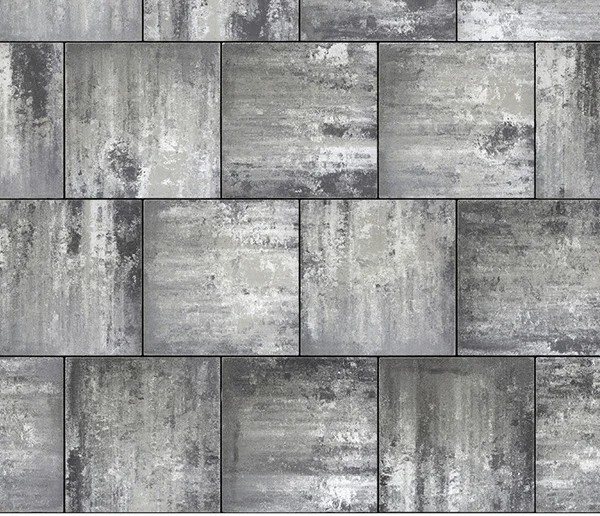
You can spend hours on manufacturer websites looking at product photography, and you still won’t have an accurate sense of what a material looks like at full scale, in natural light, next to your house. Colors look different on a screen than they do on the ground. Textures that look rough in a photo can look refined in person. Scale changes everything.
The other thing photos don’t show you is variation. Natural stone, in particular, has inherent color and texture variation from piece to piece. Some homeowners love that — it’s what gives a bluestone walkway its character. Others find it harder to predict how the finished surface will look, and they’d rather have the consistency of a manufactured concrete paver. Neither preference is wrong, but you can’t really know which camp you’re in until you’ve held both materials in your hands.
This is exactly why we have showrooms. Our Roslyn Heights location — right here in Nassau County — carries a broad selection of the materials covered in this guide, including Cambridge Pavers, Nicolock, natural stone options, and porcelain. You can walk in, see the materials at actual size, compare them side by side, and ask questions from people who’ve been working with these products for over 25 years.
We also find that homeowners who visit the showroom before meeting with a contractor have a more productive conversation. You’ll know what you’re looking at, you’ll have a sense of what you like, and you won’t feel like you’re being steered toward whatever the installer happens to have on hand.
One question we hear constantly is whether concrete pavers are a step down from natural stone. The short answer is no — not when you’re buying from the right brands. Cambridge Pavers and Nicolock are the two dominant premium brands on Long Island, and both produce concrete pavers that look nothing like the basic gray blocks people sometimes picture. Many of the driveways in Garden City and Jericho that look like natural stone are actually premium concrete pavers. The difference in material cost is real, but so is the difference in installation complexity — natural stone requires more skilled labor, which affects the total project cost.
Another common question is whether any of these materials actually need to be sealed. Concrete pavers benefit from sealing — it enhances color, reduces staining, and adds a layer of protection against road salt and freeze-thaw damage. Natural stone is similar: sealing isn’t mandatory, but it extends the life of the surface and makes maintenance easier. Porcelain, on the other hand, doesn’t need to be sealed at all. Its density makes it naturally resistant to everything that sealing is meant to address.
People also ask about combinations — and this is something most online guides don’t address. A lot of the most attractive Nassau County driveways aren’t made from a single material. A concrete paver field with a Belgian block border is one of the most popular configurations we see, and for good reason: it adds visual definition, it’s extremely durable, and the two materials complement each other well. Bluestone walkways with granite steps are another common combination.
Finally, homeowners often ask how much material they’ll actually need. Over-ordering wastes money, and under-ordering can delay your project if a particular product needs to be restocked. We can help you work through the math based on your actual square footage, so you’re not guessing.
If there’s one takeaway from this guide, it’s that no single paving material is right for every Long Island home. Concrete pavers are versatile and proven in our climate. Natural stone is dense, durable, and timeless. Porcelain is low-maintenance and long-lasting. Belgian block brings a character that’s deeply embedded in Nassau County’s architectural landscape. Permeable pavers solve real drainage problems that other materials can’t.
The decision gets easier once you’ve seen the materials in person and had a real conversation about your specific project — the surface, the traffic, the look you’re going for, and the Long Island winters it needs to survive.
Powerhouse Mason Supply has been helping homeowners and contractors navigate exactly this decision for over 25 years. Stop by our Roslyn Heights showroom, bring your project details, and we’ll help you figure out what actually makes sense for your property.
Article details:
Share:
Continue learning: