Pavers or poured concrete? Here's an honest, locally grounded breakdown to help Nassau County homeowners make the right call before spending a dime.
Share:
Summary:
You’re looking at a cracked driveway and wondering whether to pour concrete again or finally make the switch to pavers. It’s a fair question — and a bigger decision than it looks. The upfront numbers are different. The long-term math is different. And the way each material holds up through a Nassau County winter is very different. We’ve been supplying hardscape materials to Long Island homeowners and contractors for over 25 years, and we’ve seen both options succeed and fail. What follows is the comparison we’d give a neighbor — straightforward, specific, and grounded in what actually happens on Nassau County driveways.
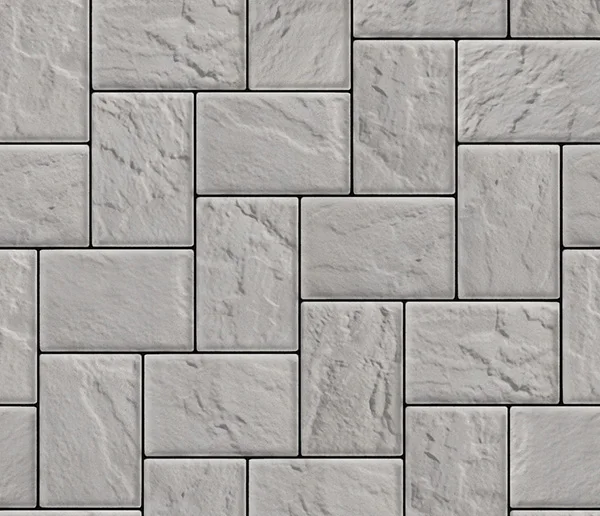
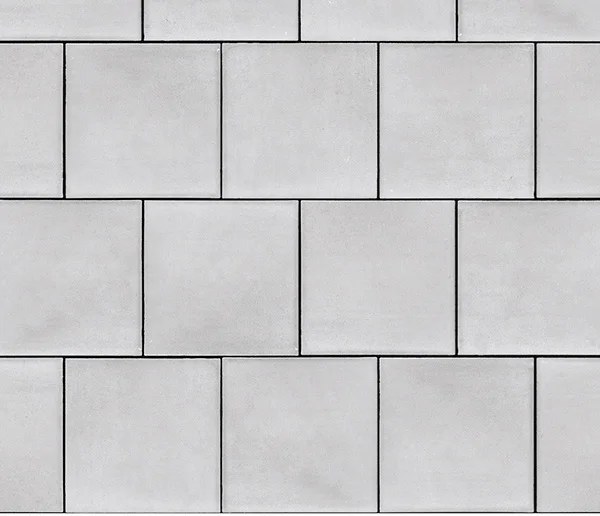
Before anything else, it helps to clear up a common misconception: concrete pavers and poured concrete are not the same material. Poured concrete is a single continuous slab. Interlocking pavers are individual manufactured units — each one engineered to meet ASTM C936, which requires a minimum compressive strength of 8,000 psi. Standard residential poured concrete typically lands between 2,500 and 4,000 psi. That gap matters more than most people realize, especially here on Long Island.
Both options can make a driveway look sharp on day one. The difference shows up in year five, year ten, and year twenty — when Nassau County’s freeze-thaw cycles, clay-heavy soils, and the occasional nor’easter have had time to do their work.
Nassau County experiences roughly 50 to 80 freeze-thaw cycles every year. That means the ground beneath your driveway is expanding and contracting — repeatedly, all winter long. Poured concrete is a rigid, monolithic surface. It doesn’t flex. When the ground moves beneath it, the slab resists, and eventually it loses. That’s not a contractor error or a product defect. It’s physics.
The cracking and heaving you see on older concrete driveways in Levittown, Massapequa, and Merrick isn’t a fluke — it’s what happens when a rigid surface meets decades of ground movement. Interlocking pavers work differently. Because they’re individual units set on a compacted aggregate base with a bedding sand layer, the system has flexibility built into it. When the ground shifts, the pavers move with it — and when temperatures stabilize, they return to position.
That’s the core structural advantage, and it’s the reason a properly installed paver driveway can last 50 years while a concrete slab often needs full replacement within 15 to 20. There’s also the soil factor. Long Island has significant clay content in many areas, which amplifies ground movement beyond what freeze-thaw alone causes. A flexible paver system handles that better than a rigid slab.
Add to that the de-icing salts most Nassau County homeowners rely on every winter — concrete pavers are specifically engineered to resist salt damage, while poured concrete is not. None of this means poured concrete is a bad material. For certain applications and budgets, it makes sense. But for a driveway in Nassau County that you want to last and not think about for decades, the climate argument for interlocking pavers is hard to ignore.
Here’s a practical angle that doesn’t get discussed enough: what does repair actually look like for each option?
With poured concrete, a crack is a problem with no clean solution. You can fill it, but the patch is always visible and rarely holds long-term. If the slab has heaved or settled unevenly, you’re typically looking at either grinding down the high spots or removing and replacing sections — and concrete removal alone averages over $1,100 before new material goes in. If the damage is widespread, you’re replacing the whole driveway.
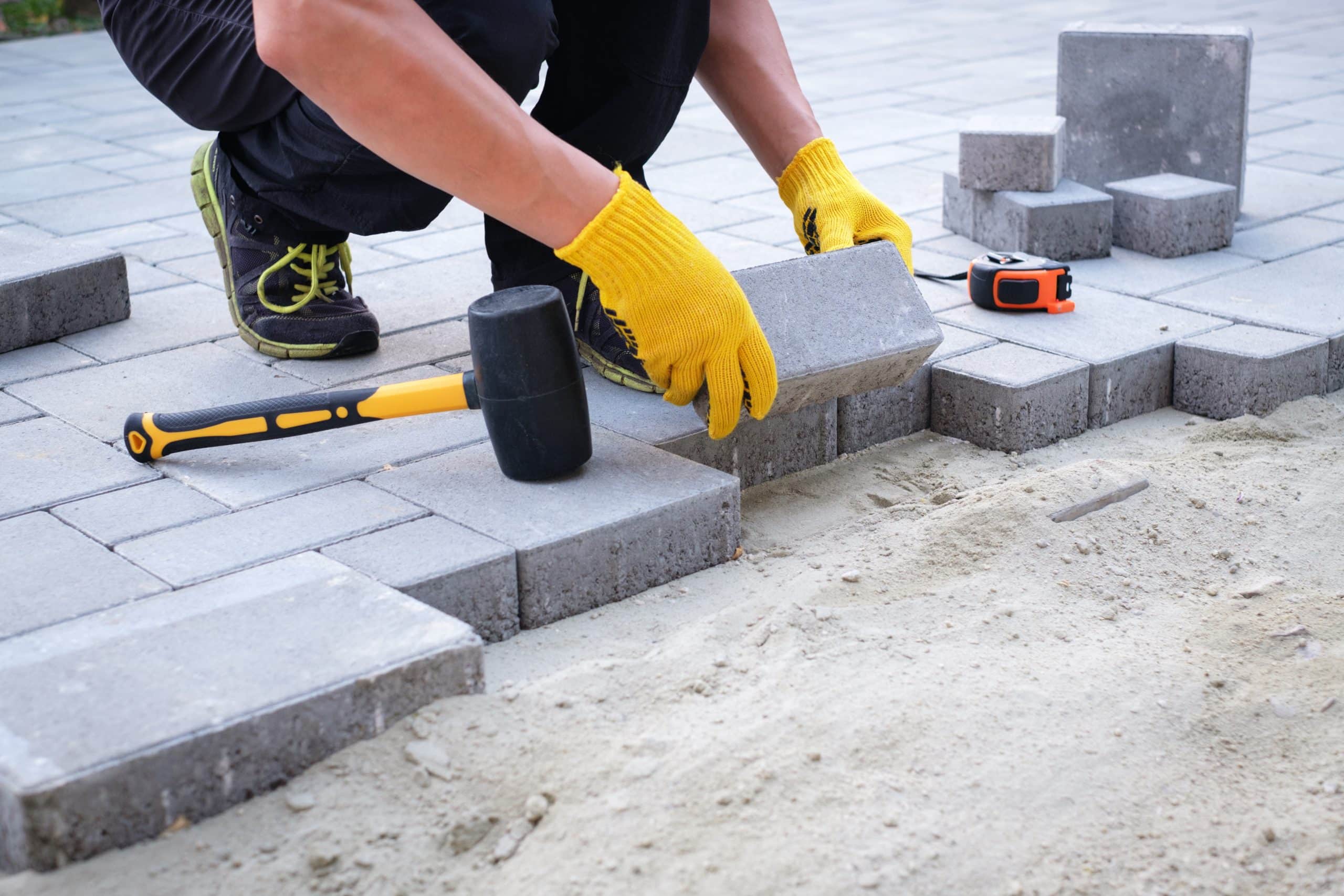
With interlocking pavers, a damaged section is a repair job, not a replacement project. Individual pavers can be lifted, the base can be corrected if needed, and the units can be reset — often in an afternoon. The caveat is that you’ll want to buy extra material at installation so you have matching pavers on hand if you need them later. Color lots can vary between production runs, and a paver sourced years after the original job may not be a perfect match.
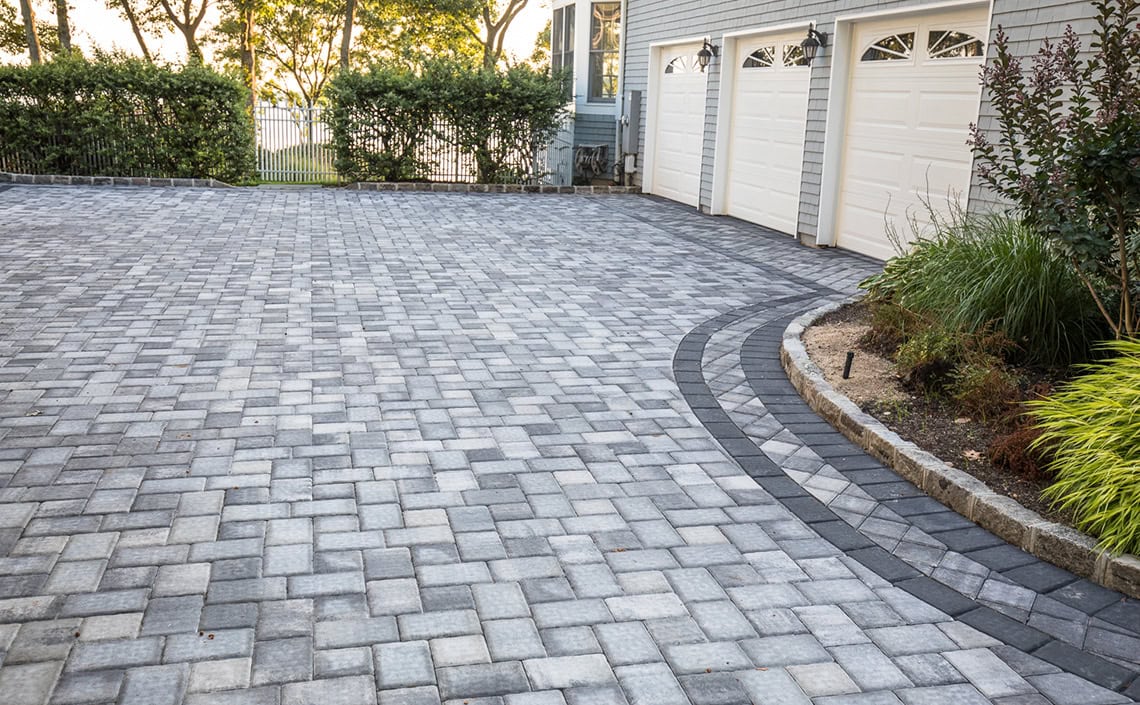
The repairability advantage is one of the most underrated parts of the interlocking driveway conversation. An interlocking system lets you address problems exactly where they occur, without disturbing anything else. For homeowners in Garden City, Great Neck, and across Nassau County who’ve invested in a well-designed front exterior, the ability to make a targeted repair without disrupting the whole driveway is worth something real.
Want live answers?
Connect with a Powerhouse Mason Supply expert for fast, friendly support.
The upfront cost difference between pavers and poured concrete is real, and we’re not going to pretend otherwise. In Nassau County, installed concrete pavers typically run $16 to $19 per square foot. Brick pavers tend to fall between $17 and $22 per square foot. Poured concrete comes in lower — though in the New York metro area, the gap narrows compared to national averages.
On a typical two-car driveway of around 600 square feet, you’re looking at a meaningful difference in day-one spend. What changes the math is what happens over the next 20 to 30 years.
This is probably the question we hear most often, and the honest answer is: it depends on your timeline.
If you’re comparing day-one installation costs only, poured concrete wins. There’s no way around that. But that framing leaves out a lot. A poured concrete driveway, even a well-installed one, typically needs resurfacing or significant repair within 15 to 20 years. Stamped concrete — the decorative alternative — tends to show wear and cracking even sooner. When that happens, you’re paying for concrete removal (again, over $1,100 on average just for demo), disposal, and a full reinstall.
A quality interlocking paver system, installed correctly over a properly compacted base, routinely lasts 50 years. Not 50 years without any attention — you’ll want to reseal periodically and refresh the joint sand over time — but 50 years without a full replacement. When you spread the cost of each option across that kind of lifespan, the math often flips. The paver driveway that cost more on day one ends up costing less per year of useful life.
There’s also a resale value dimension worth mentioning. A well-maintained interlocking driveway — especially one using a recognized brand like Cambridge Pavers or Nicolock — adds visible curb appeal and signals quality to buyers. Nicolock’s paver-shield products even carry a transferable lifetime warranty, which means the coverage follows the home, not just the original owner. That’s a tangible asset when you’re selling in Nassau County’s competitive real estate market.
If you’re planning to stay in your Nassau County home for 10 or more years, the long-term economics of pavers tend to make more sense. If you’re looking for the lowest possible cost right now and plan to sell in the next few years, concrete may be the practical call.
Most comparisons in this space treat the decision as binary — interlocking concrete pavers on one side, poured concrete on the other. But there’s a third category that Nassau County homeowners increasingly ask about: natural stone.
Sandstone, bluestone, travertine, marble, and porcelain pavers are all available through local sandstone paving suppliers and hardscape distributors like us. Each has its own performance profile, aesthetic, and price point. Bluestone is a Long Island classic — it’s been used on front walks and driveways in communities like Manhasset and Port Washington for generations, and it ages beautifully. Travertine and marble offer a more refined look that works well in upscale settings. Porcelain pavers are increasingly popular for their durability, low porosity, and resistance to staining.
The tradeoff with natural stone is typically cost and installation complexity. These materials require a skilled installer who understands how to set them correctly — especially in a climate with significant freeze-thaw activity. Not every contractor who installs concrete pavers has the same depth of experience with natural stone, so material selection and contractor selection need to happen together.
At our Roslyn Heights showroom — the only location in Nassau County where you can see Cambridge Pavers and Nicolock side by side — we offer the ability to look at all of these options in person before committing. A 600-square-foot driveway is a significant investment regardless of material. Seeing the actual color, texture, and scale of a paver before you order it is a different experience than looking at a photo online. Our staff can walk you through what makes sense for your home’s style, your neighborhood’s character, and the specific conditions of your property.
We also connect customers with experienced local Long Island contractors who know how to install these materials correctly — because the best paver in the world underperforms on a poorly prepared base. Getting the material right and getting the installation right are two separate decisions, and we help with both.
There’s no universal right answer here — but there is a right answer for your specific situation, and it comes down to how long you’re staying, what your budget looks like across a 20-year horizon, and what kind of maintenance you’re willing to do.
What we can say with confidence, after more than 25 years of supplying hardscape materials across Long Island: interlocking pavers consistently outperform poured concrete in Nassau County’s climate. The freeze-thaw cycles are real, the clay soils are real, and the repairability advantage is real. If you’re replacing a driveway that’s already failed once, choosing the same material and expecting a different result is a hard case to make.
If you’re ready to see your options in person, talk through what makes sense for your project, and get connected with a contractor who knows how to install it right — Powerhouse Mason Supply is the place to start.
Article details:
Share:
Continue learning: