Not all stone siding survives Long Island's salt air and freeze-thaw winters. Here's what Nassau County homeowners actually need to know before choosing.
Share:
Summary:
Most homeowners start researching outdoor stone siding after seeing it on a neighbor’s house or scrolling past a photo that stopped them mid-swipe. The look is immediate. The questions come right after: Is that real stone? How much does it cost? Will it hold up here?
Those are exactly the right questions — especially if you’re in Nassau County, where salt air off the South Shore, hard winters, and homes that are often 50 or 60 years old all factor into what’s going to work and what’s going to fail. This guide is written for that specific situation. By the end, you’ll know which materials make sense, what they actually cost, and where to see them in person before committing.
The first thing to understand is that “stone siding” covers two very different products, and the choice between them isn’t just about budget — it’s about your home’s structure, your timeline, and what you’re actually trying to achieve.
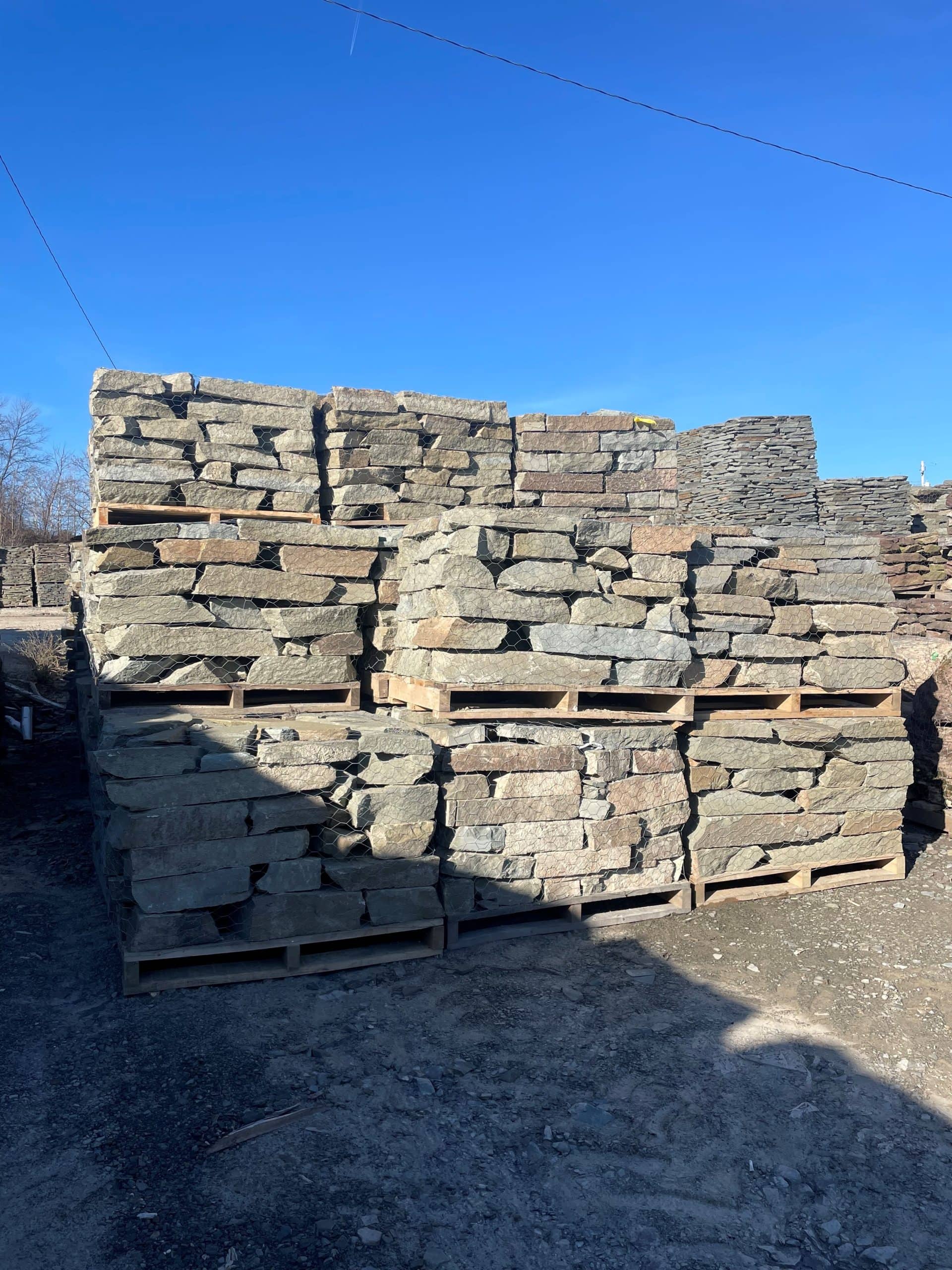
Natural stone veneer is quarried material, cut thin enough to be applied to an exterior wall without requiring full structural support. It’s the real thing — no two pieces look exactly alike, it doesn’t fade, and it lasts a lifetime when installed correctly. The trade-off is cost. Natural stone veneer runs $35 to $50 per square foot for materials alone, and that’s before labor, which on Long Island is among the highest in the country.
Manufactured stone veneer — often called cultured stone or faux stone — is cast from molds made from actual stone. Quality products from brands like Eldorado Stone, Cultured Stone, and Dutch Quality Stone are visually indistinguishable from natural stone to most people standing in front of a house. They run $8 to $12.50 per square foot for materials. That’s a significant difference, and for most residential projects in Nassau County, manufactured stone veneer is the smarter starting point.
Stacked stone is one of the most searched exterior styles right now, and it’s easy to see why. The look — thin horizontal layers of stone with tight joints and strong shadow lines — reads as both contemporary and timeless. It works on a craftsman bungalow in Garden City as naturally as it does on a newer build in Syosset.
What most homeowners don’t realize is that the stacked stone look is almost always achieved with manufactured stone veneer, not full-depth quarried stone. The individual pieces are cast to mimic the irregular, layered appearance of natural ledgestone, and when they’re installed by a skilled mason, the result is nearly impossible to distinguish from the real thing at any normal viewing distance.
Where stacked stone really earns its place in Nassau County is on accent applications. A full-facade wrap in stacked stone is a significant project and investment. But stacked stone on the front-facing columns of a split-level, along the foundation band of a colonial, or framing the entry of a cape cod — that’s where the style does its best work. It draws the eye exactly where you want it, and it does it without requiring you to reclad the entire house.
One thing worth knowing: stacked stone profiles tend to have more horizontal surface area than other veneer styles, which means they can collect debris and moisture in certain exposures. On the South Shore, where salt air is a real factor, that makes material quality and installation technique more important than they might be elsewhere. Products that meet ASTM C1670 standards are engineered to handle these conditions. Cheaper alternatives — particularly imported panels without documented testing — are not.
If stacked stone is the aesthetic you’re after, come see it in person at our Roslyn Heights showroom before committing. The texture and depth of these products don’t translate well in photos, and seeing them at scale changes how you evaluate them.
This is the part that most online guides skip entirely, because most online guides aren’t written for Long Island. They’re written for a national audience, which means they assume average conditions. Nassau County’s conditions are not average.
The South Shore communities — Long Beach, Oceanside, Merrick, Wantagh, Massapequa — deal with salt air year-round. Salt air is an accelerant. It degrades materials that would otherwise last decades in an inland environment, and it does it faster than most homeowners expect. Vinyl siding, certain metals, and low-grade manufactured stone panels are all vulnerable to it. Quality stone veneer — the kind manufactured by established brands with documented performance data — is specifically engineered to resist it.
Then there’s the freeze-thaw issue. Nassau County winters don’t stay cold. Temperatures cross the freezing threshold repeatedly throughout the season, which means water in exterior materials expands and contracts over and over. In a low-quality manufactured stone panel, that process causes cracking and spalling within a few years. In a quality product installed with proper moisture management — a weather-resistant barrier behind the veneer, correct mortar, flashing at every transition — it’s a non-issue.
Many Long Island homes have cultured stone that’s performed well for 15 to 20 years when installed correctly. That’s what we see in the field. The variables that determine whether your stone siding lasts are product quality and installation method. Both matter equally. A great product installed poorly will fail. A mediocre product installed perfectly will still fail eventually.
That’s part of why we connect buyers with experienced local contractors who know how to work with these materials in this specific climate. It’s not enough to choose the right stone — you need someone who knows how to put it up correctly on a Nassau County house.
Want live answers?
Connect with a Powerhouse Mason Supply expert for fast, friendly support.
The phrase “faux stone” still carries some baggage from the era of plastic-looking panels on strip mall facades. That reputation is outdated. The manufactured stone veneer category has changed dramatically, and the products we carry at Powerhouse Mason Supply — Eldorado Stone, Cultured Stone, Dutch Quality Stone, Casa di Sassi — bear almost no resemblance to what gave faux stone a bad name.
What separates quality faux stone veneer panels from the options you’ll find at a big-box store is a combination of mold detail, color variation, and material density. Better products are molded from actual stone, which means the surface texture is genuinely irregular rather than repeated. Color is applied in layers rather than a single flat coat, which is what gives quality veneer the depth that makes it read as real stone.
When you’re evaluating faux stone veneer panels for an exterior project, the questions to ask are: Who manufactured it? Does it meet ASTM C1670 standards? What does the warranty cover? If a supplier can’t answer those questions clearly, that’s information.
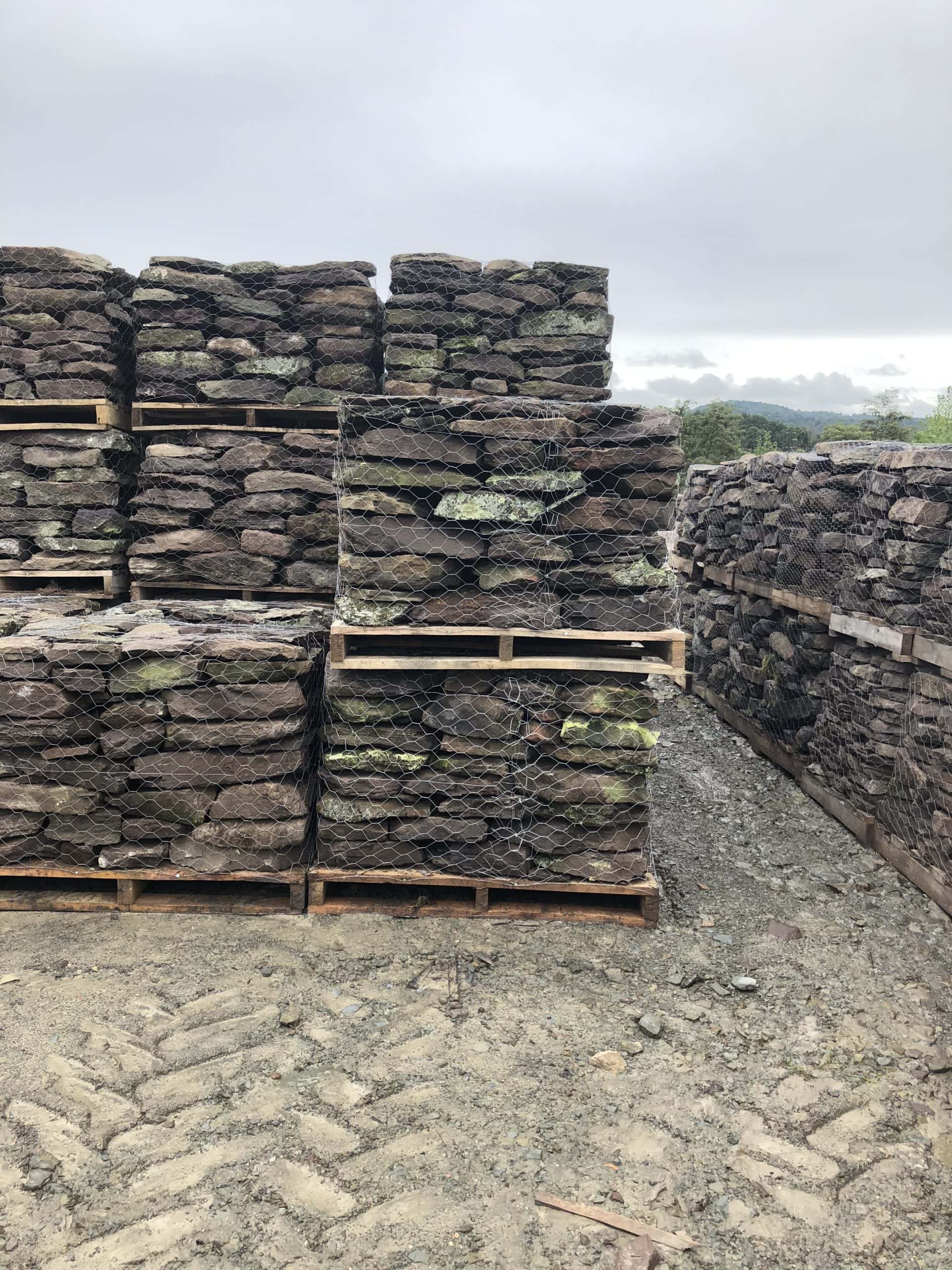
One of the most common mistakes homeowners make is choosing a stone veneer product based entirely on photos. Online images are shot under ideal lighting, in ideal conditions, with ideal color calibration. They don’t tell you how a product looks on a cloudy November afternoon in front of a 1960s colonial in Levittown.
The only reliable way to evaluate stone veneer is to see it in person, at scale, in natural light. That’s what our showrooms in Roslyn Heights and Amityville are for. You can stand in front of full-size panels from multiple manufacturers — Eldorado Stone, Cultured Stone, Dutch Quality Stone, Casa di Sassi — and compare them directly. That comparison is genuinely useful because these brands have different strengths. Some have more color variation. Some have a more refined, architectural profile. Some lean more rustic. Which one is right depends on your house, your neighborhood, and your own eye.
The other thing you can evaluate in person is texture. Stone veneer is a tactile product. The depth of the relief — how much the surface varies in and out — affects how it reads from the street. A shallower profile can look cleaner and more modern. A deeper profile casts more shadow and reads more like natural stone from a distance. Neither is objectively better, but one is likely better for your specific house.
We carry multiple brands under one roof, which matters more than it might seem. When you shop at a manufacturer’s design center, you’re only seeing that manufacturer’s products. You’re not getting a comparison — you’re getting a sales environment. At Powerhouse Mason Supply, we carry competing brands because our job is to help you find the right material for your project, not to move a specific product line.
If you’re not sure where to start, come in on a Saturday morning — we’re open 7 AM to 1 PM — and give yourself an hour to walk through the showroom. Most people find that an hour in person settles questions that weeks of online research couldn’t.
Quantity anxiety is real for stone veneer projects, and it’s one of the things that quietly stops homeowners from moving forward. The fear of ordering too much — and being stuck with material you can’t return — or too little and having to match a discontinued color later is legitimate. It’s also more manageable than most people think.
The first thing to understand is that most residential stone veneer applications are partial, not whole-house. The most common use case is accent cladding: the front facade of the house, the columns flanking an entry, the foundation band, a chimney. These areas are visually impactful but often surprisingly modest in square footage. A typical front-of-house accent application on a Nassau County colonial or split-level might run anywhere from 150 to 400 square feet of veneer, depending on how much of the facade you’re covering and how many architectural features you’re wrapping.
Calculating that square footage accurately requires accounting for windows, doors, and any architectural details that break up the surface. This is where an in-store consultation is genuinely useful — not because the math is complicated, but because getting it right the first time saves you from the two worst outcomes: running short mid-project or sitting on excess material.
On the question of minimums: we can break pallets for smaller residential projects. That’s not something every masonry yard will do, and it matters for homeowners who are doing an accent application rather than a full wrap. One of our customers recently had us break a pallet in half for a front-of-house project and had the material delivered within three days. That kind of flexibility is something you’re not going to find at a big-box store or a supplier that’s set up primarily for commercial volume.
The return policy is also worth understanding upfront: like most masonry suppliers, we don’t accept returns on large quantities once purchased. That’s standard in the industry, and it’s exactly why getting your square footage right before you order matters. We’d rather spend 20 minutes with you in the showroom working through the numbers than have you end up with a problem after the fact.
Choosing outdoor stone siding comes down to three things: picking a material that’s right for your house, sourcing it from a manufacturer whose products are built for this climate, and getting it installed by someone who knows what they’re doing on a Long Island exterior. Those three things are connected, and getting one right without the others doesn’t get you where you want to go.
The short version: quality manufactured stone veneer handles Nassau County‘s conditions well, costs a fraction of natural stone, and looks better than most people expect when it’s sourced from the right brands and installed correctly. Natural stone is the right call for some projects — but it’s a significant investment, and most homeowners don’t need it to get the result they’re after.
If you’re in the early stages of researching, the best next step is to come see the materials in person. Powerhouse Mason Supply’s Roslyn Heights showroom carries multiple brands side-by-side, and our team can walk you through the options without any pressure to buy on the spot. We can also connect you with experienced local contractors when you’re ready to move forward.
Article details:
Share:
Continue learning: