Choosing between Cambridge, Nicolock, and natural stone pavers for your Amityville patio? We break down durability, cost, and freeze-thaw performance.
Share:

Summary:
Cambridge Pavers are made to hold up in any weather, resisting cracks during winter freeze-thaw cycles and staying strong through hot, sticky summers. This isn’t marketing talk—it’s the reality of what happens when you build pavers specifically for climates like ours.
All Cambridge Pavingstones use their proprietary ArmorTec technology, a unique blend of high-quality concrete, granite, and superfine sand that creates pavers built to sustain years of weathering, remaining blemish-free through Long Island winters, snowplows, and de-icing salts. That last part matters more than most people realize. Road salt and ice melt products destroy cheaper pavers within a few seasons.
Cambridge backs their products with a transferable lifetime warranty covering structural integrity, color retention, salt resistance, and freeze-thaw durability. When a company puts that kind of guarantee behind their product, they’re confident it works.
The freeze-thaw cycle is what kills most outdoor materials on Long Island. Water seeps in, freezes, expands, and cracks whatever it’s trapped inside. The wrong paver in a cold climate can spall, with bits or pieces falling away because water seeps into the material, freezes, expands, and cracks it.
Cambridge solved this with their ArmorTec blend. The superfine sand and granite create a denser surface that resists water penetration in the first place. These pavers can withstand the region’s harsh weather conditions, including freeze-thaw cycles, without cracking or shifting.
What does this mean for your Amityville patio? You won’t see the surface degradation that happens with standard concrete pavers. Cheap pavers or poor installation will show problems within 5-7 years, but Cambridge pavers maintain their appearance and structural integrity much longer.
The color technology matters too. ArmorTec pavers have richer color and more uniform texture than paving stones made without, continuing to remain blemish-free through years’ worth of Long Island winters. You’re not just buying durability—you’re buying pavers that look good for decades, not just the first few seasons.
Local contractors who’ve worked with Cambridge for years report fewer callbacks for repairs or color fading. Some contractors install over 250,000 square feet of Cambridge pavers annually and are recognized as Premier Distributors, guaranteeing genuine, high-quality materials. That kind of volume means they know what works in our climate.
Amityville’s lot sizes present unique challenges. You want maximum impact without overwhelming a smaller space, and you need materials that work within a realistic budget. Cambridge offers solutions that make sense for both constraints.
Paver patio costs in Long Island range from $16 to $19 per square foot for sand-based concrete pavers, and Cambridge typically falls in the middle of that range. Most Long Island homeowners spend somewhere between $30 and $45 per square foot to have a paver patio professionally installed, including both materials and labor.
For smaller Amityville patios, Cambridge’s design flexibility becomes an advantage. Cambridge Pavingstones have an incredible collection of shapes, colors, and design kits available, with every space being unique and deserving careful planning to select the perfect color and pattern. You can create visual interest without needing a massive area.
You can mix and match colors, textures, and patterns to create unique looks—blend smooth and textured pavers, pair neutral tones like Champlain Gray with warmer shades like Toffee/Onyx Lite, and use patterns to define spaces. This design flexibility helps smaller patios feel more spacious and intentional.
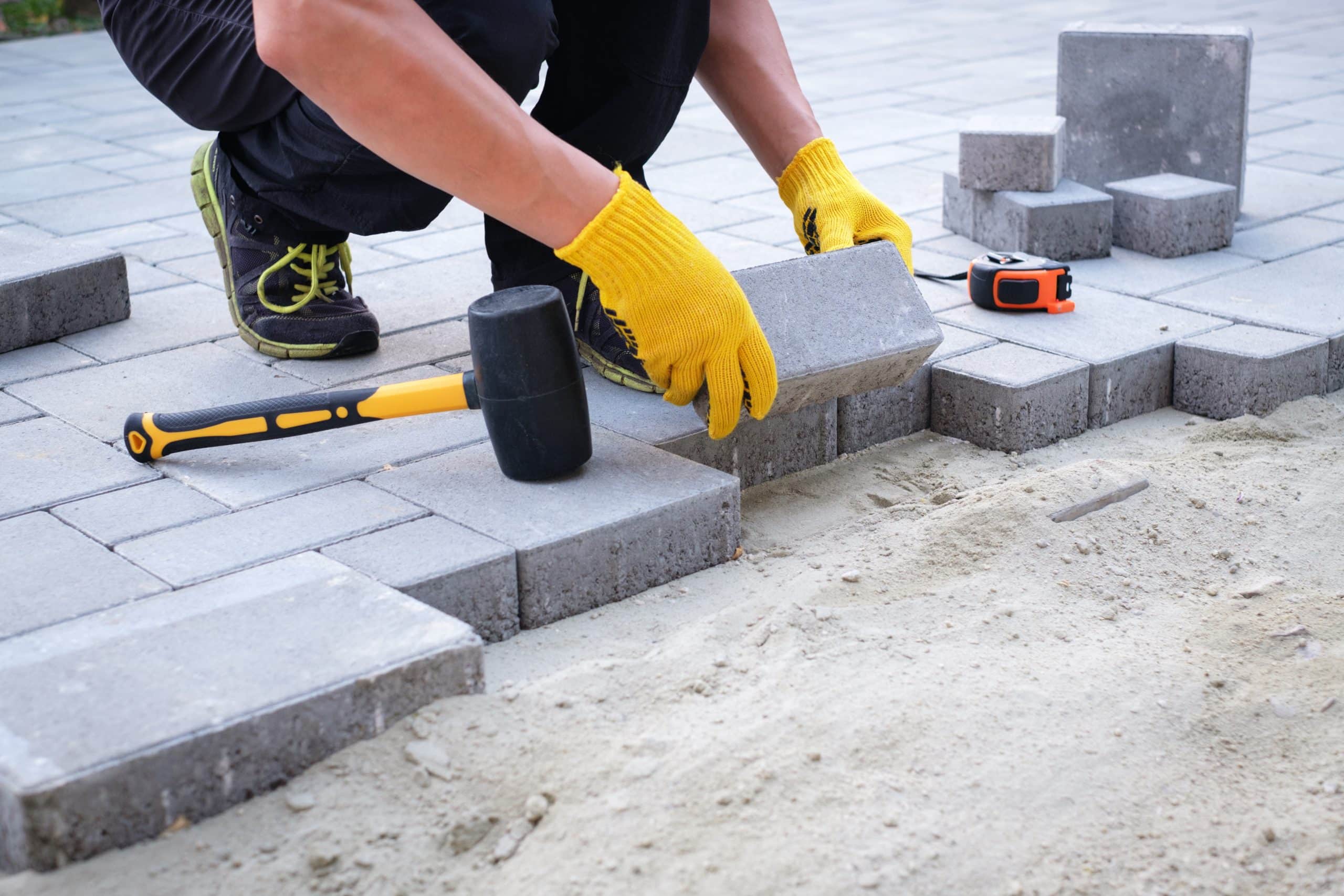
The installation process matters for smaller lots too. Cambridge pavers install efficiently, which keeps labor costs reasonable. A typical two-person crew can install about 100 square feet of pavers per day, with most residential patio projects taking 3-5 days, while some projects like 1,400 square feet around pools can be completed in just 3 days when conditions are right. Less disruption to your daily routine, and lower labor costs overall.
Want live answers?
Connect with a Powerhouse Mason Supply expert for fast, friendly support.
Both Cambridge and Nicolock offer excellent, up-to-date paver technology to give you a stronger, longer-lasting paver, but they approach durability differently. Nicolock uses their Paver-Shield technology, while natural stone relies on geological formation over millions of years.
Nicolock pavers are ideal for freeze/thaw situations, developing strength and flexibility to flow with shifting ground without rupturing, rutting, or heaving when installed over a crushed aggregate base. This flexibility is crucial for Long Island’s soil conditions and seasonal movement.
Natural stone takes a different approach. Natural stone pavers excel in extreme environments, having endured centuries of geological forces, making them inherently resistant to outdoor exposure challenges. But this comes with trade-offs in cost and installation complexity.
The technology battle between Nicolock and Cambridge comes down to different approaches to the same problem: creating pavers that last in harsh climates. Nicolock employs Paver Shield, whereas Cambridge deploys ArmorTec, a powerful additive pumped into the paver to offer a non-slip, durable, and superior alternative.
Nicolock paving stones use paver-shield technology to manufacture beautiful concrete paving stones, creating pavers with richer and denser surfaces that have a bright, vibrant appearance that just doesn’t fade. This technology focuses on surface density and color retention.
Cambridge pavers have ArmorTec technology that does a wonderful job of improving your home’s appearance, but their approach emphasizes the complete paver structure, not just the surface. The granite and superfine sand blend creates durability throughout the entire paver thickness.
For Amityville homeowners, both technologies deliver results. When it comes to Cambridge vs. Nicolock Pavers, the technology for both is similar, so you can count on having a highly durable product if you were to select either paver brand. The choice often comes down to available styles, local supplier relationships, and specific project requirements.
There is no distinct winner when you compare Cambridge pavers and Nicolock pavers, both are top brands offering great choices for Long Island property, with top-quality paver technology from either brand, where the better choice is the one that fits with your design needs and wants.
What matters more than the specific technology is proper installation. Both Cambridge and Nicolock require correct base preparation, adequate drainage, and skilled installation to perform as designed. We provide proper drainage planning, frost-resistant construction methods, and materials that handle Long Island’s freeze-thaw cycles.
Natural stone pavers occupy a different category entirely. Natural stone paver costs typically range from $15 to $30+ per square foot installed, reflecting the stone’s superior longevity and aesthetic value, delivering exceptional return on investment through enhanced property value and minimal replacement costs over decades.
Sourcing and transporting natural stone to Long Island can add up, and installation often requires skilled labor, increasing overall expense, but despite the higher initial cost, natural stone’s lasting quality and individual character make it worthwhile for many.
For Amityville’s smaller lots, natural stone can create dramatic impact. The main advantage of using natural stone lies in the fact that every piece is entirely unique, with distinctive color and texture depending on where it was quarried. This uniqueness helps smaller spaces feel more custom and high-end.
Natural stone is renowned for its natural durability, standing up to harsh weather conditions, especially when selecting varieties like bluestone that resist freeze-thaw cycles. However, not all natural stones perform equally in our climate.
The maintenance reality differs from concrete pavers. Natural stone pavers tend to preserve their beauty as they age because they contain no composite aggregates or pigment. They don’t fade like some concrete pavers, but they may require different maintenance approaches.
The natural cleft (irregularly textured surface) of flagstone pavers can make it difficult to keep furniture level and can present a tripping hazard, with some types heating in the sun and becoming painful to walk on with bare feet. These practical considerations matter for daily use.
For Amityville homeowners considering natural stone, both materials have a place in landscaping, with concrete pavers being great for quick, budget-conscious projects, while natural stone is a long-term investment in beauty and strength. The decision depends on your priorities, timeline, and how long you plan to stay in the home.
Your paver choice ultimately comes down to balancing performance, cost, and aesthetics for your specific situation. Frequent freeze thaw cycles make pavers a more weather resilient choice for Long Island homeowners, reducing the risk of heaving and uneven surfaces compared to poured concrete.
Cambridge pavers offer proven ArmorTec technology, extensive design options, and strong warranty coverage. Nicolock provides competitive Paver-Shield technology with good local availability. Natural stone delivers unmatched beauty and longevity, but at higher initial costs.
The real value of a paver patio isn’t just about the price per square foot—it comes from how the space works with your home, how well it handles Long Island weather, and how often you’ll actually use it, where solid layout and right materials matter, but so does hiring a crew that knows how to build it right the first time.
For expert guidance on your Amityville patio project, we combine local knowledge with quality materials and professional installation connections to help you make the right choice for your outdoor investment.
Article details:
Share:
Continue learning: