Not sure what dry stack stone veneer is or whether it will hold up on Long Island? This guide breaks it down — from how it works to where to find it in Nassau County.
Share:
Summary:
You saw it on a house in Roslyn or Great Neck — that clean, layered stone exterior with no visible grout lines — and now you’re trying to figure out what it is and where to get it. That’s exactly what this guide is for.
Dry stack stone veneer is one of the most popular exterior finishes right now, but it’s also one of the most misunderstood. The terminology alone can send you in circles: cultured stone, manufactured veneer, thin stone, ledgestone panels. And once you start wondering how any of it holds up through a Long Island winter, the questions multiply fast.
Here’s what you actually need to know — product types, performance, and how to source it locally in Nassau County.
Dry stack stone veneer refers to stone that is installed without visible mortar joints between pieces. The result is a tight, layered profile where the stones appear to sit flush against each other — clean lines, no white grout seams, and a look that works just as well on a contemporary colonial in Garden City as it does on a more traditional home in Oyster Bay.
One thing worth clarifying upfront: “dry stack” describes the finished appearance, not the installation method. Most dry stack installations still use mortar or adhesive behind the stone for structural support — it’s just hidden. The face of the wall looks dry-stacked. This distinction matters because it affects how you evaluate installation quality and which contractors you want handling the job.
This is the question most Nassau County homeowners land on pretty quickly, and it’s worth taking seriously because the answer affects your budget, your timeline, and your long-term maintenance.
Natural stone veneer is cut directly from quarried or fieldstone. Every piece is genuinely unique, which gives it an authenticity that’s hard to replicate. The tradeoff is cost — natural stone veneer runs significantly higher in both material and installation labor, typically in the range of $25 to $50 per square foot installed. It’s also heavier, which can be a real consideration if you’re working on an older home. Much of Nassau County’s housing stock was built in the postwar era — the 1940s through 1970s — and those foundations weren’t always designed with heavy cladding in mind.
Manufactured stone veneer, sometimes called cultured stone, is made by pouring a blend of lightweight concrete and aggregate into molds cast from real stone. Mineral pigments are added to replicate natural color variation. Done well — and with a premium brand — the result is nearly indistinguishable from the real thing. The weight difference is significant: manufactured veneer typically runs 10 to 15 pounds per square foot, which means no additional structural support is required for most existing walls. That’s a practical advantage when you’re renovating rather than building from scratch.
The other thing manufactured stone has going for it is consistency. If you’re ordering for a large exterior project, you can get matching material across the whole run. With natural stone, variation is part of the appeal — but it also means color-matching additional material later can be tricky.
For most exterior applications in Nassau County, premium manufactured stone veneer from brands like Cultured Stone, Eldorado Stone, or Dutch Quality Stone delivers a result that looks exceptional and performs reliably. The concern that it will look “fake” usually comes from exposure to low-quality products — not from the category itself.
This is the question that separates Long Island homeowners from buyers in warmer markets, and it deserves a direct answer: yes — but only if you’re selecting the right product.
Nassau County typically experiences 30 to 50 freeze-thaw cycles per year. That means exterior materials expand and contract repeatedly throughout the winter season. Stone or veneer products that aren’t rated for freeze-thaw conditions can crack, delaminate, or absorb moisture in ways that cause real damage over time. It’s one of the most common ways exterior stone projects go wrong, and it’s almost always a product selection issue, not an installation issue.
What you’re looking for is a manufactured stone veneer product that meets ASTM C1670 standards — the industry benchmark for adhered manufactured stone masonry veneer units. Reputable brands like Cultured Stone and Eldorado Stone carry independent testing documentation that confirms freeze-thaw performance. When you’re comparing products, that documentation should be something you can actually ask for and receive.
Coastal areas of Nassau County — Long Beach, Atlantic Beach, Lido Beach, and waterfront sections of Oyster Bay — add another layer of consideration. Elevated humidity and salt air can affect some exterior materials over time. Stone veneer, particularly well-sealed manufactured veneer, holds up better in those conditions than wood siding or stucco. But it’s worth discussing your specific location when you’re selecting materials, because product specs vary and the right choice for a home in Manhasset may differ from one in Long Beach.
This is exactly the kind of conversation that’s hard to have with an online retailer. You need someone who understands the local climate and can tell you which products in their inventory are actually appropriate for your site conditions — not just what looks good in a catalog photo.
Want live answers?
Connect with a Powerhouse Mason Supply expert for fast, friendly support.
“Artificial stone” is a term that gets used interchangeably with manufactured stone veneer and cultured stone, and it carries some baggage. The word “artificial” makes it sound like a compromise — like you’re settling for something lesser. That framing is outdated.
Modern manufactured stone veneer is engineered specifically for exterior performance. The manufacturing process uses real stone molds, so the texture and relief are cast from actual stone surfaces. The result, with a quality brand, is a product that reads as genuine stone from any normal viewing distance — and in some cases, up close too. What separates the good products from the bad ones isn’t the category; it’s the brand and the installation.
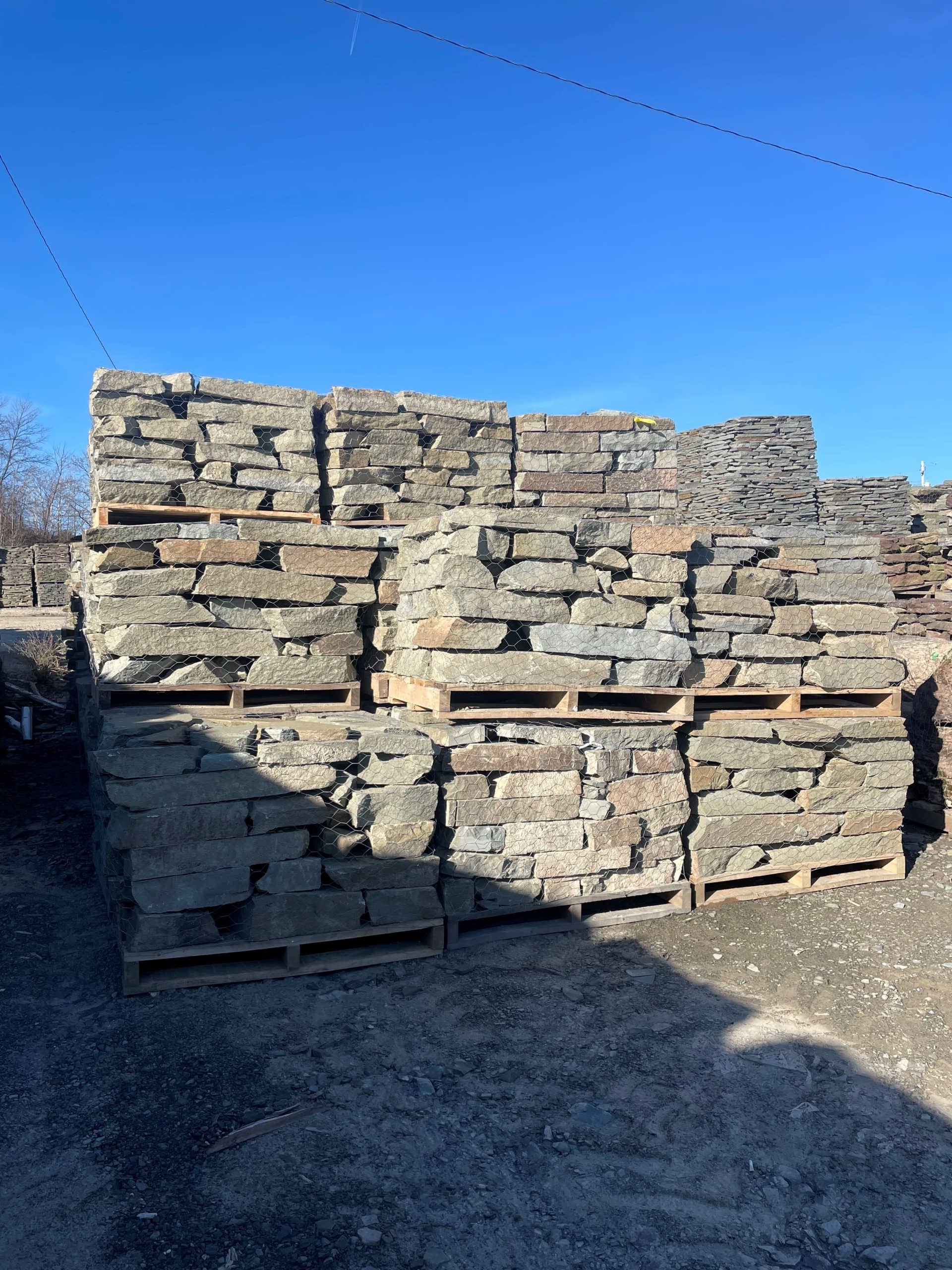
There’s a reason dry stack stone veneer shows up on so many of the newer and recently renovated homes in Nassau County’s higher-end communities. The tight, mortar-free profile fits naturally into contemporary and transitional architecture — the clean horizontal lines echo the same aesthetic sensibility you see in modern windows, flat-panel garage doors, and minimal landscaping.
It works as a full facade treatment, but it’s equally effective as an accent. A dry stack stone veneer base on a two-story colonial, combined with traditional siding above, gives the home a grounded, elevated look without overpowering it. Entry pillars, window surrounds, and garage facades are other common applications in Nassau County neighborhoods where homeowners want to add visual weight and texture without a full exterior overhaul.
The design flexibility is part of why manufactured stone veneer appears as a standard or upgrade finish in an estimated 22 to 28 percent of new homes priced above $400,000 nationally. In a county where median home values regularly exceed $600,000 to $700,000, and where buyers have high design expectations shaped by proximity to New York City, dry stack stone has become a recognizable marker of a well-finished home.
From an investment standpoint, the numbers are worth knowing. According to the 2025 Zonda Cost vs. Value Report, manufactured stone veneer delivered a 200.7 percent return on investment in the Mid-Atlantic region — meaning the average project returned more than double its cost at resale. That’s a meaningful data point for Nassau County homeowners who are investing in a property already worth well into the six figures. The key to getting that return is doing it right — right product, right installation, right application. A poorly installed or mismatched veneer won’t deliver those results. A well-executed dry stack exterior on a home in Port Washington or Roslyn Heights, using a premium brand installed by an experienced local mason, absolutely can.
This is a distinction that doesn’t get explained often enough, and it trips up a lot of buyers who are comparing products without fully understanding what they’re looking at.
Loose dry stack stone veneer consists of individual pieces — varying in length, width, and depth — that a mason sets by hand, piece by piece, to build the dry stack pattern. The result is highly customized and visually organic, because each installation is unique. The tradeoff is time and skill. Loose dry stack requires a more experienced installer and a longer labor window. It’s the approach you’d choose when you want a truly artisanal result and you have a mason who knows what they’re doing.
Dry stack panel systems are prefabricated units — typically 12 square feet or so per panel — designed to interlock and create the dry stack look more efficiently. They’re engineered so that the joints between panels are disguised within the pattern, making the finished wall look continuous rather than modular. The installation is faster and somewhat more forgiving, which is why panel systems are often the practical choice for larger exterior applications where labor costs and project timelines are real constraints.
Neither format is inherently superior. The right choice depends on your project scope, your installer’s experience, and the specific look you’re going for. A full front facade on a large colonial in Old Westbury might be an ideal candidate for a panel system. A smaller accent wall or entry feature might benefit from the hand-set character of loose stone.
When you’re in the planning phase, this is a conversation worth having with both your supplier and your installer before you commit to a product. The material you choose will shape the installation approach, and the installation approach will shape the final result. Getting all three parties — homeowner, supplier, and contractor — aligned early is how projects come out the way they were imagined.
If you’ve made it this far, you have a solid foundation for making a smart decision — you know what dry stack stone veneer is, how natural and manufactured options compare, what to look for in a product that will actually survive a Long Island winter, and how panel systems differ from loose stone.
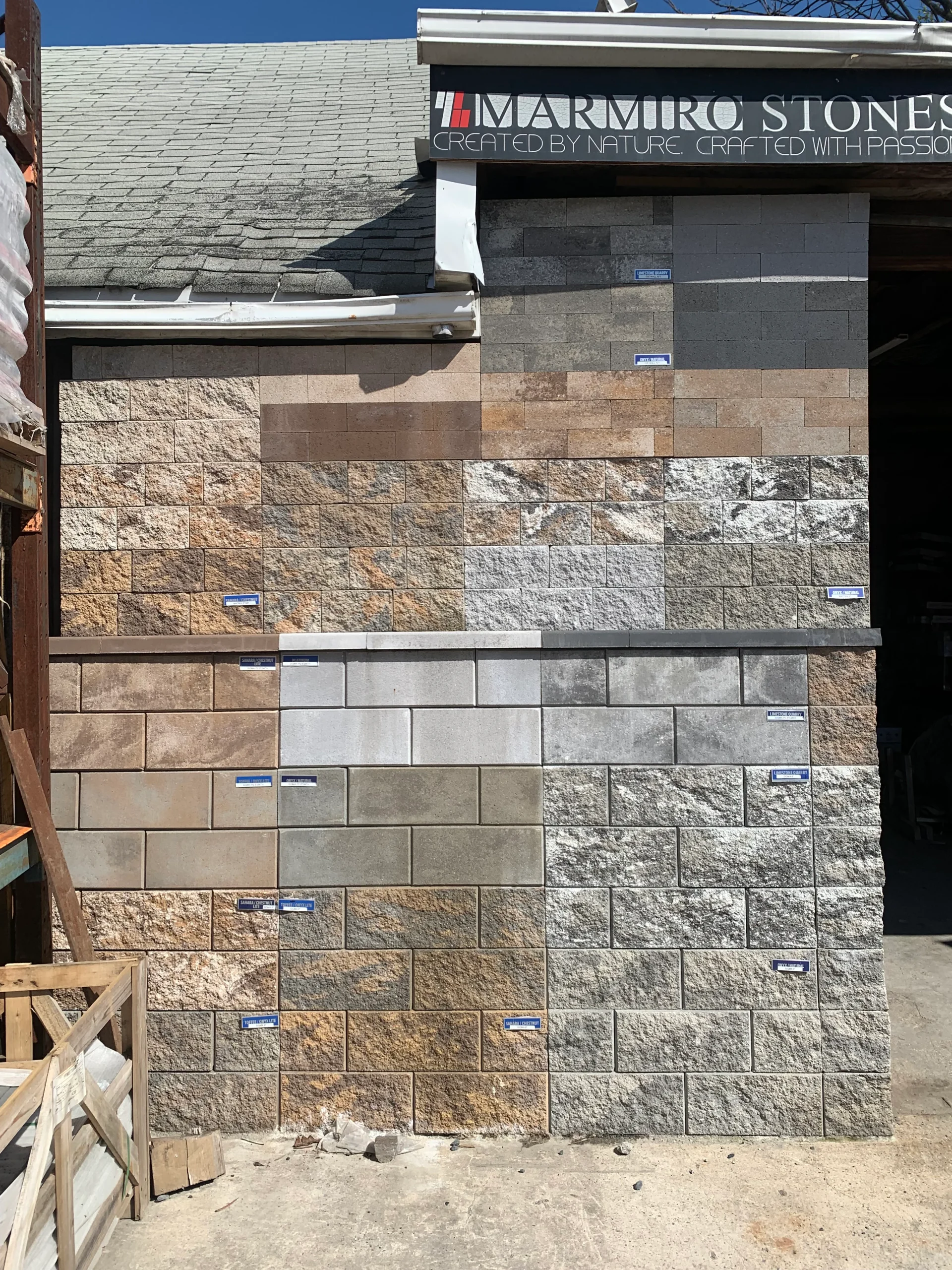
The next step is seeing the options in person. Color, texture, and scale are genuinely difficult to evaluate on a screen, and the wrong choice on any of those three can throw off an entire exterior. That’s why having a local showroom matters — not as a sales pitch, but as a practical reality of how good exterior projects get planned.
At Powerhouse Mason Supply, our Roslyn Heights location is right here in Nassau County. We carry Cultured Stone, Eldorado Stone, Dutch Quality Stone, Casa di Sassi, and more — so you can compare styles, ask questions, and leave with a clear direction rather than a guess. If you need a contractor, we can connect you with experienced local installers who know the product and know Long Island. Stop in, or give us a call — we’re open Saturdays too.
Article details:
Share:
Continue learning: