Trying to decide between faux rock exterior panels and natural stone? Here's what Nassau County homeowners actually need to know before choosing.
Share:
Summary:
Most homeowners assume natural stone is the smarter investment — the “real” choice — and that faux rock exterior panels are a budget compromise. That assumption is worth questioning. The data tells a different story, and so does the math once you factor in installation costs, local climate conditions, and what each material actually returns at resale. If you’re weighing your options for a Nassau County home, the decision is more nuanced than it looks. Here’s what you actually need to know.
The price gap between natural stone and manufactured stone veneer is wider than most buyers expect — and it shows up most in labor. Natural stone siding runs anywhere from $30 to over $110 per square foot installed, depending on the material and complexity of the job. Whole-home natural stone exteriors average around $95,000.
Manufactured stone veneer, by comparison, typically installs for $24 to $47 per square foot. That gap exists largely because of labor. Faux stone panels cost $3 to $5 per square foot in labor. Natural stone costs roughly $9 to $15 per square foot — about three times more.
When you’re covering even a modest portion of a Nassau County home’s exterior, those numbers add up fast. A modest 500-square-foot project in manufactured stone runs approximately $15,750 professionally installed. That’s a very different conversation than a whole-home natural stone project.
One of the most common mistakes homeowners make is thinking they need to cover the entire front of their house in stone for it to look right. They don’t. In fact, covering too much surface area — say, 50% or more of the facade — can look heavy and unbalanced. Most designers recommend somewhere around 25 to 30% coverage on the front elevation, focused on architectural features that naturally anchor the eye.
Think about where stone makes the biggest visual impact: the foundation band running across the base of the house, the columns flanking an entryway, the area around a garage bay, or the front face of a chimney. These are the spots where stone — faux or natural — creates a grounded, finished look without overwhelming the rest of the exterior.
This matters for your budget, too. Strategic stone veneer placement rather than comprehensive coverage means the total square footage drops significantly, which changes the project cost and timeline.
The other thing worth knowing: manufactured stone veneer is lightweight. It can be applied to most standard wall substrates — wood framing, CMU, poured concrete, metal studs — without structural modification. Full-bed natural stone is heavy enough that some homes require foundation reinforcement before installation can even begin. That’s an added cost and complication that rarely gets mentioned upfront.
For Nassau County homes specifically, a lot of the housing stock is mid-20th century construction — post-war Capes, split-levels, colonials built in the 1950s through 1970s. These homes weren’t designed with the structural load of full natural stone in mind. Manufactured stone veneer sidesteps that issue entirely, which is one reason it’s become the go-to choice for exterior upgrades across Long Island.
This is the question that stops most buyers. They’ve seen cheap faux stone — the kind with an obvious repeating pattern, flat texture, and visible seams running floor to ceiling — and they don’t want that on their house. That concern is fair. But it’s a quality problem, not a category problem.
The difference between faux stone that looks fake and faux stone that fools the eye comes down to three things: how many molds were used in production, how much texture depth the panel has, and how the seams are managed during installation. Cheap panels use only a handful of master molds, which means the same stone shape repeats every few feet. Quality manufactured stone veneer — the kind made by brands like Eldorado Stone, Dutch Quality Stone, and Cultured Stone — is cast directly from carefully selected natural stone, capturing surface detail at a level that’s genuinely difficult to distinguish from the real thing at street distance.
Texture depth matters because stone creates shadow. A flat, low-relief panel looks like a printed image of stone. A panel with real depth catches light and shade the way actual stone does, which is what gives it a three-dimensional, convincing appearance.
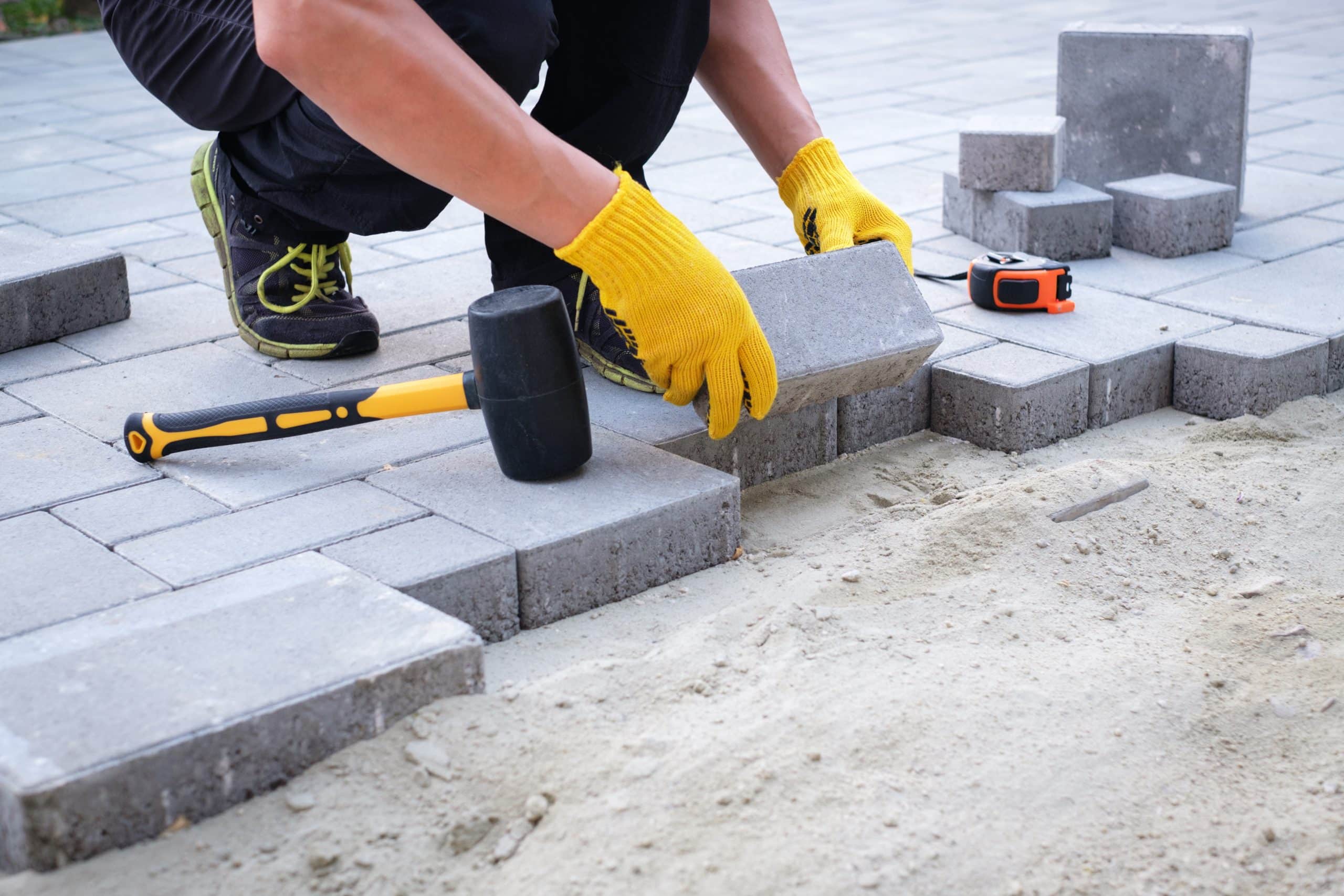
Seam management is an installation issue as much as a product issue. A straight vertical seam running from top to bottom is a dead giveaway — real stacked stone never does that. Proper installation staggers the seams and blends the joints so the pattern reads as continuous rather than panelized.
When you’re buying from a supplier who carries premium brands and can connect you with installers who know how to work with these materials, the “it looks fake” problem largely disappears. The risk is buying the cheapest option available and expecting premium results.
Want live answers?
Connect with a Powerhouse Mason Supply expert for fast, friendly support.
Where you buy your stone veneer affects the outcome of your project more than most people realize. The brands a supplier carries, their ability to break pallets for smaller jobs, and whether they can connect you with a qualified installer all shape the experience — and the result.
Nassau County has no shortage of masonry yards, but not all of them carry the premium manufactured stone veneer brands that actually deliver on appearance and durability. At Powerhouse Mason Supply, we carry Eldorado Stone, Dutch Quality Stone, Casa di Sassi, and Cultured Stone — brands that are cast from natural stone molds, ASTM-compliant, and widely recognized by the contractors and designers who work with these materials regularly.
We also understand the specific demands of Long Island’s climate and building stock. Our team has worked with hundreds of Nassau County homeowners on exterior projects, and we know which materials and installation approaches hold up best through our winters and salt air.
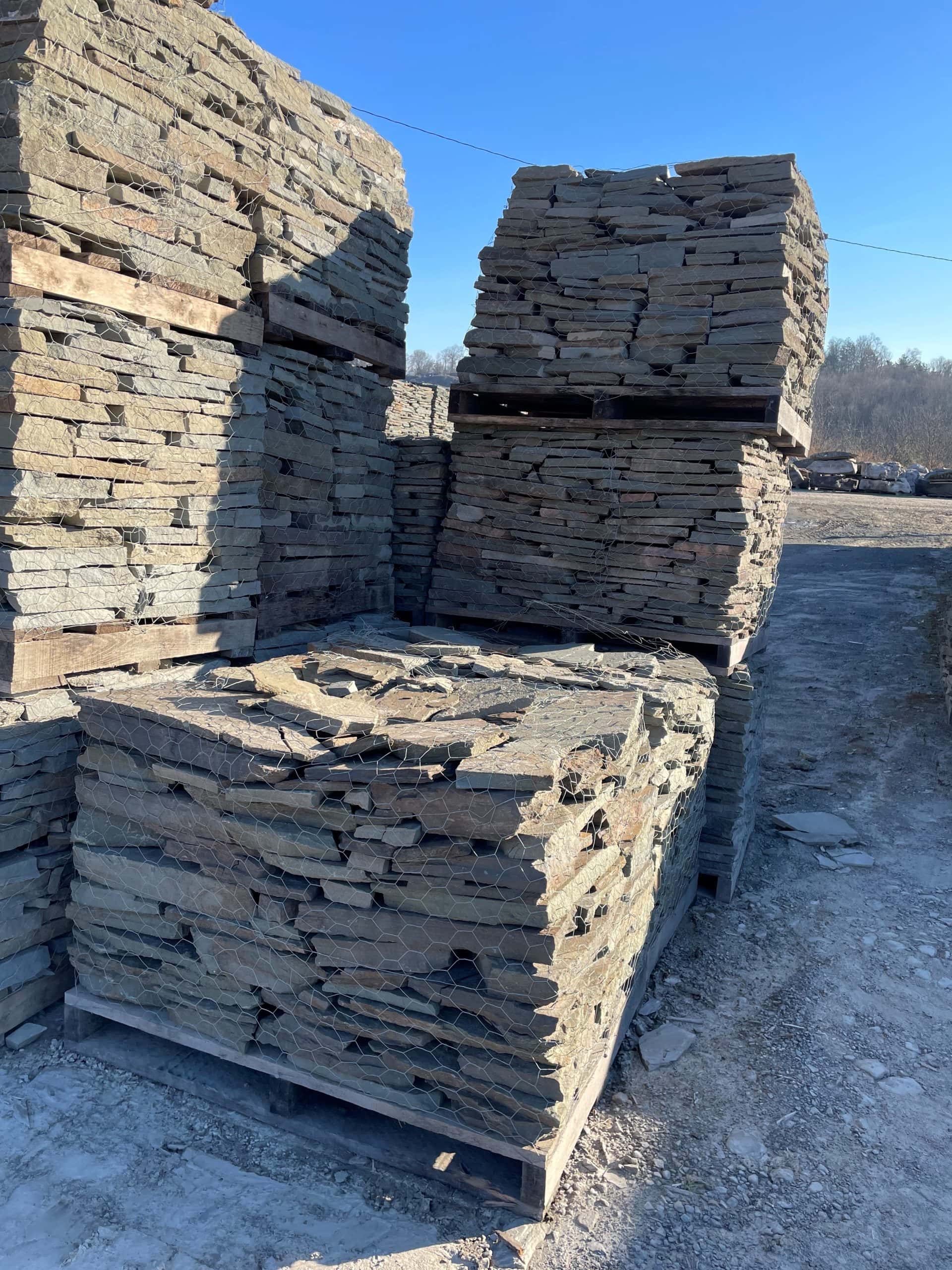
Nassau County sits between Long Island Sound to the north and the Atlantic Ocean to the south. That geography means salt-laden air hits your exterior masonry year-round — not just during storms. Combined with hard winters and the freeze-thaw cycling that comes with them, it’s an environment that tests exterior materials more aggressively than most inland markets.
Freeze-thaw damage works like this: water infiltrates porous surfaces, freezes, expands, and forces the material apart. Over multiple seasons, that process causes cracking, delamination, and mortar failure. It’s why you see so many deteriorating masonry exteriors on older Long Island homes — materials that were installed without proper moisture management, or that simply weren’t up to the task.
Quality manufactured stone veneer, installed correctly with a weather-resistant barrier, metal lath, and a proper mortar scratch coat per ASTM C1780 standards, is engineered to handle these conditions. The installation process creates a sealed, bonded system rather than a surface that’s simply adhered to the wall. When it’s done right, it holds up through Nassau County winters without the cracking and spalling you’ll see in lower-quality applications.
Natural stone isn’t immune to freeze-thaw either. Dense stones like granite perform well; more porous options like certain limestones can be vulnerable. The material matters, but so does the installation — and that’s true for both categories.
The salt air factor is worth taking seriously if you’re on or near the South Shore. Communities like Massapequa, Wantagh, Bellmore, and Merrick see more direct coastal exposure than interior Nassau County neighborhoods. If your home is within a mile or two of the water, that’s a conversation worth having when you’re selecting materials and planning the installation approach.
Here’s the piece of information that tends to shift the conversation: according to the 2025 Zonda Cost vs. Value Report — the most widely cited annual study on home improvement returns — manufactured stone veneer ranked third out of 28 evaluated projects for return on investment, recouping more than 206% of its cost at resale. Only garage door replacement and steel entry door replacement ranked higher. Natural stone does not appear in the top 10.
In a market like Nassau County, where the median home value sits at $684,700 and has been rising steadily, that ROI figure carries real weight. Homeowners here are equity-conscious in a way that buyers in lower-value markets aren’t. An exterior upgrade that returns more than twice its cost isn’t just cosmetic — it’s a financial decision.
The 2024 version of the same report put the average manufactured stone veneer project cost at $11,287 with an average resale value of $17,291. Those are national averages; Nassau County’s higher home values and renovation costs will shift the specific numbers, but the directional argument holds.
What this means practically is that the “natural stone is the real investment” assumption doesn’t survive contact with the data. Manufactured stone veneer is the material that actually performs at resale — not because it’s cheaper, but because it delivers visible, lasting curb appeal at a cost that the market rewards.
For homeowners on Nassau County’s North Shore — Great Neck, Roslyn, Manhasset, Old Westbury — where home values are higher and buyers are discerning, this distinction matters. Curb appeal in these communities is competitive, and the material you choose needs to look right and hold up for years. The good news is that quality manufactured stone veneer does both.
The honest answer is: it depends on your home, your goals, and your budget — but for most Nassau County homeowners, manufactured stone veneer is the stronger choice on every measurable dimension except one. If authenticity in the strictest sense matters to you, natural stone delivers that. For everyone else, faux rock exterior panels from a quality manufacturer offer better ROI, easier installation, lower total cost, and performance that holds up through Long Island’s climate without compromise.
The most important variable isn’t faux versus natural — it’s quality versus cheap. The brand you choose, the installer you hire, and the substrate preparation behind the panels determine whether the result looks like a premium exterior or a regrettable one.
We have showrooms in Roslyn Heights and Amityville where you can compare materials side by side before committing to anything. Our team can connect you with experienced local contractors who know how to install these products correctly in Nassau County conditions. Reach out to Powerhouse Mason Supply and let’s figure out what actually makes sense for your project.
Article details:
Share:
Continue learning: