National cost guides give you ranges. This breaks down what retaining wall blocks actually cost in Nassau County — and why the numbers look different here.
Share:
Summary:
You’ve probably seen the national cost estimates — $15 to $35 per square foot for materials, $60 to $140 per linear foot installed. Those numbers aren’t wrong, exactly. But they’re not Nassau County numbers either. Long Island has its own labor market, its own soil conditions, and its own winters. A cost guide that doesn’t account for any of that isn’t giving you the full picture.
This page is for homeowners in active planning mode — not browsing for inspiration, but actually figuring out what a retaining wall project is going to cost them and what blocks they should be buying. Let’s get into it.
The material cost for interlocking retaining wall blocks typically runs $15 to $35 per square foot. Individual blocks range from $2 to $10 each for standard residential units.
Once you add labor, drainage, base preparation, and a cap course, a complete installed wall generally lands between $28 and $55 per square foot — or $60 to $140 per linear foot for a standard 3- to 4-foot wall. For a 100-square-foot project, expect total costs somewhere between $2,800 and $9,000 depending on wall height, site conditions, and the specific system you choose.
The range is wide because the variables are real. A two-foot garden wall on flat ground is a very different project from a four-foot engineered retaining wall on a sloped North Shore property.
Labor costs in the New York metro area — including Nassau County — run 15 to 30 percent above national averages. On a $6,000 project, that gap could mean $900 to $1,800 more than what a homeowner in the Midwest might pay for the same scope of work.
Wall height is the single biggest cost driver regardless of where you live. A two-foot wall might run $40 to $200 per linear foot. Push that to six feet and you can hit $360 per linear foot. That’s not just more blocks — taller walls require engineered geogrid reinforcement layers, deeper base preparation, and more drainage infrastructure behind them. The labor complexity increases significantly with every foot of height.
Much of Nassau County’s housing stock was built between the 1940s and 1970s. Older retaining walls — timber, railroad ties, mortar-based block — are now at or well past their useful life. Replacement projects often come with added costs: demo, disposal, and sometimes regrading the slope before new blocks can even go in. If you’re replacing an existing wall rather than building new, budget for those additional line items.
Labor accounts for 50 to 60 percent of total retaining wall project cost. The blocks themselves are a minority of what you’ll spend. That changes how you should think about material selection. Upgrading from a basic block to a premium Cambridge or Nicolock wall system might add a few hundred dollars to your material cost — but it won’t dramatically change your total project budget, and it will meaningfully change how the wall performs over time.
Many Nassau County homeowners planning a retaining wall project are also thinking about their driveway at the same time. If a contractor is already mobilized on your property, tackling both is efficient. The question that often comes up is whether to go with traditional cobblestone (Belgian block) or interlocking concrete pavers.
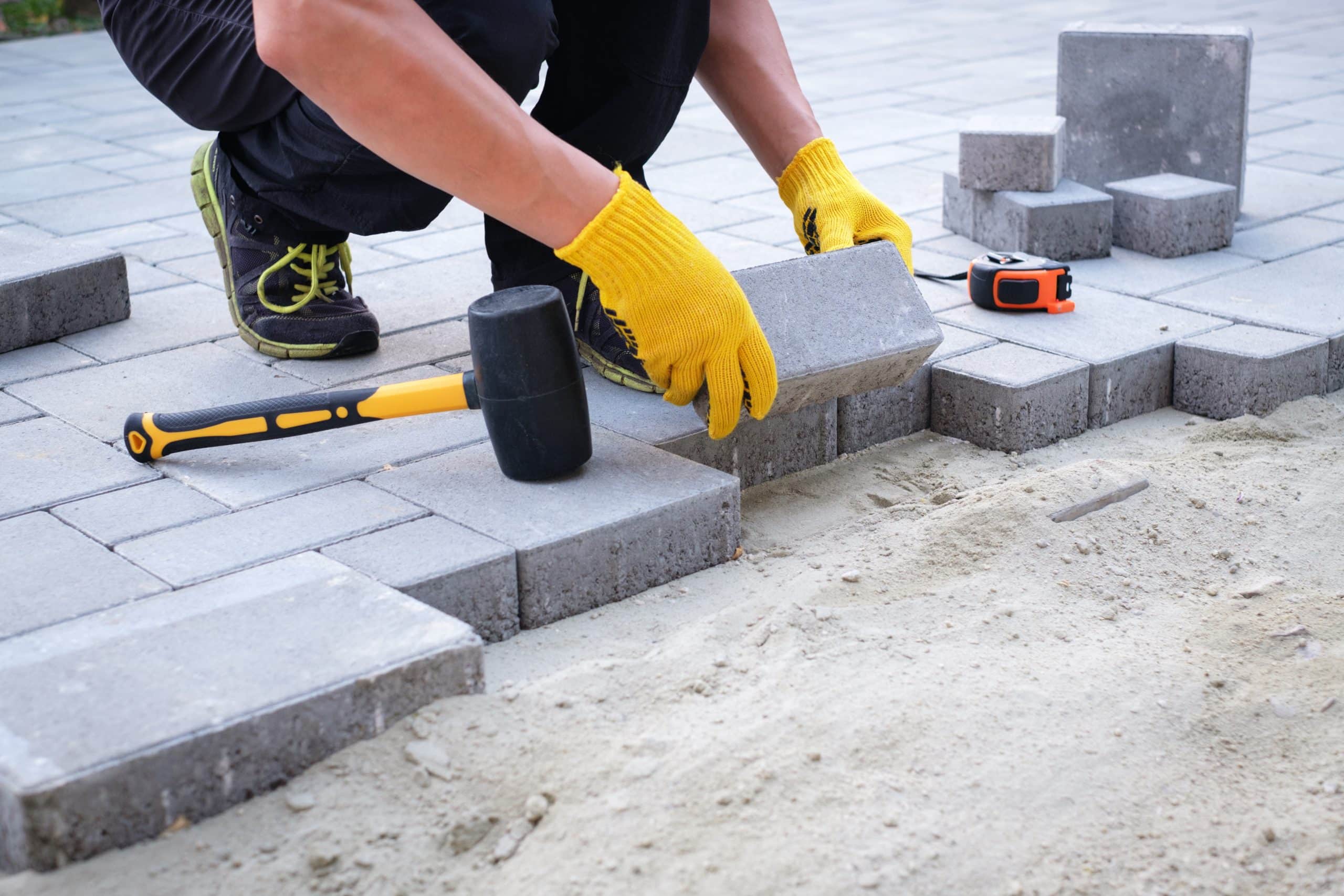
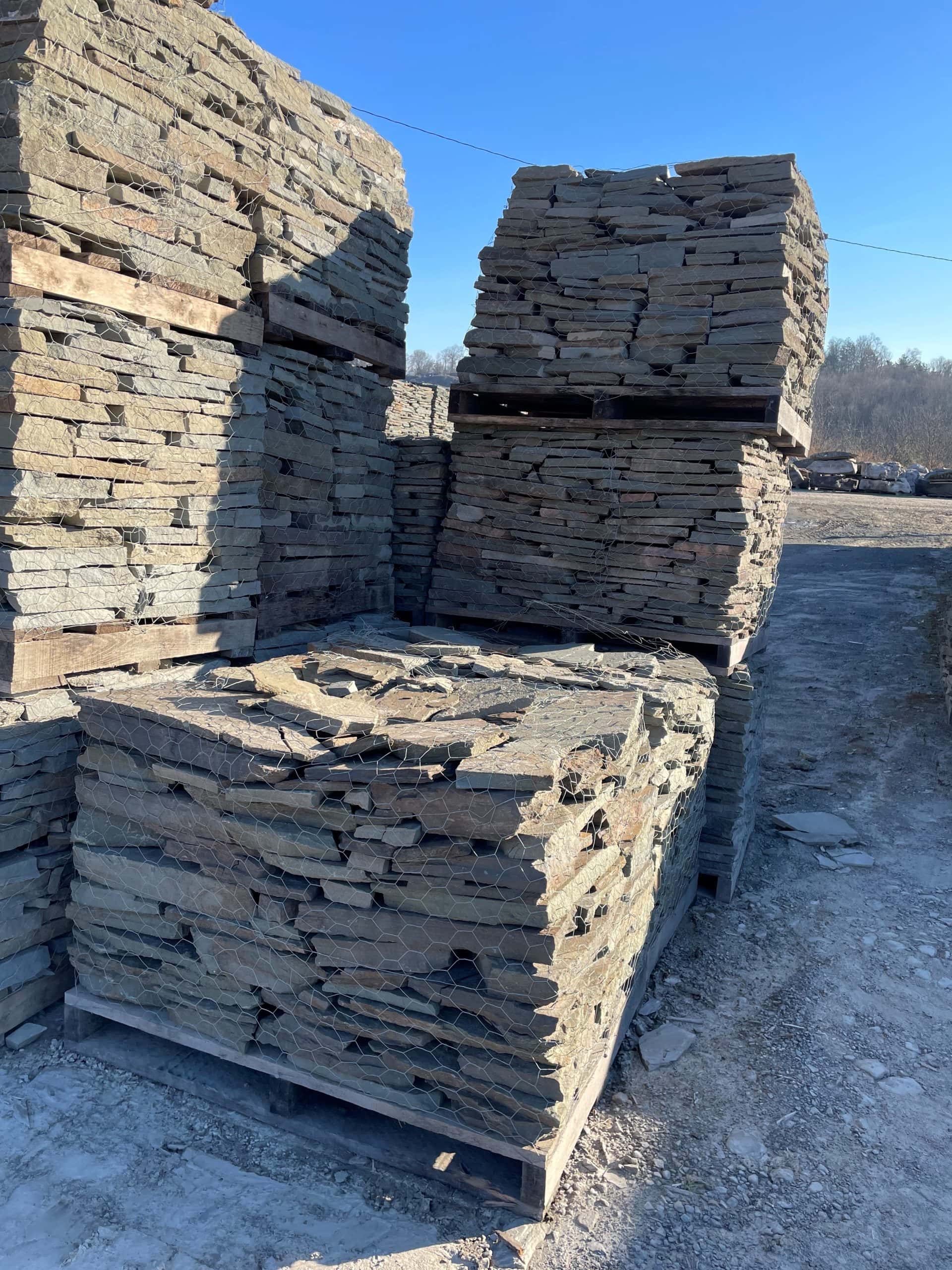
They’re related products but not the same thing. Traditional cobblestone is natural stone — quarried, tumbled, and set in sand or mortar. Interlocking pavers are manufactured concrete units engineered for consistent sizing and interlocking fit. Both are available through Powerhouse Mason Supply, and both work well on Long Island properties. The differences come down to aesthetics, cost, and installation method.
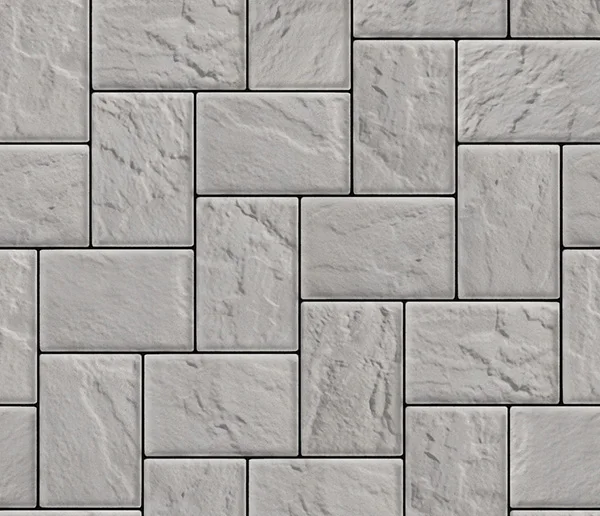
Belgian block driveways have a classic, old-world look that suits the established character of many Nassau County neighborhoods — think the tree-lined streets of Garden City, the historic feel of Roslyn Village, or the older estates along the North Shore. Interlocking pavers give you more color and pattern options and tend to be easier to repair if a section ever needs to be pulled up.
On the cost side, natural cobblestone typically runs higher on materials than manufactured interlocking pavers, and the installation is more labor-intensive because natural stone requires more hand-fitting. If you’re comparing options for a driveway project alongside a retaining wall, we invite you to visit one of our showrooms to see both side by side. The difference in texture and color is something that’s genuinely hard to evaluate from a screen.
Powerhouse Mason Supply carries both products. If you’re doing a full hardscape renovation — retaining wall, driveway, walkway — you can source everything from one place, see it all in person, and get consistent material quality across the project.
Want live answers?
Connect with a Powerhouse Mason Supply expert for fast, friendly support.
When most homeowners search for retaining wall blocks, they’re picturing a single unit — one block. But what you’re actually building is a system. A complete retaining wall system includes the base course blocks, fill courses, a cap course, compacted gravel base, drainage aggregate behind the wall, and for walls over three to four feet, layers of geogrid reinforcement embedded in the soil.
The interlocking mechanism is what makes these systems work without mortar. Each block connects to the next through a rear lip, pin, or tongue-and-groove system depending on the product line. That connection creates a unified structure that can flex slightly through freeze-thaw cycles — which matters a great deal on Long Island, where winters put real stress on outdoor masonry.

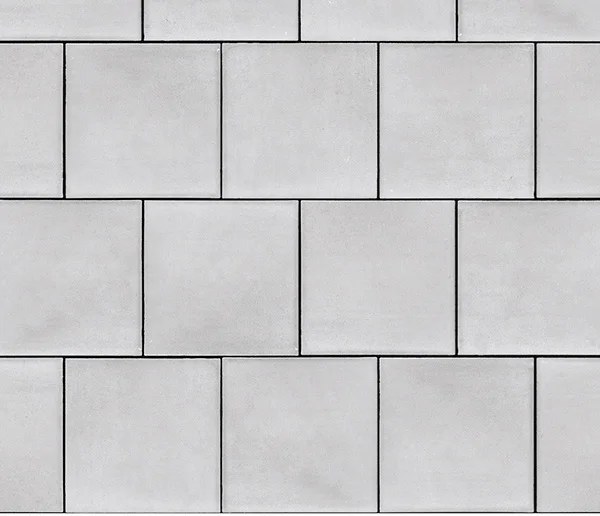
Not every retaining wall calls for the same block size. Small decorative garden wall blocks — the kind you’d use to border a planting bed or define a low landscape edge — are designed for light-duty applications. They’re appropriate for walls under two feet, on relatively flat ground, with minimal soil pressure behind them.
Large retaining wall blocks are a different category. These are engineered for structural applications — steeper slopes, taller walls, situations where the wall is holding back a significant volume of soil. Large-format blocks run $25 to $100 each for materials, and $20 to $45 per square foot installed. The higher cost reflects both the block size and the engineering that goes into the system.
The distinction matters for a practical reason: buying the wrong block type for a structural application isn’t just a waste of money — it’s a structural risk. A decorative garden wall block stacked four feet high on a slope without geogrid reinforcement is not a retaining wall. It’s a wall waiting to fail.
In Nassau County, the demand for large retaining wall blocks tends to be concentrated in areas with genuine grade changes — the North Shore communities like Oyster Bay, Roslyn, and Manhasset, where properties often sit on sloped terrain, and in areas near water features or tidal zones where soil erosion is an active concern. If your property has a meaningful slope or you’re dealing with an eroding hillside, this is the conversation to have before you buy anything.
When you visit our Roslyn Heights showroom, we can walk through your project specifics — the height, the slope, what’s behind the wall — and point you toward the right system. That’s a different experience than adding blocks to a cart online without knowing whether they’re rated for what you’re asking them to do.
We carry both Cambridge and Nicolock wall systems, and the question of which to choose comes up constantly. The short answer is that both are contractor-grade products that perform well in Long Island’s climate. The longer answer depends on your project specifics, your aesthetic preferences, and what your contractor is experienced installing.
Nicolock offers several distinct wall system lines — the Alta Wall, Belvedere Wall, Garden Wall, Firma Wall, Colonial Wall, and Verona Wall, among others. Each system has a specific interlocking mechanism, block profile, and application range. The Alta Wall uses a rear lip connection system with a built-in one-inch setback per course, which gives the wall its structural backward lean without any guesswork during installation. The Firma Wall uses a double tongue-and-groove system for added interlocking strength. These aren’t cosmetic differences — they affect how the wall is built and how it performs under load.
Cambridge wall systems are another strong option and are widely specified by Long Island contractors. Both brands are manufactured to CMHA (Concrete Masonry & Hardscapes Association) standards for segmental retaining walls, which means they meet the industry’s engineering benchmarks for structural performance, drainage, and freeze-thaw durability.
That last point — freeze-thaw durability — is worth dwelling on for Nassau County specifically. Long Island goes through significant freeze-thaw cycling every winter. Mortar-based masonry walls crack under that stress because the mortar joints can’t flex. Interlocking concrete block systems from both Cambridge and Nicolock are designed to handle freeze-thaw movement without mortar, which is why they’re the dominant choice among Long Island contractors for residential retaining walls.
These brands aren’t available at big-box stores. Home Depot and Lowe’s carry their own lines of retaining wall block, but they’re not the same products that local masonry contractors specify. When a contractor recommends a Cambridge or Nicolock system, they’re recommending it for a reason — and sourcing it from a specialty supply yard that actually stocks it is part of how that recommendation gets executed correctly.
The cost of a retaining wall project on Long Island comes down to a handful of real variables: wall height, block type, site conditions, and local labor rates. National averages give you a starting point, but Nassau County’s labor market, aging housing stock, and climate conditions all push those numbers in specific directions that generic guides don’t capture.
The most important thing you can do before buying anything is make sure you’re buying the right system for the application — not just the block that looks good in a photo.
If you’re in the planning stages of a retaining wall project, Powerhouse Mason Supply has showrooms in Roslyn Heights and Amityville where you can see Cambridge and Nicolock wall systems in person, talk through your project with someone who knows the products, and get connected with experienced local contractors if you need an installer. We’re open Saturdays from 7 AM to 1 PM for homeowners who can’t get in during the week.
Article details:
Share:
Continue learning: