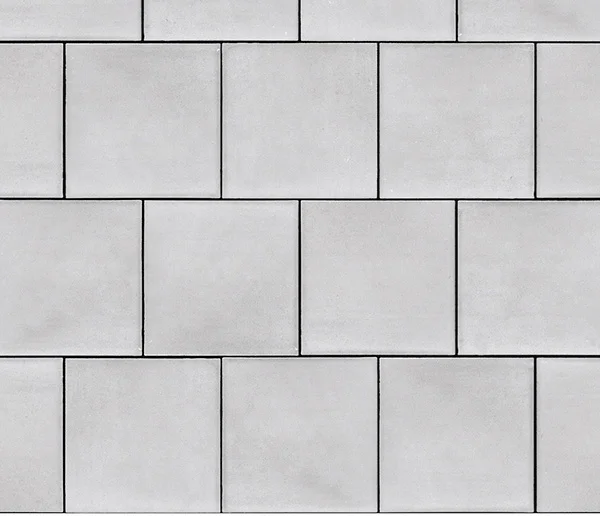
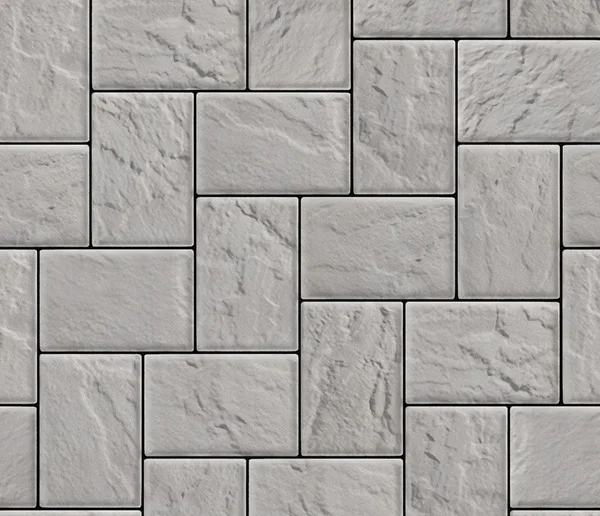
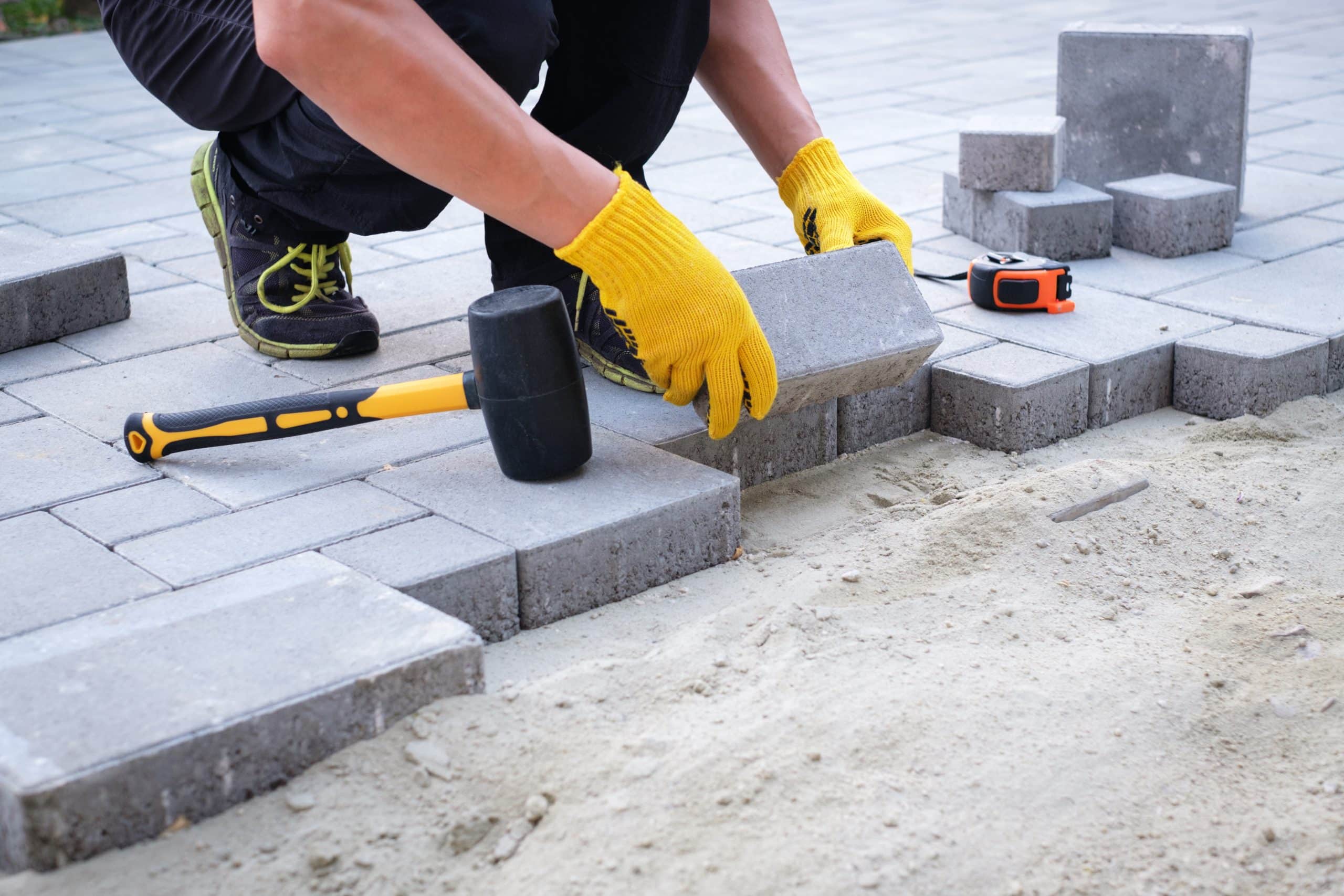
Thinking about outdoor veneer for your Nassau County home? Here's what the labels actually mean — and why the difference matters more than you'd expect.
Share:
Summary:
If you’ve started researching outdoor veneer for your Nassau County home, you’ve probably noticed that the terminology gets confusing fast. “Stone veneer,” “cultured stone,” “faux panels,” “manufactured stone” — vendors use these terms interchangeably, but the products are meaningfully different. And when you’re making a decision that affects how your home looks and holds up for decades, that difference matters. This guide cuts through the noise. By the time you’re done reading, you’ll know exactly what each product is, where each one works, and what questions to ask before you buy or hire anyone.
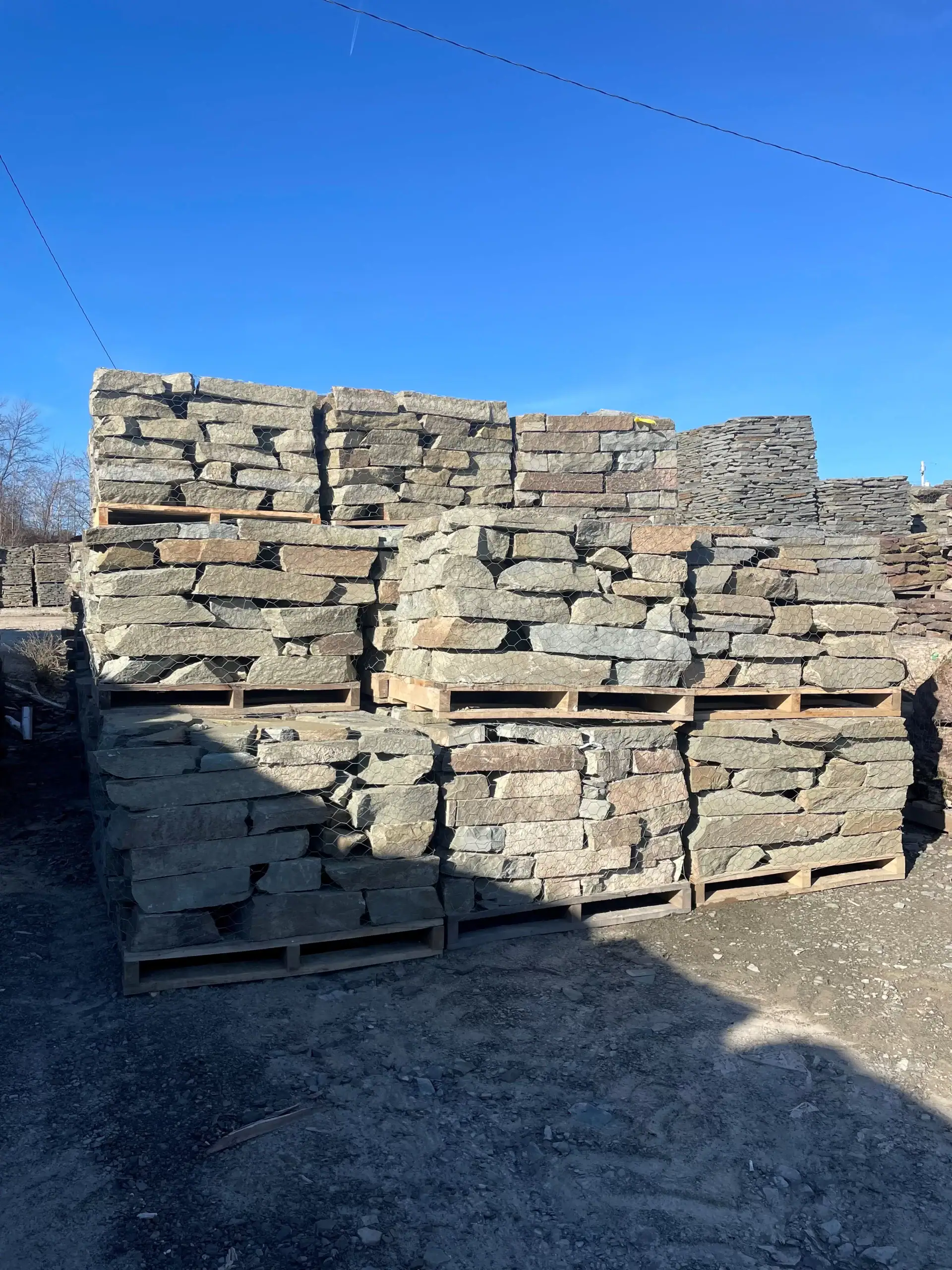
The outdoor veneer market breaks down into three distinct product categories, and most buyers don’t know that until they’re already deep into the process. Natural stone veneer is quarried directly from the earth — it’s the real thing, with all the variation and character that comes with it. Manufactured stone veneer, often called cultured stone, is an engineered product made from cement, aggregates, and iron oxides, molded and colored to replicate the look of natural stone. Faux stone panels are something else entirely — typically polyurethane foam or plastic composites, molded and painted to resemble stone textures.
Each has a legitimate use case. The problem is when one gets sold in place of another. A faux panel that works beautifully on an interior accent wall is not the same product you want on a Nassau County exterior that faces nor’easters, salt air off the Atlantic, and genuine freeze-thaw cycling every winter.
Chimneys are one of the most popular applications for outdoor stone veneer — and one of the most unforgiving. A chimney sits fully exposed at the highest point of your home, taking the full force of whatever the weather delivers. In Nassau County, that means freeze-thaw cycling from December through February, salt-laden air from both the Atlantic to the south and the Sound to the north, and the occasional nor’easter driving wind and rain horizontally into every surface.
For exterior chimney stone veneer, manufactured stone veneer is the appropriate product. It’s engineered for exterior durability — resistant to chipping, fading, and the kind of moisture infiltration that faux panels simply aren’t built to handle at elevation. The installation requirements are also more demanding on a chimney than on a ground-level accent wall. Proper flashing at the chimney cap, correct mortar selection for freeze-thaw resistance, and drainage detailing that prevents water from sitting behind the veneer are all non-negotiable. Miss any of those steps and you won’t see the problem until it’s already caused serious damage — often behind the substrate where it’s invisible until water starts showing up inside.
This is also where the distinction between manufactured stone and faux panels becomes most consequential. Faux stone is known to fade after prolonged direct sun exposure — the pigments that give it color aren’t permanent the way natural stone or quality manufactured veneer is. A chimney that fades unevenly within a few seasons is not a minor cosmetic issue. It’s a visible centerpiece of your home’s exterior, and it will look exactly like what it is: a product that wasn’t right for the application.
If you’re considering a chimney veneer project, the conversation should start with material selection — specifically whether the product you’re looking at is rated for exterior use and engineered for the temperature swings and moisture conditions that Long Island actually delivers. That’s a question we can help you answer before you commit to anything.
“Fake stone for the front of a house” is one of the most common ways homeowners describe what they’re looking for — and it’s worth being direct about what that phrase actually covers, because the answer isn’t the same for every situation.
Faux stone panels — the polyurethane or plastic composite sheets — are a legitimate product for the right application. They’re lightweight, relatively easy to install, and can produce a convincing stone look in sheltered or interior settings. A covered entryway, a garage accent wall, or an interior fireplace surround are all reasonable use cases. The issue is when faux panels get specified for fully exposed exterior facades in a climate like Nassau County’s.
Polyurethane panels are less resistant to impact and extreme weather conditions than manufactured stone veneer. They’re not designed to handle the kind of freeze-thaw cycling that occurs when temperatures drop below freezing repeatedly across a Long Island winter. And unlike natural stone — which has already spent thousands of years in the ground and will look the same decades from now — faux panels are tinted with pigments that fade under sustained direct sun. Once they fade, you can’t repaint them the way you’d repaint a house. You’re looking at replacement.
Manufactured stone veneer occupies the middle ground that most homeowners are actually looking for. It’s made from cement and aggregates, engineered to perform outdoors, and molded from real stone to produce the kind of variation and texture that reads as authentic rather than uniform. Brands like Eldorado Stone, Cultured Stone, Dutch Quality Stone, and Casa di Sassi — all of which we carry — have been manufacturing these products long enough that their exterior performance track record is well established. Each piece is slightly different from the next, which is what makes the finished installation look like real stone rather than a repeating pattern.
The honest answer to “can I use faux stone on the front of my house?” is: it depends on the exposure. For a fully open Nassau County exterior — especially on the south shore where salt air and storm exposure are real factors — manufactured stone veneer is the more durable and longer-lasting choice. For a sheltered area or interior application, faux panels are a reasonable, cost-effective option.
Want live answers?
Connect with a Powerhouse Mason Supply expert for fast, friendly support.
Choosing the right product is only half the equation. The other half is installation — and this is where a lot of stone veneer projects go wrong in ways that aren’t visible until significant damage has already occurred.
Proper exterior manufactured stone veneer installation requires a weather-resistant barrier, metal lath, a scratch coat, correctly mixed mortar, appropriate grout joint spacing, and proper flashing wherever water could potentially enter. Temperature and humidity during installation affect how well the stone bonds. In Nassau County’s climate, that means timing matters — exterior masonry installation is generally inadvisable when temperatures drop below 40°F, which rules out a good portion of the winter months.
Getting this right is what separates a veneer project that looks great for decades from one that shows problems within a few years.
Nassau County doesn’t have a forgiving climate for exterior materials. The north shore communities — Roslyn, NY, Manhasset, NY, Great Neck, NY, and Port Washington, NY — face Long Island Sound exposure. The south shore — Long Beach, NY, Merrick, NY, Bellmore, NY, and Wantagh, NY — takes direct Atlantic salt air and is a primary impact zone for coastal storms. The entire county experiences genuine freeze-thaw cycling through the winter months, with temperatures regularly dropping below 32°F in January and February.
Salt air is particularly hard on materials that weren’t designed for it. It accelerates corrosion and deterioration in ways that aren’t always obvious until a few seasons in. Quality manufactured stone veneer resists salt air damage and maintains its appearance through the kind of weather conditions that challenge vinyl, wood, and many composite siding materials. That’s not a marketing claim — it’s a practical consequence of what the material is made from. Cement and aggregates don’t corrode the way organic or metal-based materials do.
Freeze-thaw performance is the other critical factor. Water expands when it freezes. Any material that allows moisture to infiltrate and then traps it through a freeze-thaw cycle is going to show damage over time — cracking, spalling, delamination. Properly installed manufactured stone veneer, with correct substrate preparation and drainage detailing, handles freeze-thaw cycling well. Faux polyurethane panels are less resistant to these conditions, which is why most manufacturers specify them for interior or sheltered exterior applications.
The practical implication for Nassau County homeowners is straightforward: the product you choose for a fully exposed exterior — especially on the south shore or anywhere with significant coastal exposure — needs to be rated and engineered for those conditions. If you’re not sure whether a product you’re looking at meets that bar, that’s exactly the kind of question our team can help you work through before you make a purchase.
There’s a version of this purchase that goes: find something online, order it, wait for it to arrive, hope it looks right in person. That process works fine for some things. For exterior stone veneer on a Nassau County home, it tends to produce problems — wrong color in natural light, longer lead times than expected, no one to call when a question comes up mid-project.
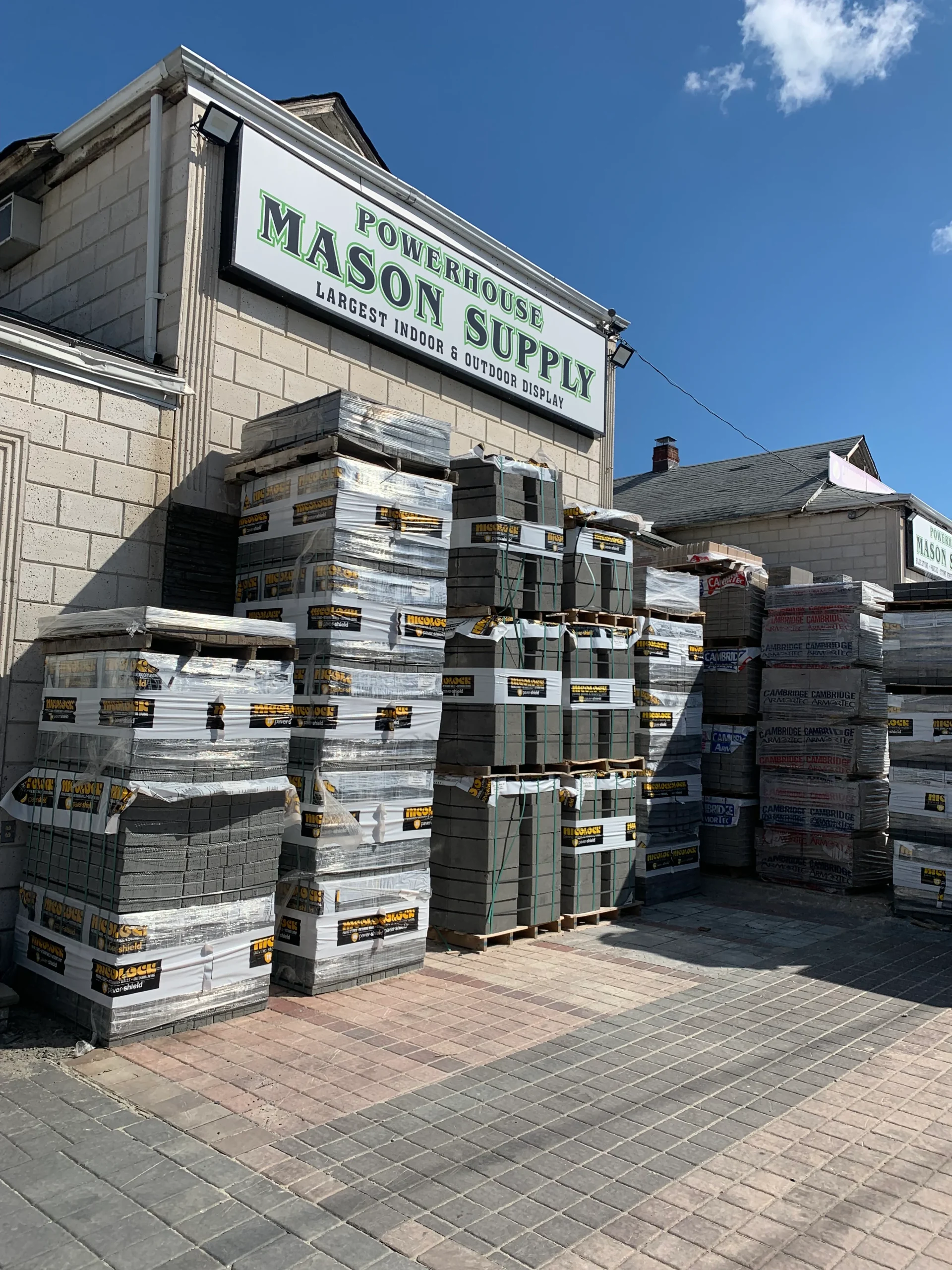
A physical showroom changes that dynamic. At our Roslyn Heights, NY location — right in Nassau County — you can see and touch the actual products before you commit. Stone veneer looks different in a photograph than it does in person, and it looks different indoors than it does in exterior light. The variation in texture, the depth of the color, the way the pieces fit together — these are things you can only evaluate properly with the material in your hands.
We’ve been in this business since 2004, and our family has been in masonry for generations before that. That background means when someone comes in asking about the difference between two cultured stone profiles, or whether a particular product is the right call for a chimney in Merrick, NY versus an accent wall in Manhasset, NY, we can give them a real answer — not a sales pitch. We also connect customers with experienced local Long Island contractors when the project calls for professional installation, which takes one of the biggest friction points in this process off the table.
The other practical advantage of sourcing locally is inventory. We maintain a large stock of in-stock materials to minimize project delays — a concern that becomes very real when a contractor is scheduled and the materials haven’t arrived. Flexible delivery options are available for both residential and commercial projects, and our Saturday hours (7 AM–1 PM across all three locations) mean working homeowners don’t have to take a day off to get this done.
For Nassau County homeowners, the combination of a local showroom, in-stock inventory, expert guidance, and contractor connections is genuinely useful. It’s not a feature list — it’s the difference between a smooth project and one that stalls out at the material selection stage.
The terminology around outdoor veneer is genuinely confusing, and the stakes are high enough that the confusion is worth resolving before you spend anything. Natural stone veneer, manufactured stone veneer, and faux panels are three different products with different performance profiles — and on a fully exposed Nassau County exterior, that difference shows up over time in ways that are hard and expensive to undo.
Manufactured stone veneer hits the right balance for most residential exterior projects: authentic appearance, exterior-grade durability, and a cost range that makes sense relative to the investment. Full exterior coverage typically runs $10,000 to $35,000 depending on size and complexity — a fraction of what natural stone would cost for similar coverage, and a project that industry data consistently shows returns strong value at resale.
If you’re in Nassau County and ready to start comparing options, Powerhouse Mason Supply is the place to begin. Come into the Roslyn Heights, NY showroom, see the products in person, and talk to someone who can give you a straight answer about what’s right for your specific project.
Article details:
Share:
Continue learning: